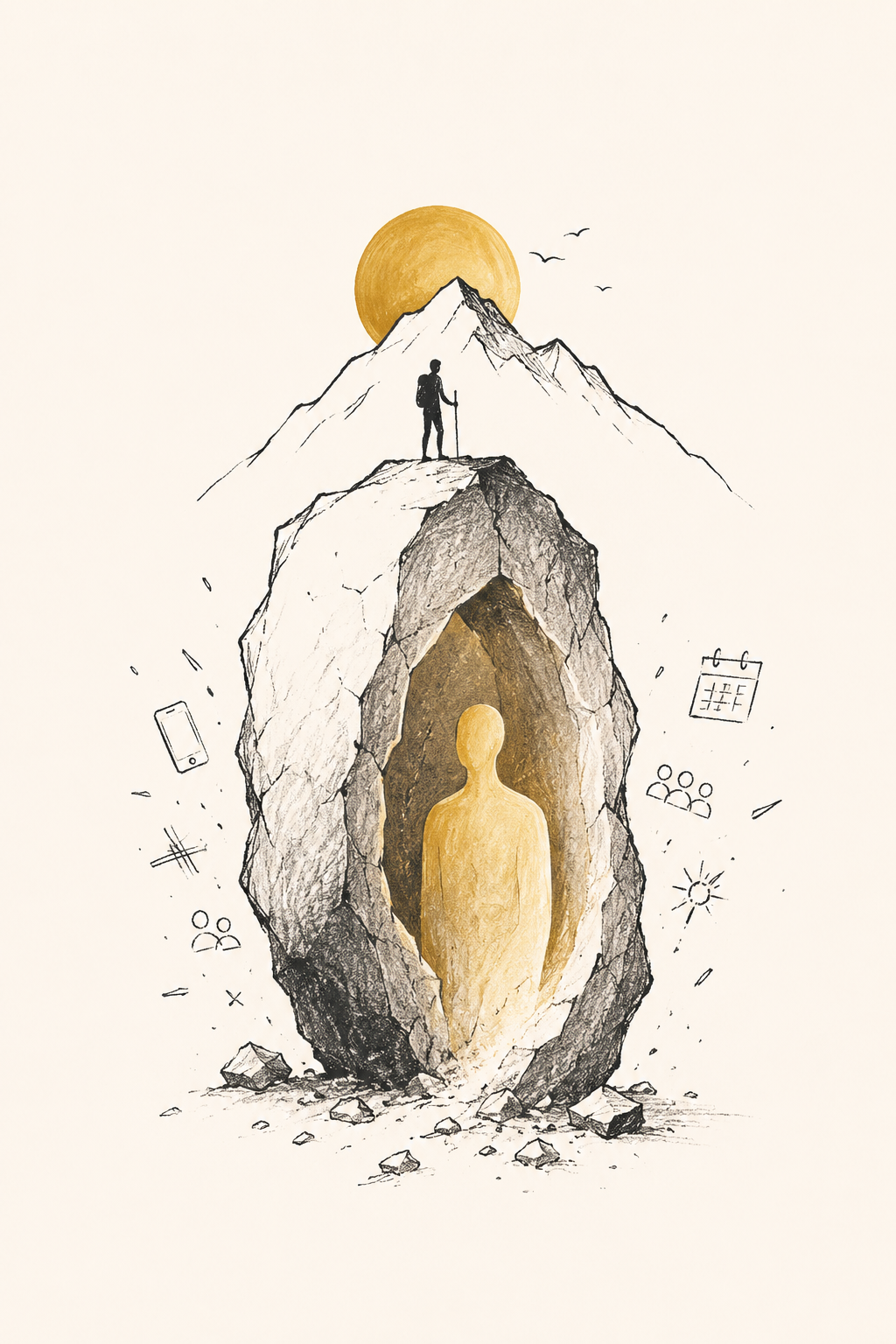
Michelangelo said, I saw the angel concealed in the marble and carved until I set her free. He firmly believed that every block of stone has a statue inside it and it is the task of the sculptor to discover it. This is a complete contrast to how we typically think about greatness. We believe growth is an accumulation game. Every other productivity book tells you to stack more habits, add better routines, optimize your mornings, and build a bigger network etc.
However, if you look at anyone who has built something weirdly exceptional, they aren’t adding more pieces rather slowly and deliberately removing stuff. They miss dinners, stop replying to group chats, skip family celebration, festivals and the old self until only the thing they care about most remains.
People mistake it for discipline. We assume that it takes this massive, agonizing amount of willpower to make sacrifices in life like that everyday – but that’s not the case for the person actually in it. Once you narrow your focus completely and lock in to that goal, you don’t need willpower to skip the family dinner. You don’t even feel like the person who belongs at that table anymore. You’ve shrunk down your identity to a goal.
Willpower is just the energy you waste when you’re still trying to maintain two conflicting lives at the same time.
What folks never see coming is the dead zone in the middle. When the initial excitement of the goal dies out, the grand narrative goes quiet, and the routine just takes over. Your body keeps executing, but you can’t see any real results yet. That is incredibly frustrating and demotivating. But this flat plateau is where the old machinery of your life is being dismantled. The seed is growing, even when the soil looks still.
This hampers relationships, obviously. The people who loved the older, more accessible version of you don’t know what to do with a person who won’t text back. They read the silence as distance or arrogance. And they’re not entirely wrong.
You are leaving. To become useful to a difficult goal, the version of you that needed their validation has to break.
No one talks about it because it’s an uncomfortable thing to admit, but You can’t cross certain thresholds without becoming a stranger to the people who liked you better when you were normal. That was the whole point of the choice, even if it feels terrible when it happens.
When things go sideways along the way—and they always do—the default human reaction is to soften the blow. You want to frame a pivot or a failure in a way that makes you look smart, both to yourself and to your peers. But every soft excuse you make is just a high-interest loan against your future clarity.
Excuses require maintenance energy.
They turn into this hidden psychological debt that shows up months later as bad judgment, cloudier intuition, and a total inability to see why the business is losing velocity.
It’s much cleaner to just say the raw truth out loud, publicly, without the corporate spin. Just say: we messed up, and here is exactly where we stand. It feels awful in the moment, but it liquidates the debt instantly. Once you put the exact gap between reality and the goal on display, you stop wasting energy maintaining the lie. You have no choice but to bridge it.
But the one thing nobody really prepares you for is what happens when you actually get close to the finish line. We have this collective fantasy that winning delivers some massive emotional payoff—this huge wave of validation or a permanent confidence boost.
In reality, the closer you get to a genuinely hard goal, the less it occupies your mind. When you finally cross it, there’s no big crescendo. It just feels like walking into a room after all the furniture has been cleared out. It’s a total void.
The story you’ve been telling yourself for years just evaporates, and you’re left facing pure biology. You’re just incredibly tired, your body hurts, and you want a simple meal made by someone who knows you without your title.
That anti-climax isn’t a failure of the achievement. It’s the ultimate proof that the process worked.
The goal didn’t fill you up; it successfully emptied you out.
This detachment is the actual outcome not a side effect of doing something great.
The internal mechanics don’t shift whether you’re trying to scale a venture-backed company, run a 5K without stopping, or just keep your sanity intact through a brutal year. The capitalization changes and the audience changes, but at the cellular level, the ask is identical.
There is always that quiet moment where you want to quit, the internal negotiation that follows,
and the decision to either accommodate your comfort or strip away another layer of who you used to be.
The question isn’t whether you’re built for something big enough. It’s just a question of how much of yourself you’re willing to strip away to find out what’s underneath.
World-class outcomes come from ruthless alignment between goal, identity, and daily behavior
— even when that alignment isolates, hurts, or looks irrational from the outside.
Leave a Reply