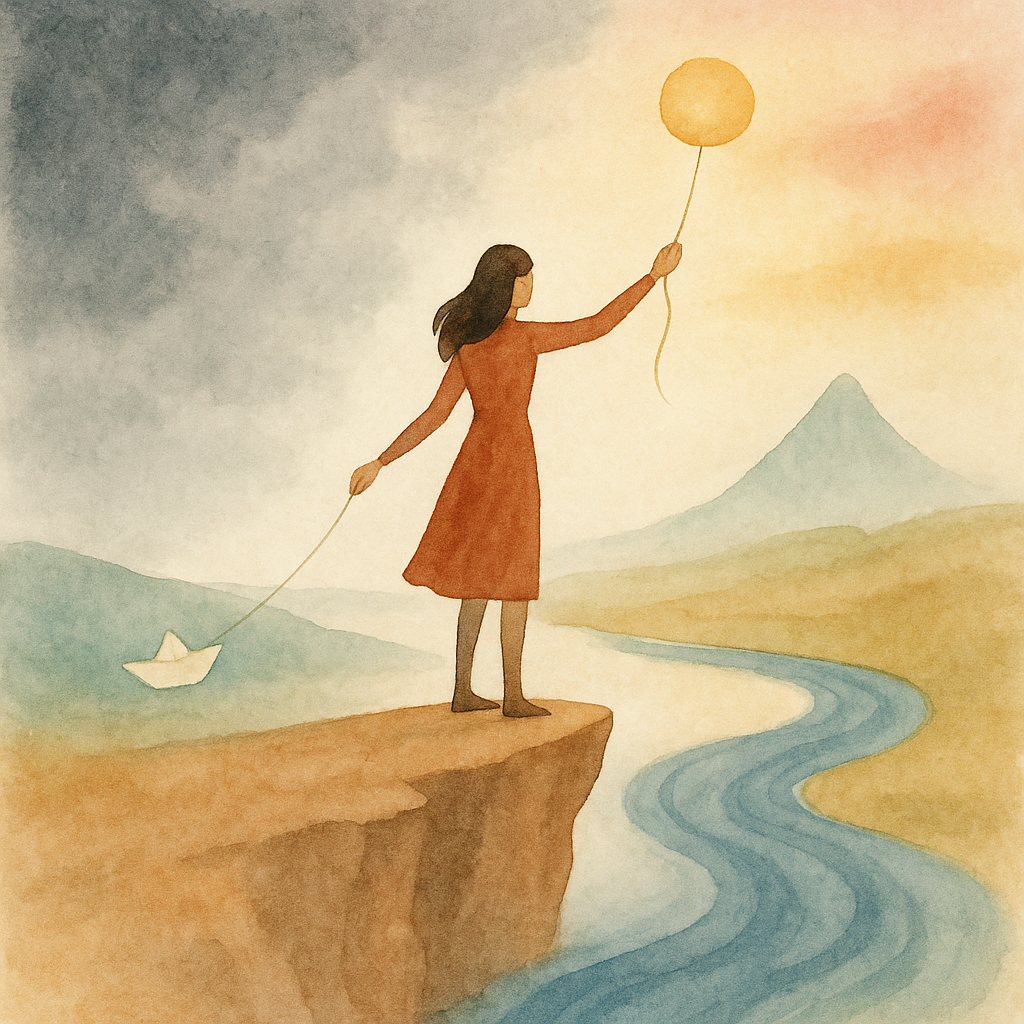
Because some losses don’t ask for surrender. They ask for evolution.
I thought I had become good at losing.
Keys. Mugs. Tiffin boxes. Emails I meant to reply to.
Friendships I thought were solid until they weren’t.
A version of my life that existed only in my head but still left behind a ghost when it dissolved. The little losses added up until it started to feel like muscle memory—like I was supposed to take it all with a quiet smile and an overused quote about letting go.
People seemed to admire the calm. “You’re so strong,” they’d say.
Which really just meant: “You’re not making us uncomfortable with your grief.”
So I turned the volume down on my wants. I called it maturity.
Told myself loss builds character.
Gave things away before they could be taken.
Walked out early so I wouldn’t have to be walked out on.
Told myself I didn’t need closure—I had perspective.
Except I wasn’t evolving. I was disappearing.
The turning point came somewhere absurd. I was halfway through a trek, huffing like a tractor, nowhere close to the summit, when I realized I was done being graceful. I was tired of being the woman who always took the high road and never got anywhere. I didn’t want to practice losing. I wanted to win—badly. I wanted to say: That was mine and I fought for it.
Because maybe the worst losses are not the ones that happen to us,
but the ones we allow by staying quiet.
There’s a version of life where you learn to loosen your grip.
Where you accept that people leave, seasons change, plans dissolve.
That version asks you to stay light on your feet.
It’s poetic. Minimalist. Good lighting, clean shelves, no emotional clutter.
But there’s another version.
Messier. Sweatier. Less chic and more stubborn.
That version says: You don’t owe the universe your silence just because things are hard.
That version reminds you that wanting something deeply doesn’t make you weak—it makes you alive.
So I’ve started to hold both.
I still let things go.
But now I ask myself if I’ve really shown up for them first.
If I’ve spoken the unspeakable.
If I’ve been brave, not just polite.
If I’ve said the thing that felt risky but necessary.
And if I haven’t, I go back and do it—even if my voice shakes or the door’s already closing.
I’m no longer interested in being the girl who knows how to lose well.
I want to be the one who knows when not to.
Because maybe the point of living isn’t to become so unattached that nothing hurts, but to care so much that you’re willing to be undone.
And if I lose after that, at least I’ll know I showed up swinging. Not sleepwalking.
Very well written Vasudha!
Yes, detachment is an art but knowing when to detach and when to keep fighting is what we need to learn.