Reflection · Books · Life
What a children’s book got right about love, identity, and the mirrors we refuse to stop staring into.
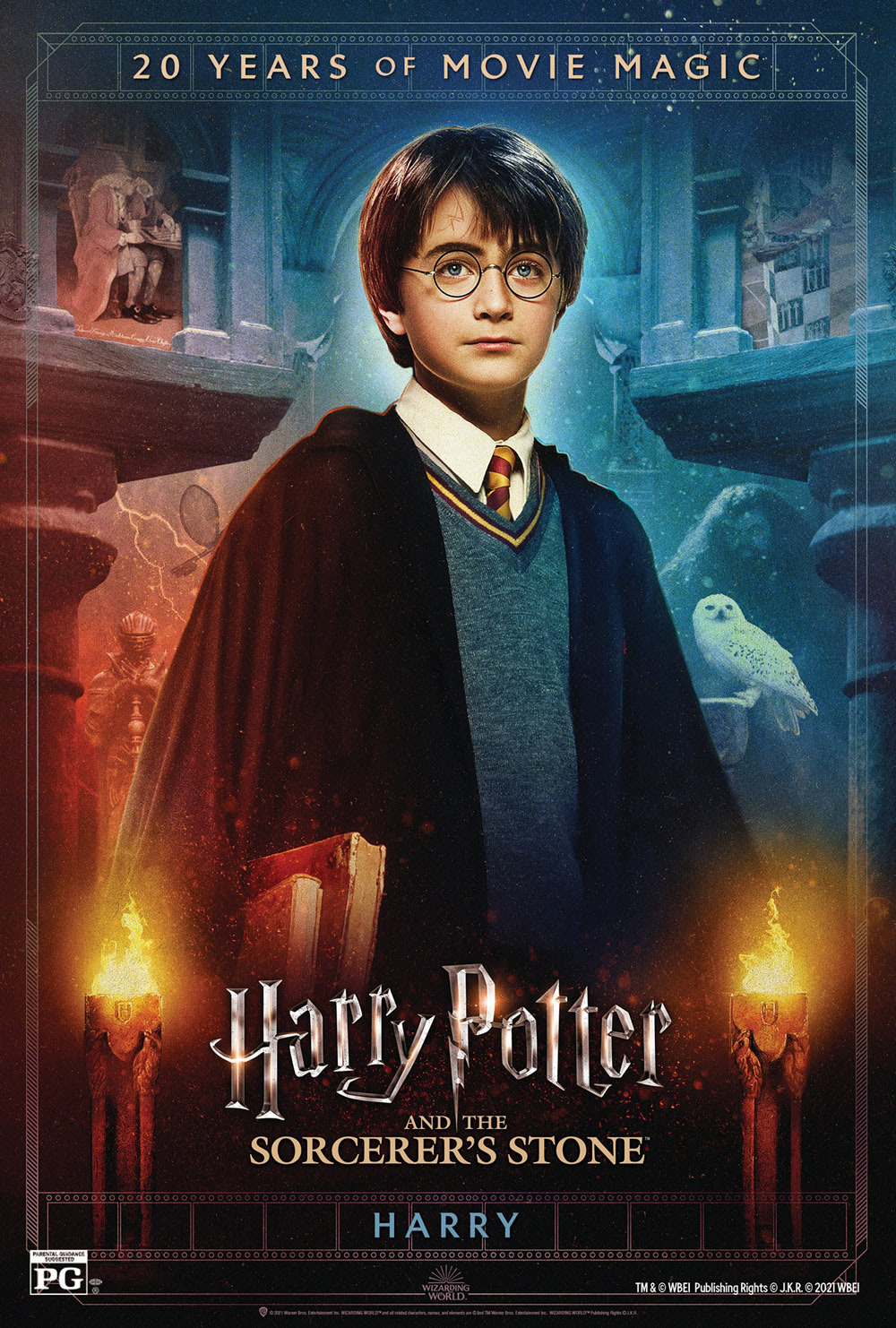
There is a scene in Harry Potter I keep returning to — and it is not the one with the dragon or the troll or the chess match, but the one where an eleven-year-old boy finds a mirror in an unused classroom and cannot stop going back to it.
The mirror shows him his dead parents. He has never met them. He goes back every night. Dumbledore eventually pulls him away and says something that took me years to actually understand:
The happiest man alive would look into that mirror and see only himself, exactly as he is.
At eleven, I thought that was a cold thing to say to a child. Much later, I came to think it might be the most generous thing anyone had ever said to anyone.
The mirror doesn’t lie. It just shows you everything you’re missing, and calls it desire.
We all have a mirror like that.
The feed that leaves you hollow after fifteen minutes.
The profile of someone you went to school with who seems to have figured something out.
The life you would have had, in full colour, if one decision had gone differently.
The mirror always looks so reasonable to stand in front of — you’re just looking, just thinking, just planning. And then an hour disappears.
What the book understood, and what took me far longer to absorb, is that the mirror is a slow leak.
Every hour spent in front of it is an hour pulled away from the actual work, which tends to be ordinary and slightly tedious and occasionally satisfying in a way that does not photograph well and cannot be shown to anyone.
On identity
You are not where you started
Harry grows up in a cupboard under the stairs, sleeping next to the boiler, being told in a hundred small ways that he is unwanted and not worth wanting. Then he gets to Hogwarts and he is fine — better than fine — brave and generous and instinctively decent in a way that has absolutely nothing to do with how he was raised, because how he was raised tried very hard to make him otherwise.
People tend to underestimate how radical that idea is. We say your environment shapes you, and it does, in measurable and documented ways — but the book insists, without making a speech about it, that the shaping is not the whole story. Harry could have become bitter. He had every structural reason to. He did not, and the book offers no grand explanation, because the point is that it does not need one. Some people just decide, on a level too deep to articulate, that the worst thing that happened to them will not become the defining thing about them.
Origin is not destiny. It is just the address where the story began.
The Sorting Hat nearly places Harry in Slytherin. This gets treated as a crisis averted, but I have come to think it is actually the most important moment in the entire book. The Hat sees ambition, resourcefulness, a quality that could go either way depending on what choices follow. Harry asks — quietly, in the space of a few seconds — to be placed anywhere but Slytherin. That small interior refusal tips the balance. He ends up in Gryffindor because of what he is choosing to be, in real time, and the Hat is wise enough to honor that.
Dumbledore says later that it is our choices that reveal who we truly are, far more than our abilities. That line has been quoted so often it has gone slightly soft at the edges, but it has not stopped being accurate. Abilities are what you begin with. Choices are what you do with them — and also what you do when you have very few of them, which is most of life.
On love and protection
The thing Voldemort couldn’t calculate
The plot turns on an act of love so complete it becomes a physical force. Lily Potter dies for her son and the sacrifice creates a protection that Voldemort, with all his accumulated power and centuries of dark knowledge, cannot penetrate or replicate or even fully understand. He tries to kill Harry and the spell rebounds. He spends the next decade as a disembodied fragment, slowly rebuilding himself — all because someone loved her child more than she feared for herself.
The compelling part is not that love is powerful — that is a very old story. The compelling part is why Voldemort, specifically, cannot comprehend it. He is brilliant. Arguably the most gifted wizard of his generation. He understands virtually every magical system ever devised. And he cannot grasp this one thing — not because it is concealed from him, but because understanding it would require having felt it, and he never has. You cannot reverse-engineer an emotion you have never experienced. You can describe it from the outside, map its effects, study its contours — but the interior of the thing stays inaccessible, and that gap, when the worst moment comes, turns out to be fatal.
The forces that matter most cannot be weaponised by people who have never been changed by them.
There is a parallel in every domain where people try to optimise their way to something that resists optimisation. Trust built through years of showing up consistently. Respect that comes from genuinely wanting nothing in return. Friendships that survive difficulty because they were never transactional at their foundation. These things work — in a deep structural way — precisely because they were not designed to work. Anyone approaching them as strategies will find that the mechanism dissolves the moment they reach for it.
On courage
Neville’s moment, which everyone forgets
At the end of the book, Dumbledore distributes house points in a sequence that feels almost cruel in its precision. Gryffindor is behind. He awards Harry points for nerve in the face of danger, Ron for the chess game, Hermione for logic under pressure. Then he pauses and gives Neville Longbottom ten points for, in Dumbledore’s words, the hardest thing of all — standing up to his own friends.
Neville had tried to stop Harry, Ron, and Hermione from sneaking out. He planted himself in front of them, visibly shaking, knowing he was outnumbered and almost certainly going to fail, and he tried anyway because he believed it was right. Hermione then froze him with a spell. They left him there, stiff on the floor.
He failed completely. He was entirely ineffective. And he received the points anyway, because the points were never for winning — they were for showing up in the exact situation where walking away would have been so much easier. Standing up to enemies takes bravery, yes. Standing up to the people you like, who like you, who will probably be annoyed at you afterward, and who are almost certainly going to do the thing regardless — that takes something slightly different and considerably less glamorous.
Most courage looks like Neville. Uncertain in its execution, easy to ignore, occasionally recognised long after the fact in ways you could not have predicted.
On friendship
Three people who wouldn’t have made it alone
Harry, Hermione, and Ron pass through a series of challenges designed to require fundamentally different intelligences — physical bravery, botanical knowledge, chess strategy, logic under pressure. Each challenge is a door that only one of them can open. If you slow down and look at the structure of it, the implication is uncomfortable: without any one of the three, the others die. They are each individually insufficient for the task at hand.
Harry has instincts and nerve but almost no academic grounding. Hermione has vast knowledge but gets destabilised by physical threat. Ron has neither Harry’s instincts nor Hermione’s knowledge but understands people and games and how stress moves through a group in ways the other two cannot quite access. Together they cover almost everything. Separately they cover one thing each, and one thing each is not enough.
Real friendship is knowing where you end and letting the other person begin without making it a competition.
What makes their dynamic function is not that they are compatible — they frequently are not. Hermione and Ron argue constantly. Harry sometimes finds them both exhausting. But they remain together because the remaining is grounded in something more durable than comfort, which is that they have genuinely needed each other in situations where needing each other was not optional. That quality of need, survived together and remembered, becomes something you can actually build on.
On evil and appearances
The villain everyone liked
The book does something technically sophisticated that most readers miss because they are nine when they first encounter it. Snape is constructed as the obvious threat — cold, deliberately cruel to Harry, found lurking around restricted areas, injured by the three-headed dog. Everything points toward him. The actual villain turns out to be Quirrell, the warm and bumbling teacher whom everyone finds reassuring and nobody suspects.
Rowling is making a structural argument, not just engineering a plot twist. The most dangerous thing in a room tends to be the thing you are not watching, and you are typically not watching it because it has found a way to look safe — through warmth, through apparent incompetence that makes you drop your guard, through a personality that accommodates everyone around it. Meanwhile the thing that seems threatening is often just abrasive, or honest in ways that sting, or wrapped in a manner that refuses to make other people comfortable. Snape is genuinely unpleasant. He is also, in this book, genuinely on the right side. Those two facts coexist without ever resolving each other neatly.
We want these things to correlate — warmth with goodness, unpleasantness with danger — because it would make the world so much easier to read. The book was patient enough to tell a children’s story through a structure that quietly refuses that comfort the whole way through.
What it’s really about
A child finding out he was worth loving all along
Underneath all of it — the magic and the moving staircases and the trolls and the mirror — this book is about a child who has been told, in every way adults can tell a child something without technically saying it, that he is unworthy of love.
Then he goes somewhere new and finds out that this was simply wrong. The Dursleys were mistaken.
He always had been worth loving. The world was just arranged in a way that prevented him from knowing it.
Hogwarts does not fix Harry. It does not give him qualities he lacked before.
What it gives him is a context in which his actual qualities —
the ones present the whole time, going unrecognised in a house that had no use for them —
can finally be seen by people equipped to see them.
He does not become brave at Hogwarts. He becomes someone whose bravery is finally visible, finally useful, finally met with recognition rather than suspicion.
Belonging does not change who you are. It gives you somewhere to be it fully, without apology.
That is the part that stays with me. People can spend years being the wrong shape for the container they are placed in, and then find a different container, and everything fits, and it was never about them at all. They were fine the whole time. The world just had not made room for it yet — and that is a painful truth to sit with, because it means so much of what we read as failure is actually just misalignment, and the two are genuinely hard to tell apart from the inside.
Written from years of rereading something I thought I’d outgrown, and finding it hadn’t outgrown me.
Leave a Reply