It’s easy to believe that what we do doesn’t really make a difference. That our efforts are too small, too unnoticed, too insignificant to matter. But that’s a lie. Every action, no matter how small, creates a ripple. The kind word you said that someone replayed in their head on a bad day. The work you put in that no one acknowledged but still made things better. The tiny, everyday choices that shape the person you become. Unhappiness doesn’t come from struggle. It comes from believing that none of it counts. That no one sees. That no …
The Work in Front of You Matters
It’s easy to get lost in someday. Someday, I’ll be fitter. Someday, I’ll write that book. Someday, I’ll be doing work that actually matters. Bigger goals are great. But they can also trick you into thinking that what you’re doing now is just a means to an end. That this part—the unglamorous, in-between stage—is just something to get through. It’s not. The work you’re doing right now matters. Even if it feels small. Even if it’s not where you ultimately want to be. Every skill, every habit, every challenge is shaping you. The effort …
The Skill Nobody Teaches
School rewards the kid who solves the math problem fastest. Life rewards the one who asks, Why are we solving this problem in the first place? Most of education is built around problem-solving. Memorize formulas, apply techniques, get the right answer. But the real world doesn’t hand you neatly packaged problems. It’s messy. The hardest part isn’t solving—it’s knowing what’s actually worth solving. Problem-finding is its own skill. It’s the difference between chasing pointless goals and working on something that matters. It’s the …
The Myth of Magical Consistency
Everyone wants to be consistent. Just like everyone wants to be rich. We all know it would change our lives. We all know the formula—show up every day, do the work, repeat. But consistency, much like a million dollars, always seems just out of reach. Instead, we fall into a cycle of inspiration. We dream. We plan. We buy fancy planners. We imagine our future selves—disciplined, unstoppable, effortlessly ticking off every goal. And then? We do nothing. Because the high of planning feels productive enough. The truth is, consistency isn’t …

The Stories That Stay With You
Most stories entertain. The best ones do something more. They change you. Not in a grand, life-altering way—no one reads a book and instantly becomes a different person. But the right story can make you see something you hadn’t noticed before. It can nudge you toward a decision you’ve been avoiding or plant a question that refuses to go away. Some stories make you uncomfortable in the best way. They hold up a mirror and force you to confront something you’ve been pretending not to see. Others remind you of what’s possible—what you could …

Who’s In Charge—You or Your Screen?
Technology gets blamed for everything—our short attention spans, our wasted hours, our inability to sit in silence for more than ten seconds without checking our phones. But technology isn’t the problem. It just makes it really easy to be aimless. When you know what you want, technology is a tool. It helps you learn faster, connect better, and build things that matter. But if you don’t know what you want, technology fills the gap. It floods you with distractions, suggestions, and algorithms that quietly nudge you into spending your life …
Continue Reading about Who’s In Charge—You or Your Screen? →
The Lies That Keep Us Stuck
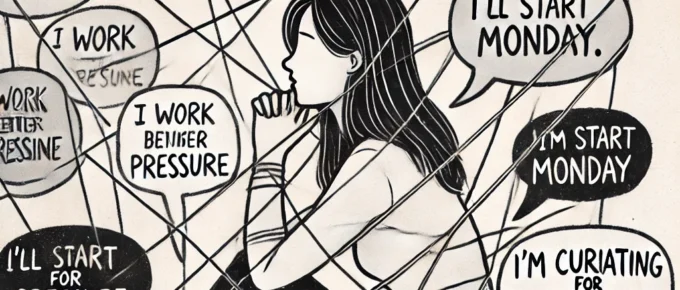
I once believed I had an Instagram problem. Too much scrolling, too little doing. The solution? Obvious. Delete the app, set screen time limits, maybe develop some self-control. But instead, I told myself a different story: "I’m curating my feed for inspiration." Inspiration for what? For the life I was too busy watching other people live? We do this all the time. We take behaviors that sabotage us and wrap them in justifications that make them easier to live with. "I work better under pressure" is just a poetic way of saying "I …
When Instinct Takes Over
When I switched from being a designer to design recruitment, I had no idea what I was doing. I’d spend hours analyzing portfolios, second-guessing every hiring decision, and overthinking feedback. It felt like a game where everyone knew the rules except me. Now? I can glance at a portfolio and know—almost instantly—whether the designer is a fit. It’s not magic. It’s time. Experience stacks up, layer by layer, until what once required conscious effort becomes automatic. Like how a chef doesn’t need to measure spices, or a musician can …