
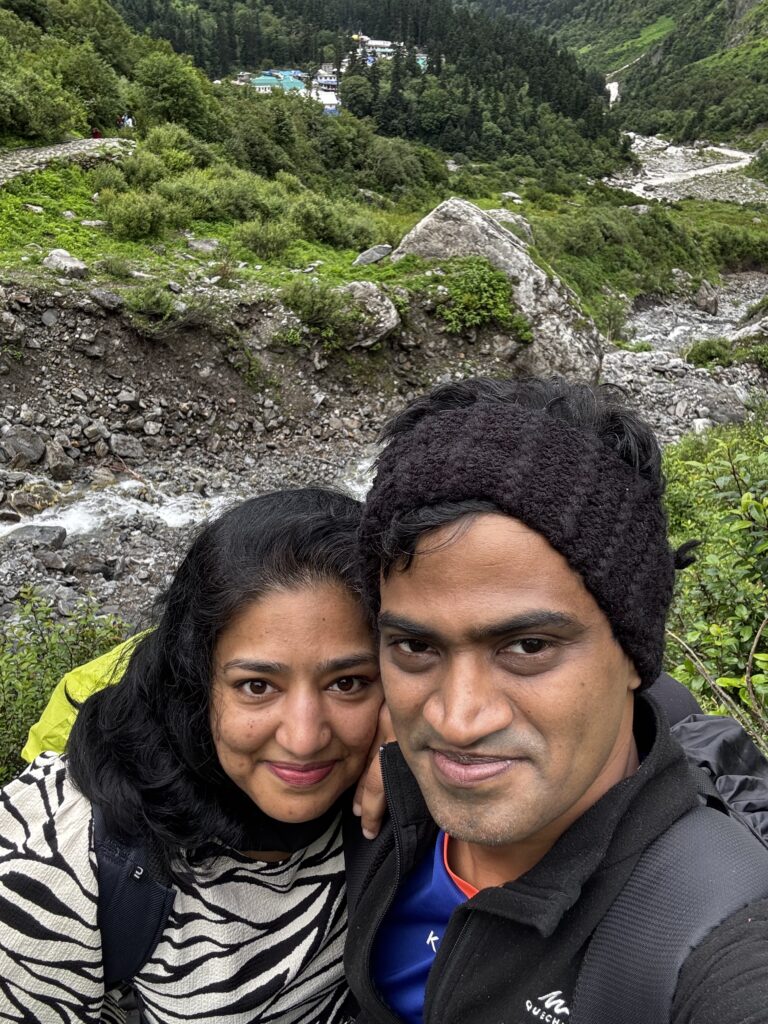
It was this rock, this view, and him beside me.
I thought I wanted the Valley of Flowers. What I really wanted was to sit on a damp rock outside a crumbling homestay, a dog curled beside me, clouds playing hide and seek with the mountains—and Hari walking up, placing his arm gently on my shoulder, settling next to me like it was the most obvious thing to do.
That moment, more than any meadow or misty summit, is what stayed with me. That was the real bucket list—quiet, unexpected, and wildly alive.
I first read about the Valley of Flowers while drenched to the bone on the Bhrigu Lake trek. The idea of coming back from a 10km hike to a hotel room with a mattress and hot shower sounded luxurious—scandalous even, to my tent-and-sleeping-bag mind. It stuck. But in that moment, soaked and shivering, it became a bucket list item. Not just for the wildflowers. But for the idea of comfort—of being able to share the mountains without the rough edges.
I knew I wanted to do it with Hari. But I didn’t know if that would ever happen.
We’ve done dozens of hikes around Bangalore, but the Himalayas are a different beast. His schedule was unpredictable, and this was not just any trek—it was the steepest and highest I’d ever attempted. A 4,000 ft elevation gain in under 7 hours. I didn’t know how my body would react. I had no clue how his would.
We decided to do it DIY-style.
No trekking group. No handlers.
Just the two of us, our shared stubbornness, and a lot of rain.
The Journey That Nearly Wasn’t
The week before we left, Uttarakhand had been drowning. News of landslides, roadblocks, and flash floods made cancelling a very real option. I panicked, spiraled, and pestered trek leaders with too many questions. One of them, Nehika, responded patiently every single time. I owe her a lot more than a thank you—because without her calm, we wouldn’t have gone.
We left from Rishikesh expecting an 8-hour drive to Joshimath. It turned into 14. Between rain, roadwork, and long halts, the journey stretched way beyond what we had planned. I had taken a motion sickness pill—as I always do before hill drives—and usually, I’m fast asleep within minutes. But this time, I stayed up for more than half the ride. I wasn’t panicking, but I found myself paying close attention—checking the road, noticing the landslide-prone stretches, watching how long we were stopped for.
It made me realize how much I’ve taken for granted on treks with Indiahikes. They handle everything—delays, detours, even emergency plans. All I’ve ever had to do was show up and start walking. This time, there was no one else managing the logistics. Just me and Hari. And that small shift changed everything. I was suddenly more present to the practical side of trekking—not just the trail, but what it takes to even get to the start line.
That first surrender came in Joshimath. We stayed in a lonely little homestay—previously an orchard, now dotted with big rocks that looked like they belonged in a Zen garden. The chai was awful. So awful, in fact, that even Hari—who has the culinary expectations of a 90s bachelor—complained. And yet we drank eight cups of it. Because our food options were two kilometres away and we were too tired to move.
We sat outside, surrounded by mist and pine and silence. He dozed. I clicked photo after photo of the mountains. Not a single frame looked the same. The cloudscape kept shifting, like nature’s own reel—unscripted and brilliant.
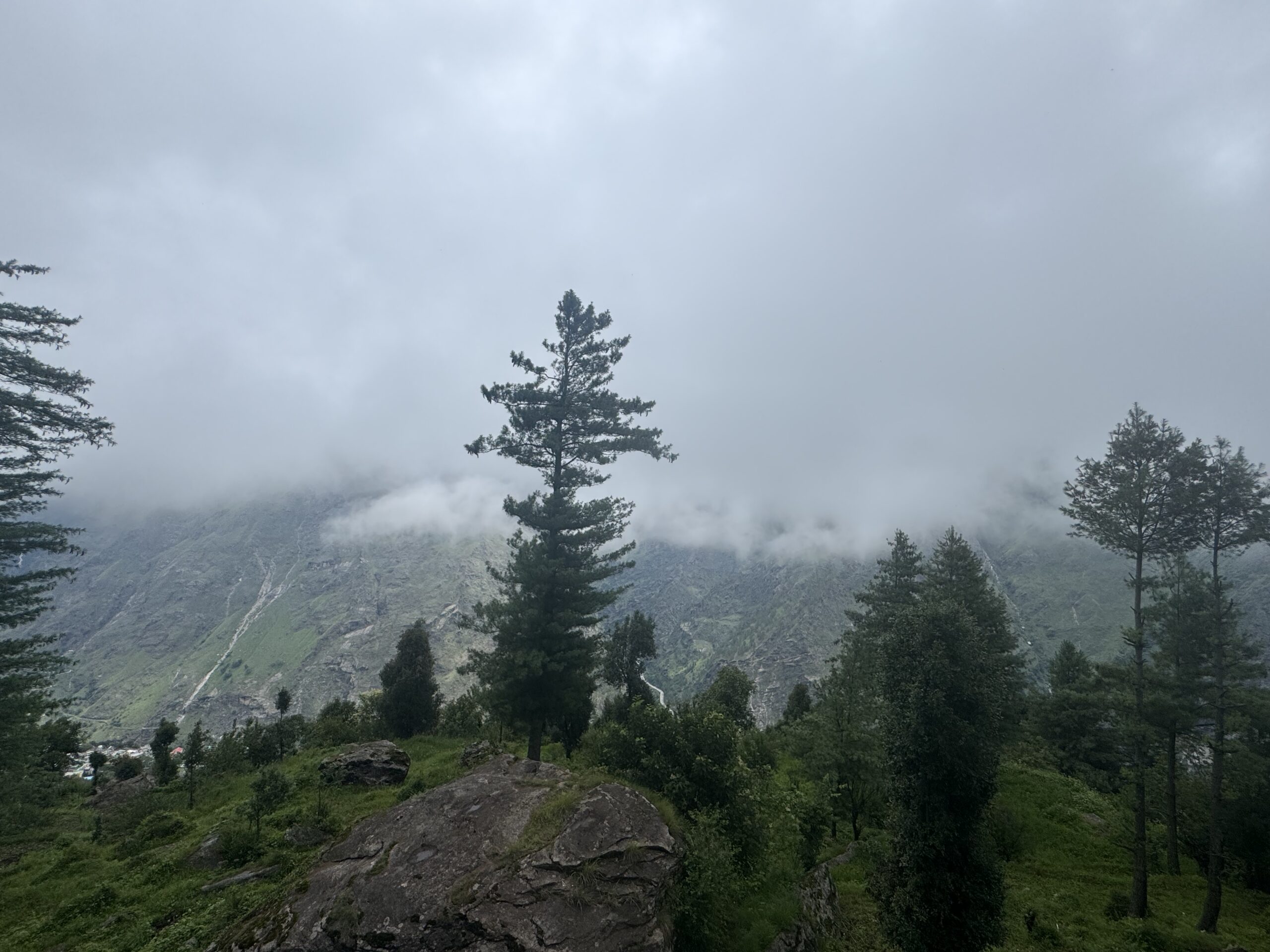
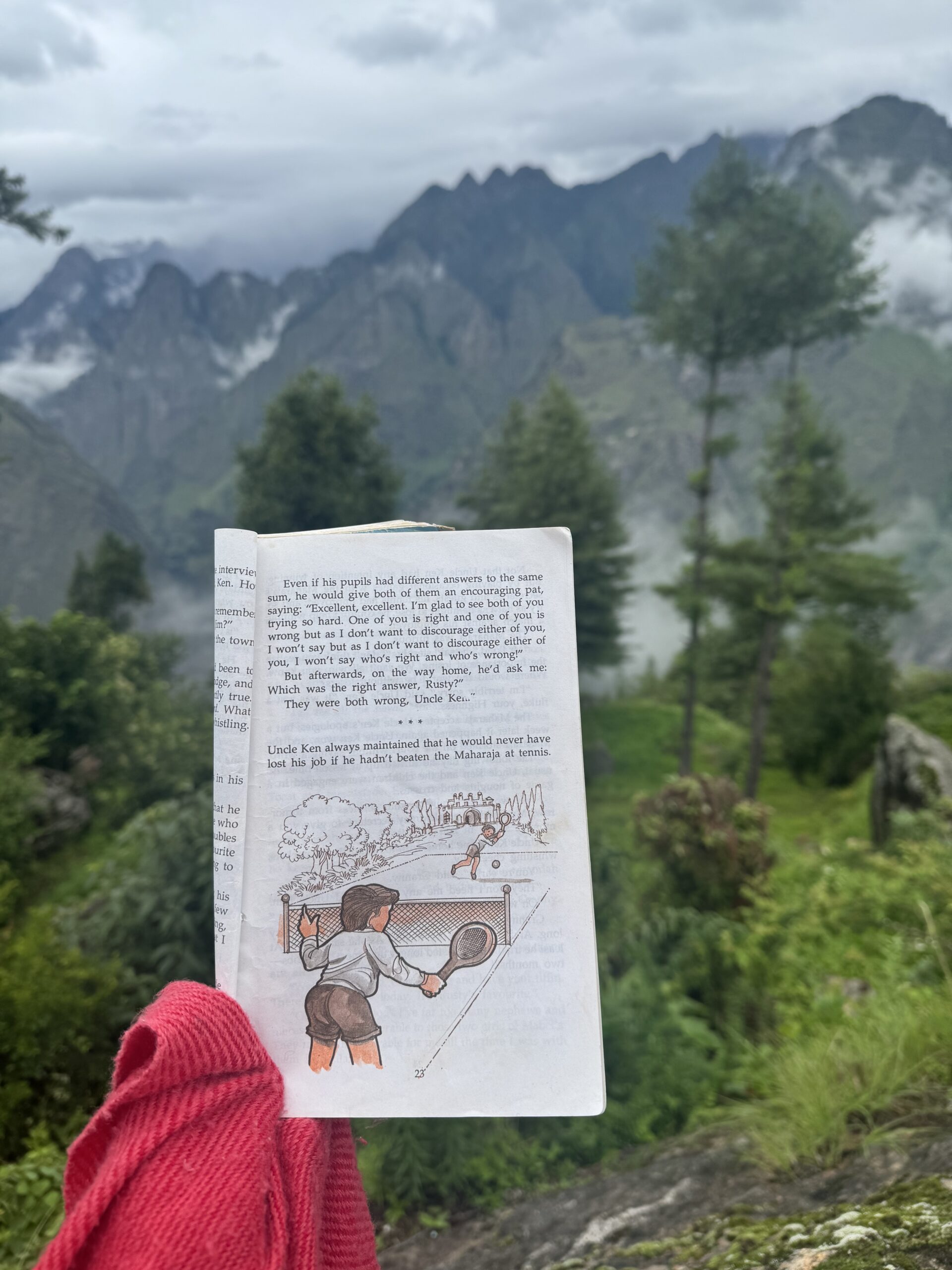

That evening, we skipped our showers. Again. Because trekking in the mountains teaches you that comfort is relative. Even the act of disrobing feels like a betrayal when the wind is biting. It’s not even about the cold. It’s about the inertia of warmth.
Day 1: The Trek Begins (Sort Of)
On July 1st, we left Joshimath at 5:40 am, reached Govindghat by 7:15, and got a shared cab to Pulna. By 7:40 am, we were walking.
I was on Day 2 of my period. And while I’ve done treks during cycles before, it’s never pleasant. Especially not on a trail with no place to duck behind a tree. This was a paved path. Popular. Exposed. And I had no idea how bad my cramps would get.

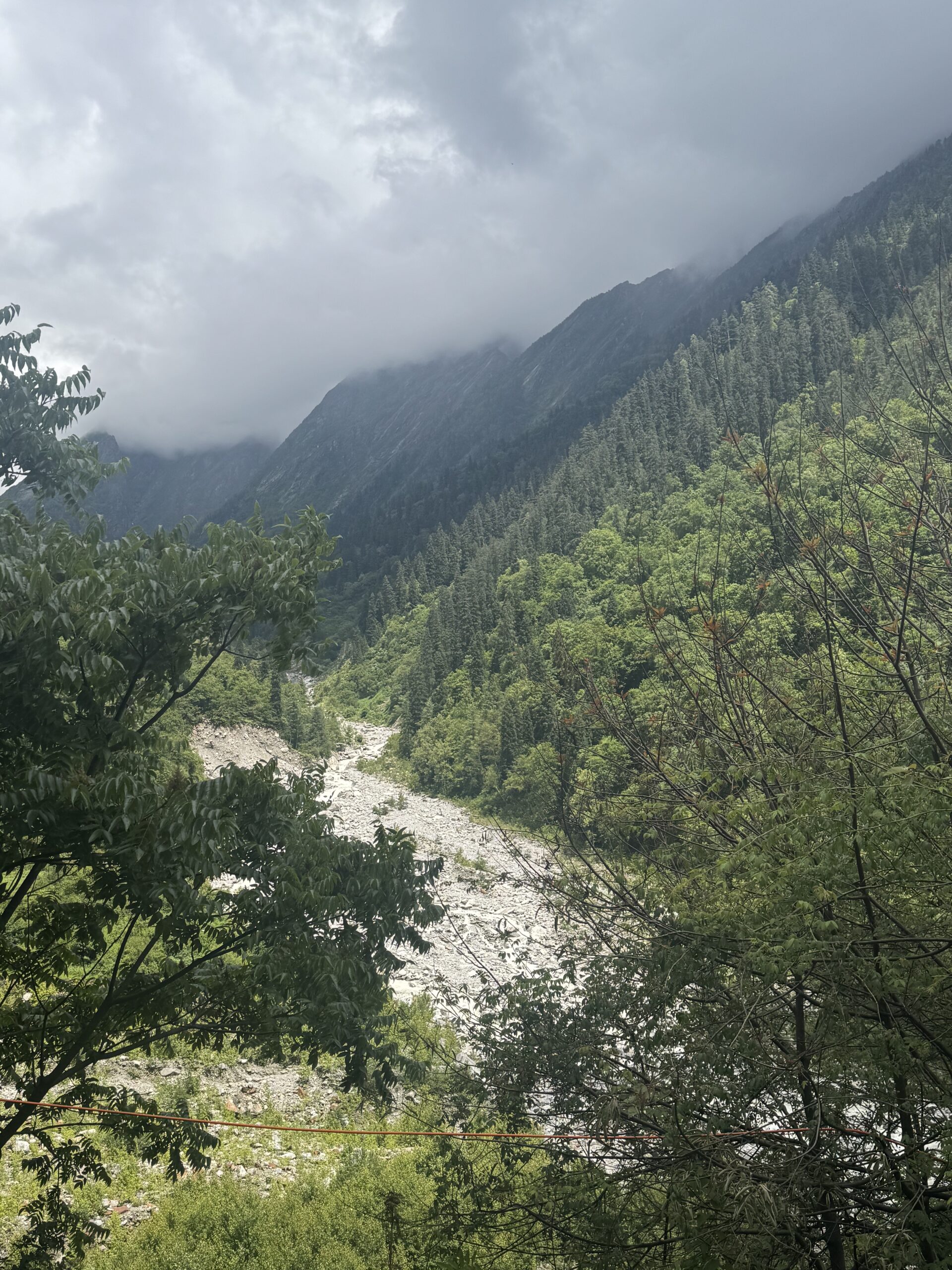

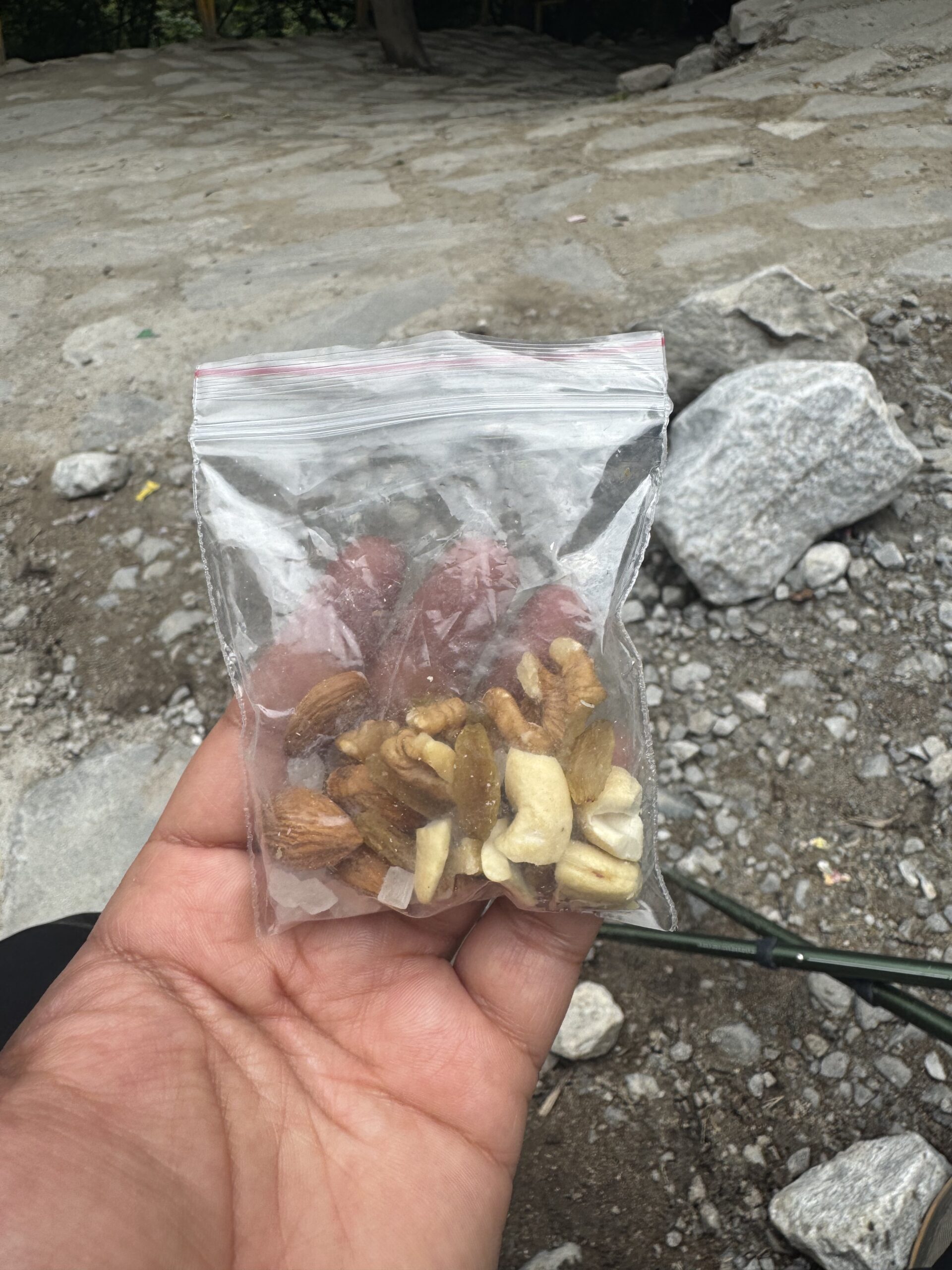

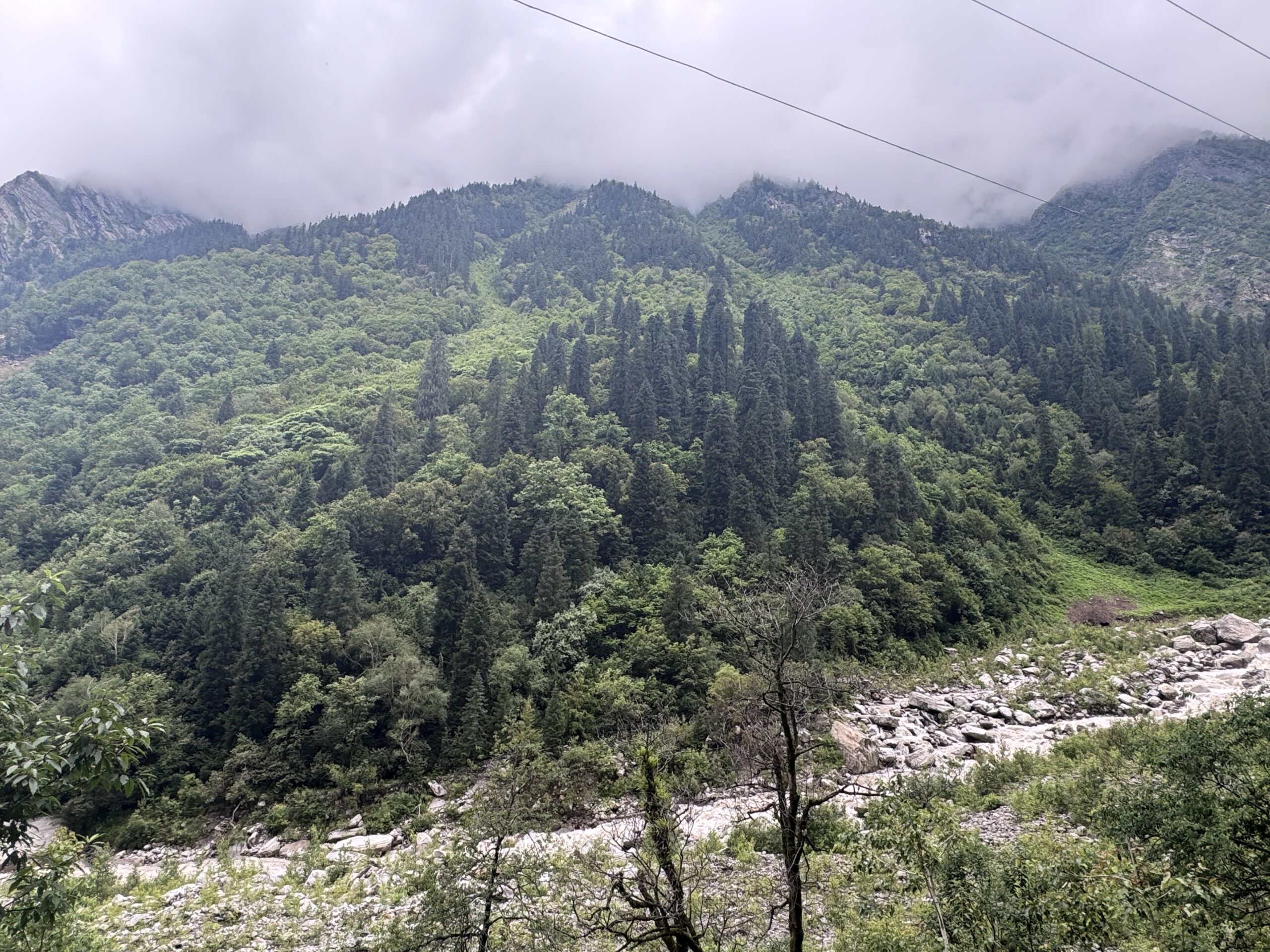
We carried our own backpacks—first time for me. Usually I offload them to mules. Hari carried most of the weight, but by the end, both of us were wiped. The route was undeniably beautiful—rivers alongside us, waterfalls tumbling down cliffs, friendly Sikh pilgrims handing out prasad and energy. But that last 1.5 km was brutal. The only thought in my mind was: just end this.
When we finally saw our hotel cot—complete with a double bed and a separate single one (which quickly became our ‘dumping ground’ for gear)—it felt like we had checked into a 5-star spa. I had a long, steaming hot bath, thanks to a solar-powered geyser that worked overtime. I used three full buckets and didn’t want it to end.
Day 2: When the Flowers Demand Their Respect
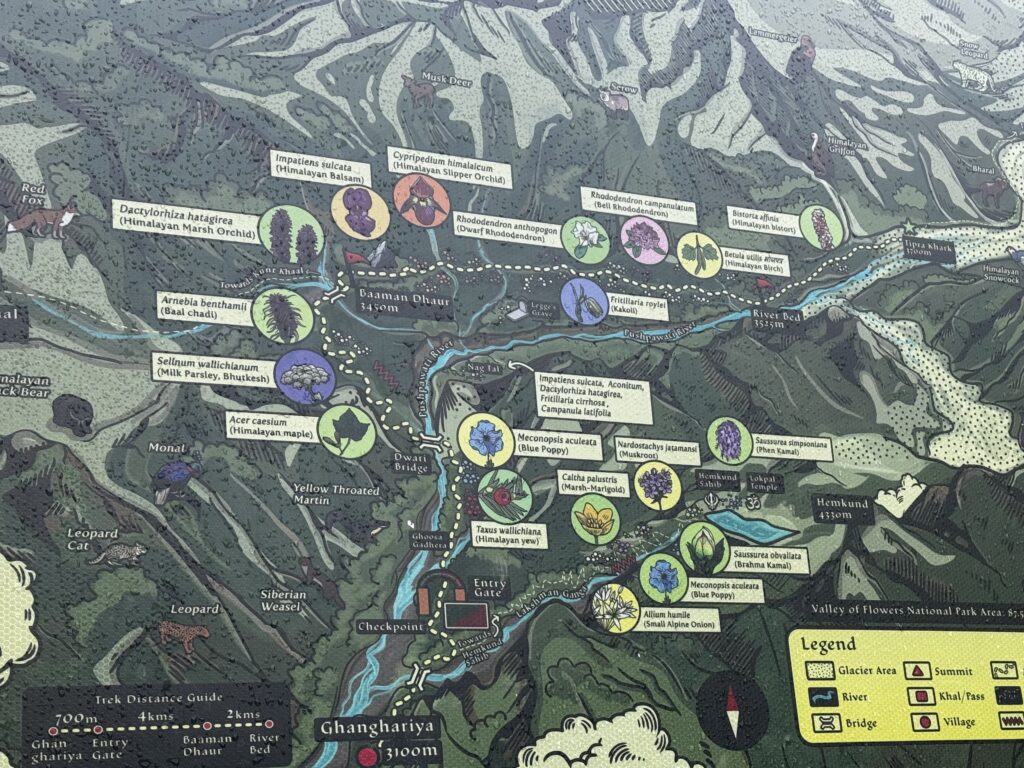
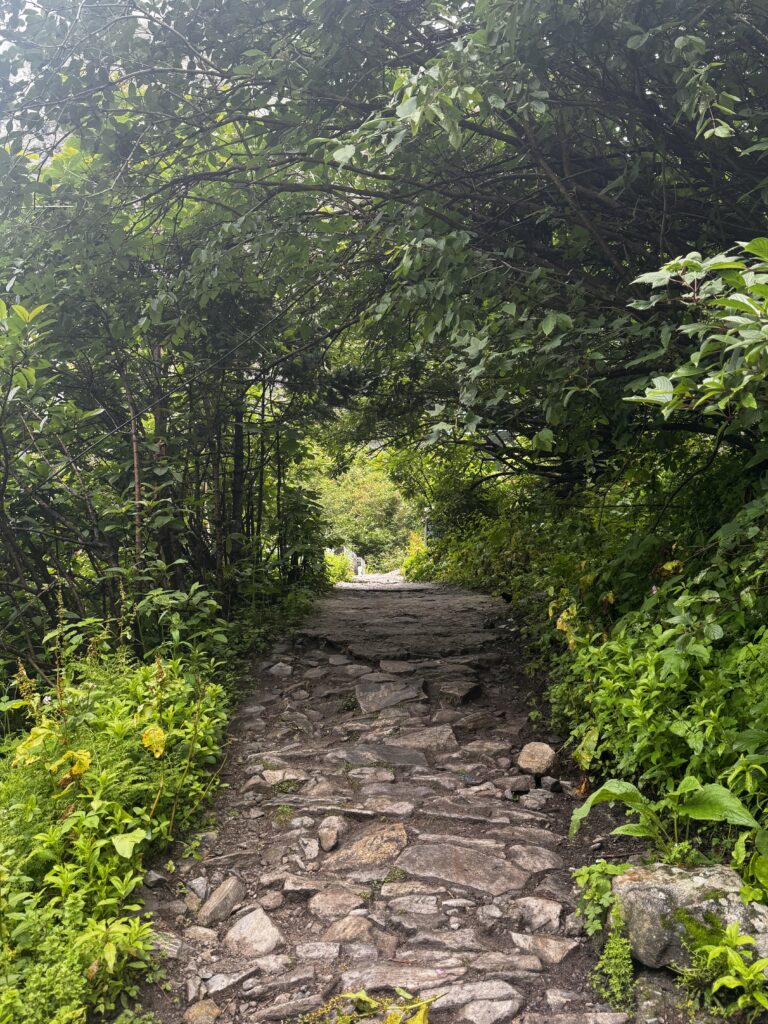
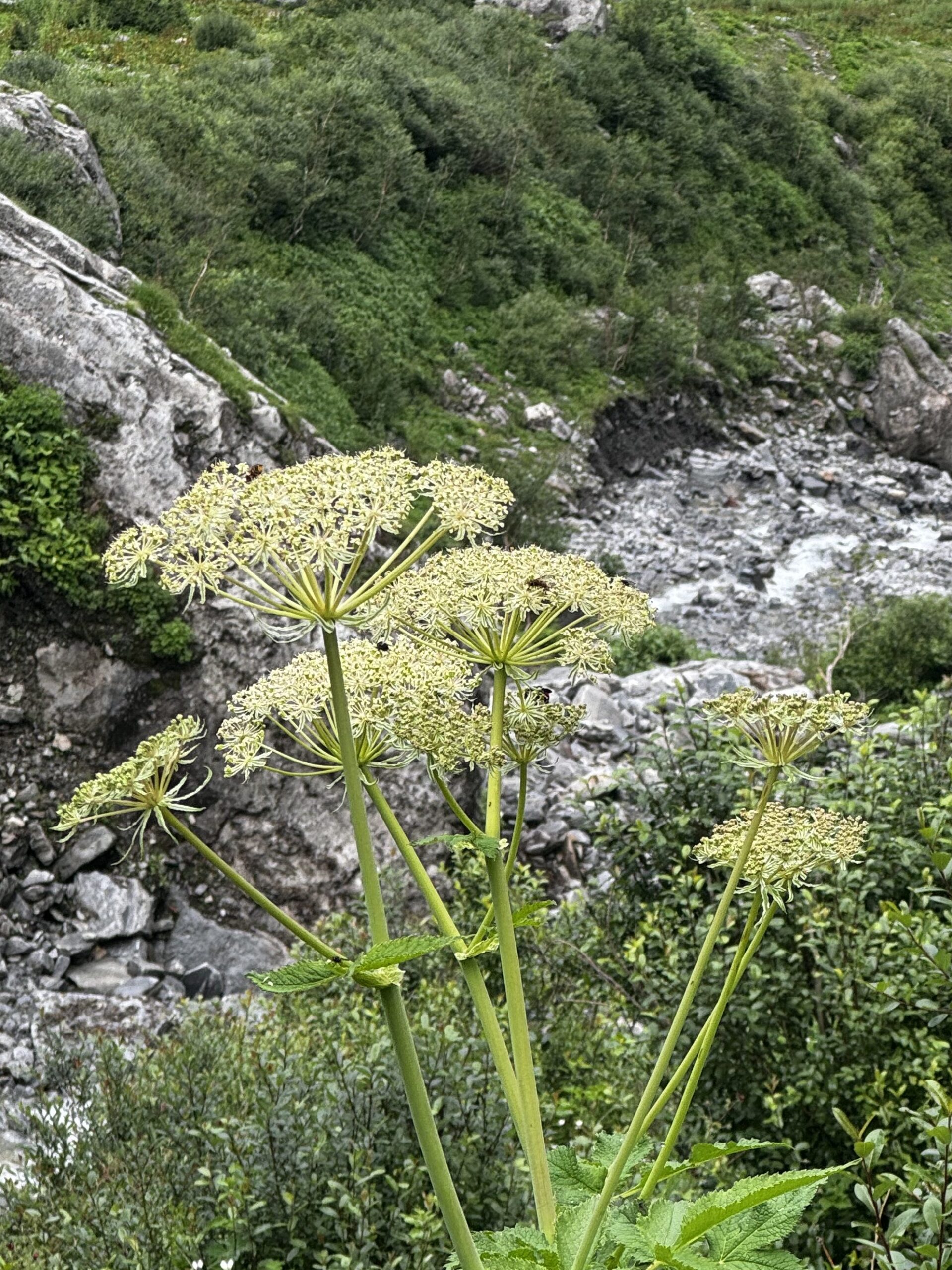
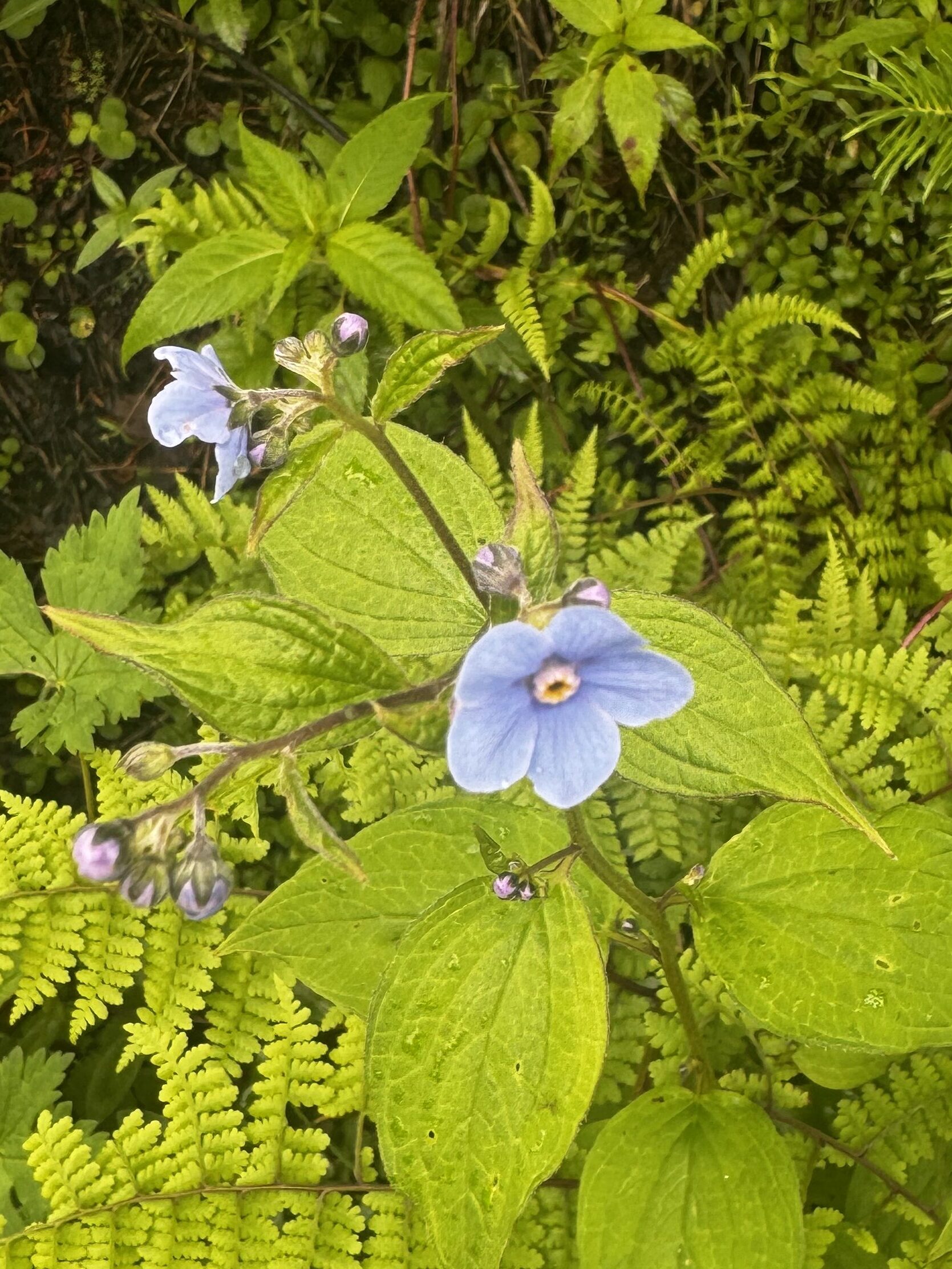
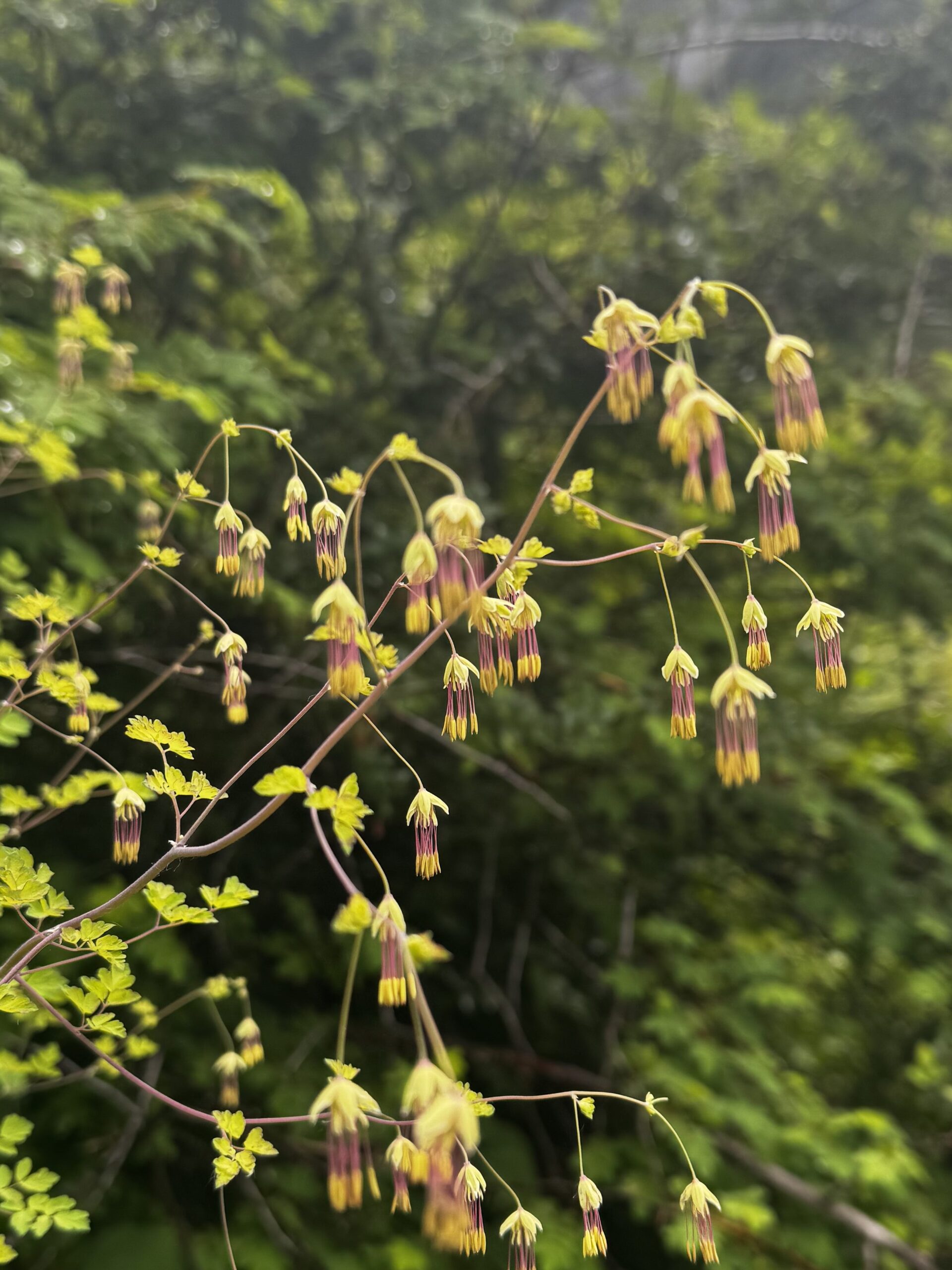
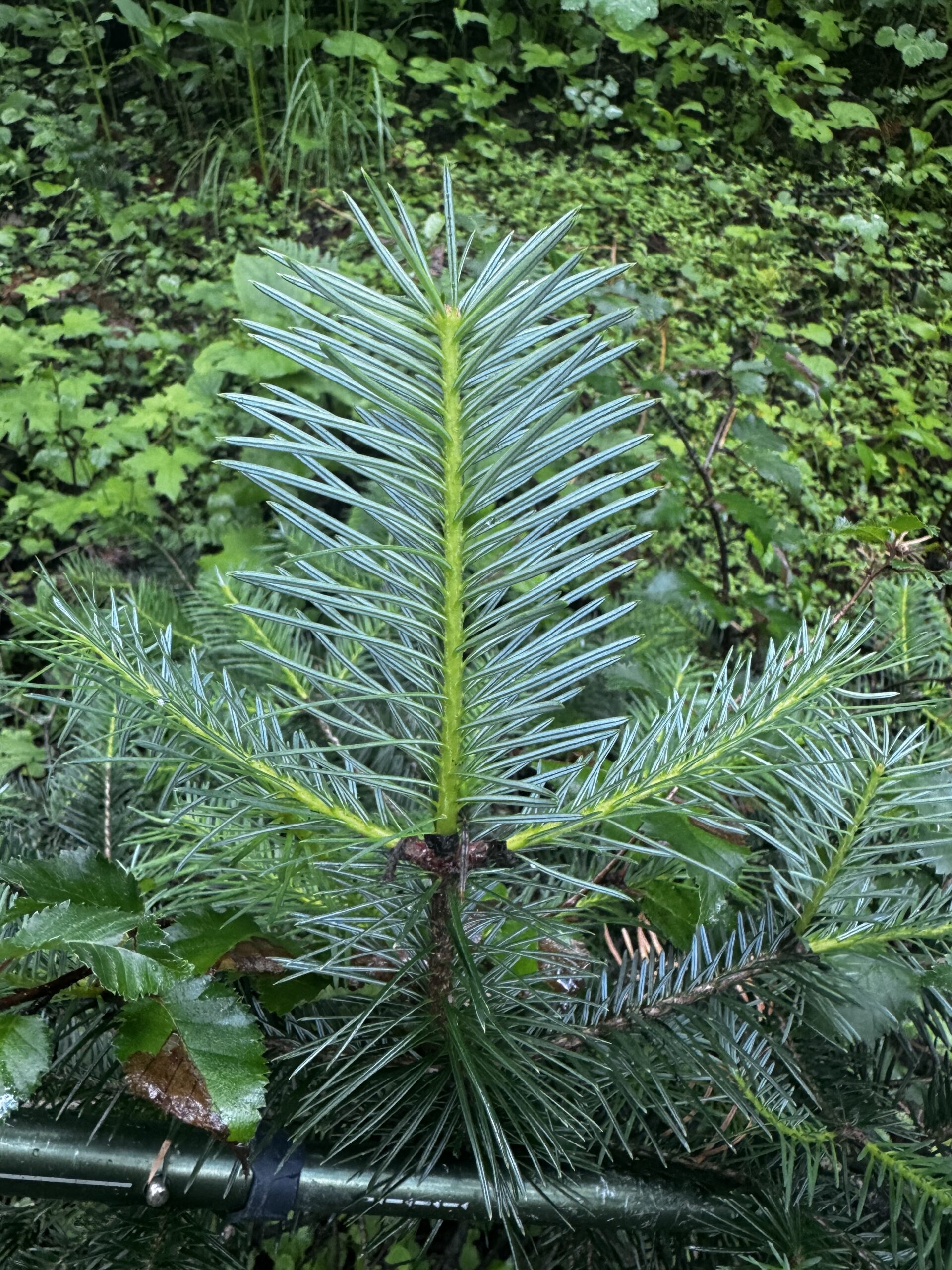
Everyone told us Valley of Flowers is a walk in the park. It isn’t. Sure, the final stretch—inside the actual valley—is a stroll.
But to reach there – You climb. And climb. And then climb some more.
We weren’t ready for that.



Add to that the crowd. Three trekking groups and dozens of pilgrims made quiet corners hard to find.
Which meant we drank less water. Which meant dehydration.
I completely overlooked the “4-litre hydration rule”, I usually follow religiously on high-altitude treks.
By the time we started heading back from the Valley, both of us were running on empty. Dehydrated, head pounding, and holding our pee far longer than any adult should. I was too uncomfortable to care about anything else—I just needed to find a spot to go. Somewhere, anywhere. Dignity had left the building.
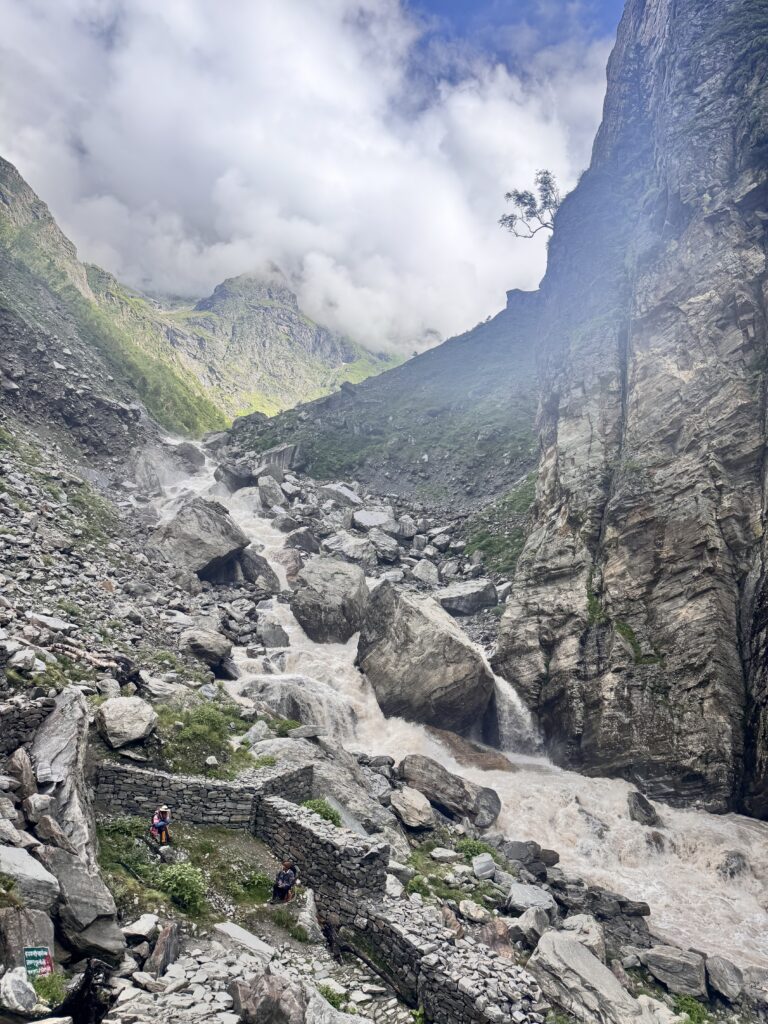
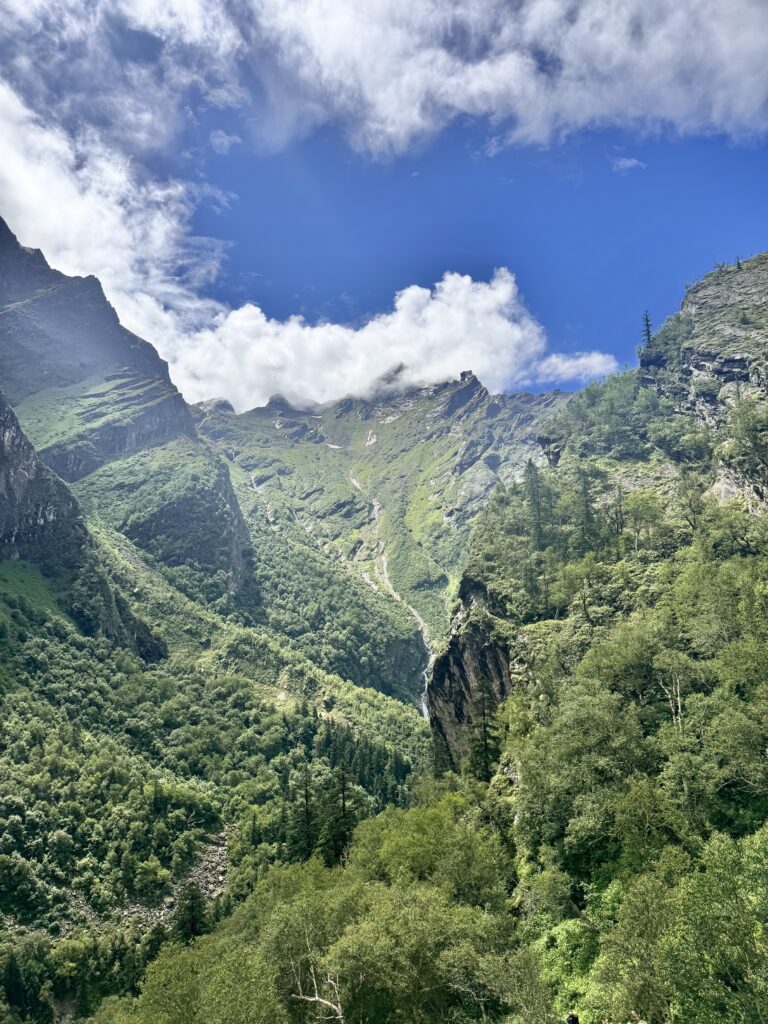
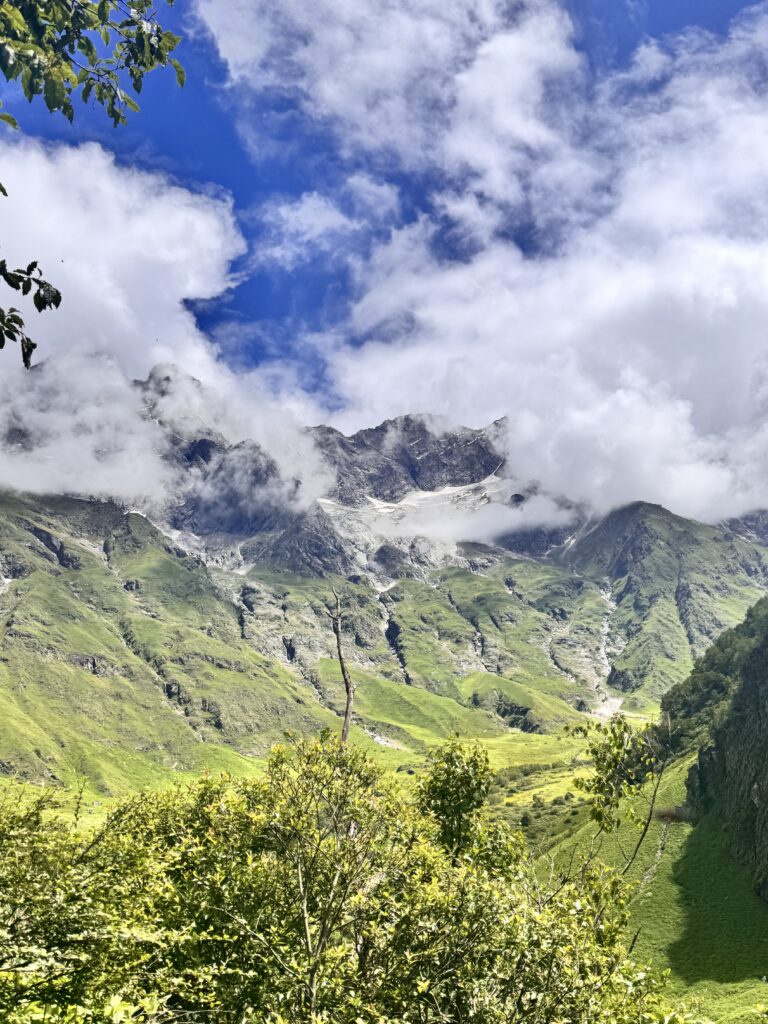
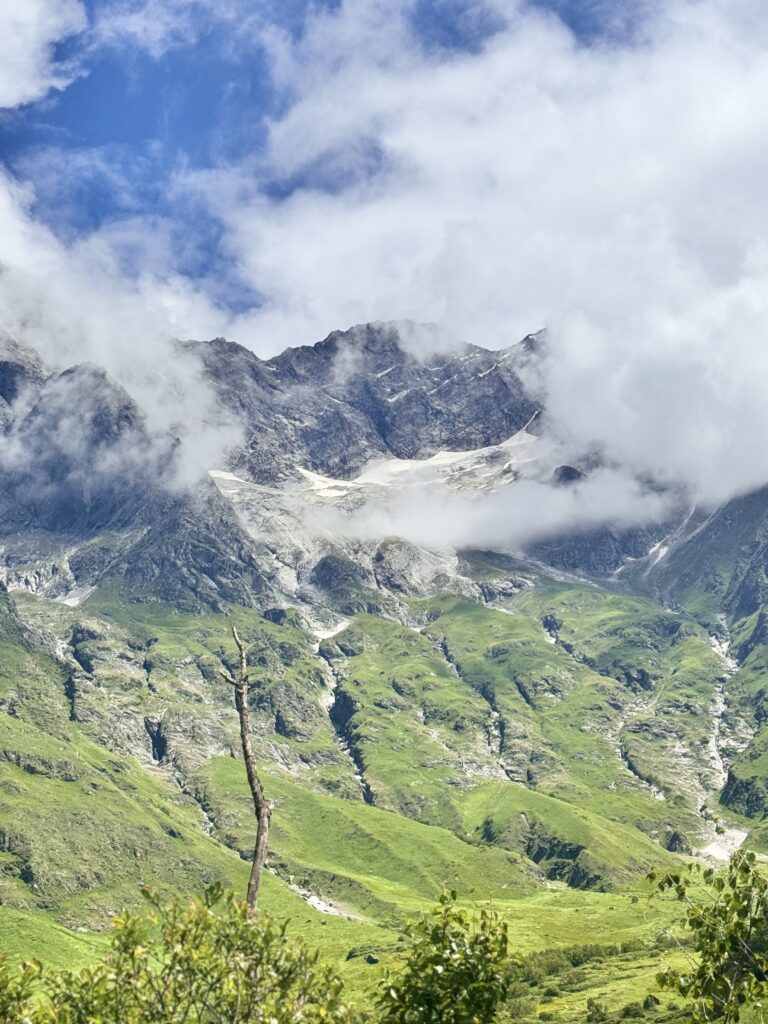
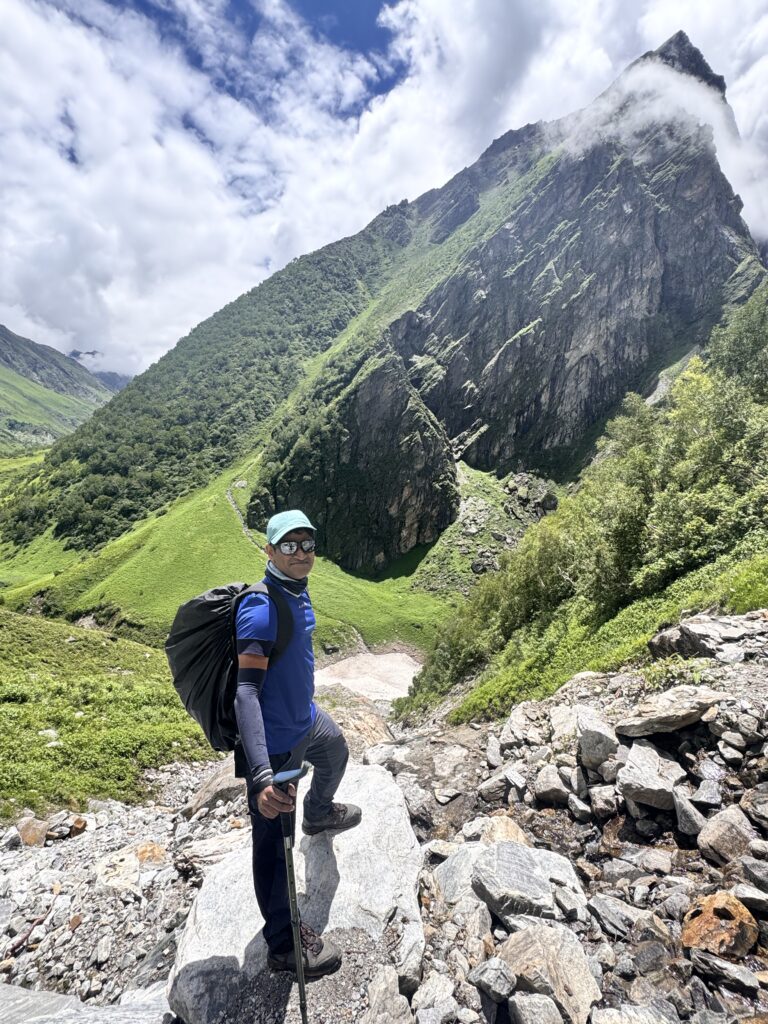
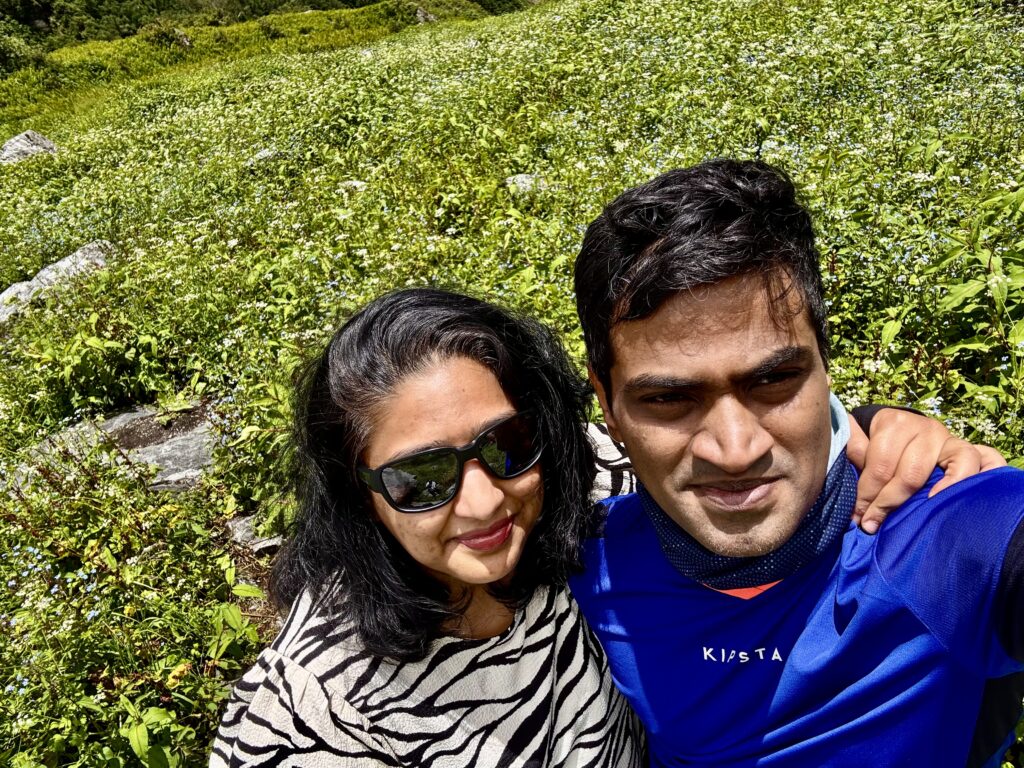
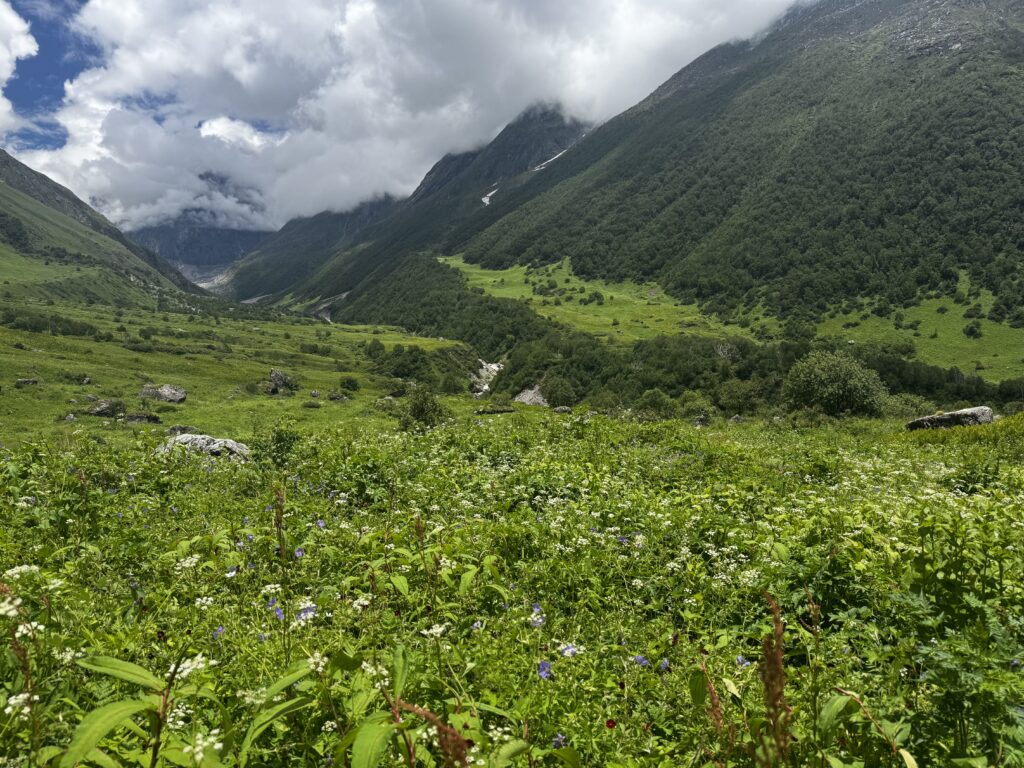
And then came the worry. I’ve had AMS before—I know the signs. And the scary part was, I hadn’t even thought about it for the Valley. My focus was entirely on Hemkund Sahib. I assumed Valley of Flowers would be mild, manageable. But by the time we were descending, I knew I had messed up—underestimated the altitude, ignored hydration, and didn’t give the day the respect it deserved.
Just to be sure, I walked up to a trek leader from one of the groups we had seen on the trail and asked if I could check my oxygen. He handed me his oximeter. It read 91. Not AMS, but not ideal either. Definitely not where I wanted to be the day before a 4,000-foot climb.
At one point, we snapped at each other. Nothing major—just two tired people who were both on edge. Later, when we sat down and finally talked, we realized we had both been craving a little space. I’m used to trekking solo, where I can go at my pace, stop when I want, and walk in silence. With Hari next to me the whole time, I didn’t get that—and he felt the same. We didn’t know how to say it in the moment, but just naming it after helped ease the tension.
Most of it was just exhaustion, dehydration, and the altitude catching up. Still, that number felt like a warning. If today was this hard, Hemkund would be another level. I knew I had to get it together. Or tomorrow wasn’t going to happen at all.
Day 3: The Climb That Took My Breath and Gave It Back
The climb to Hemkund Sahib started early, and so did the burn in my legs. I’ve always known that ascent isn’t my strength. It takes my body a while to find its rhythm, to stop resisting the climb. But once it does, I’m okay. Slow, steady, but consistent. That’s my style.
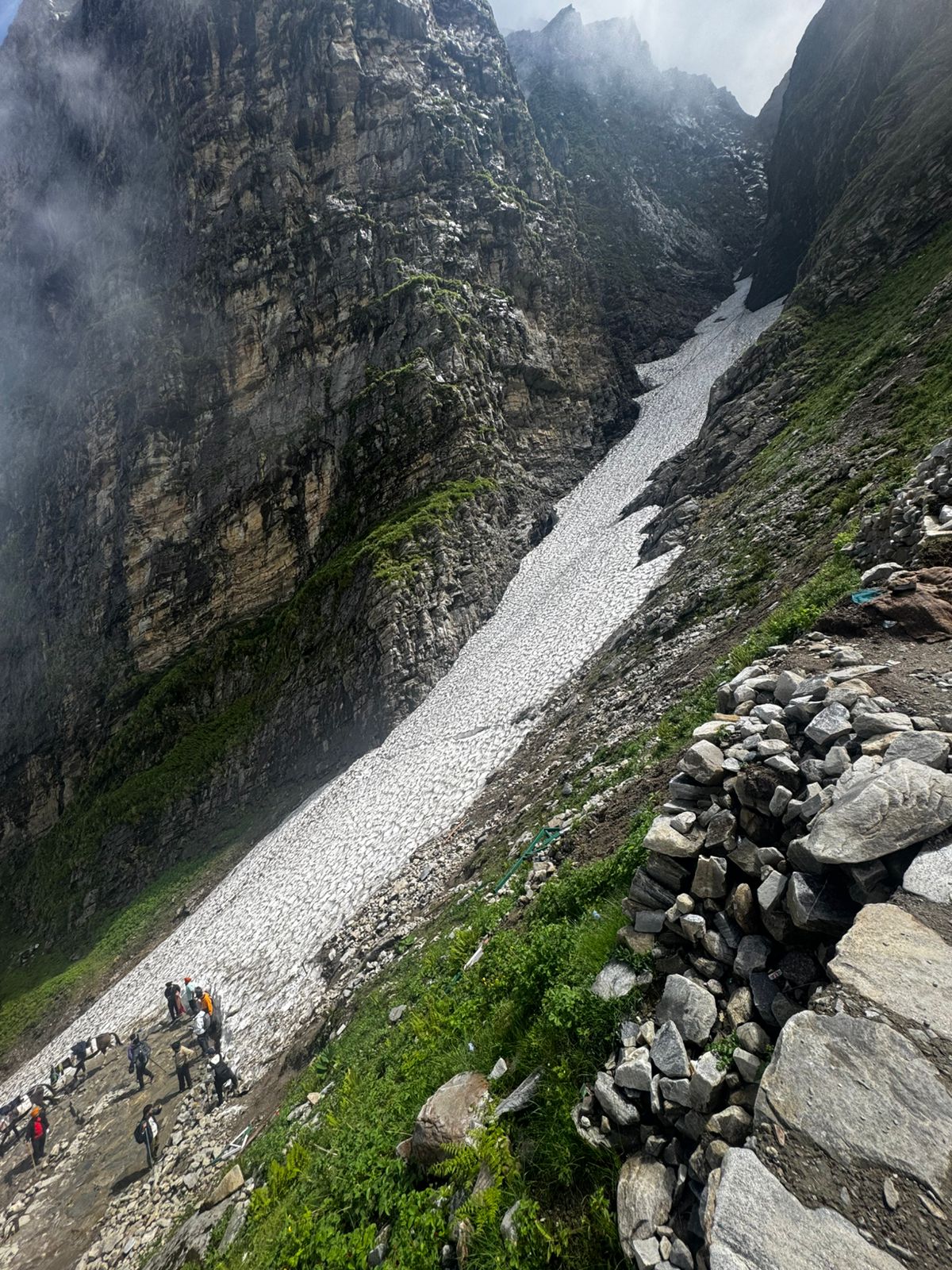
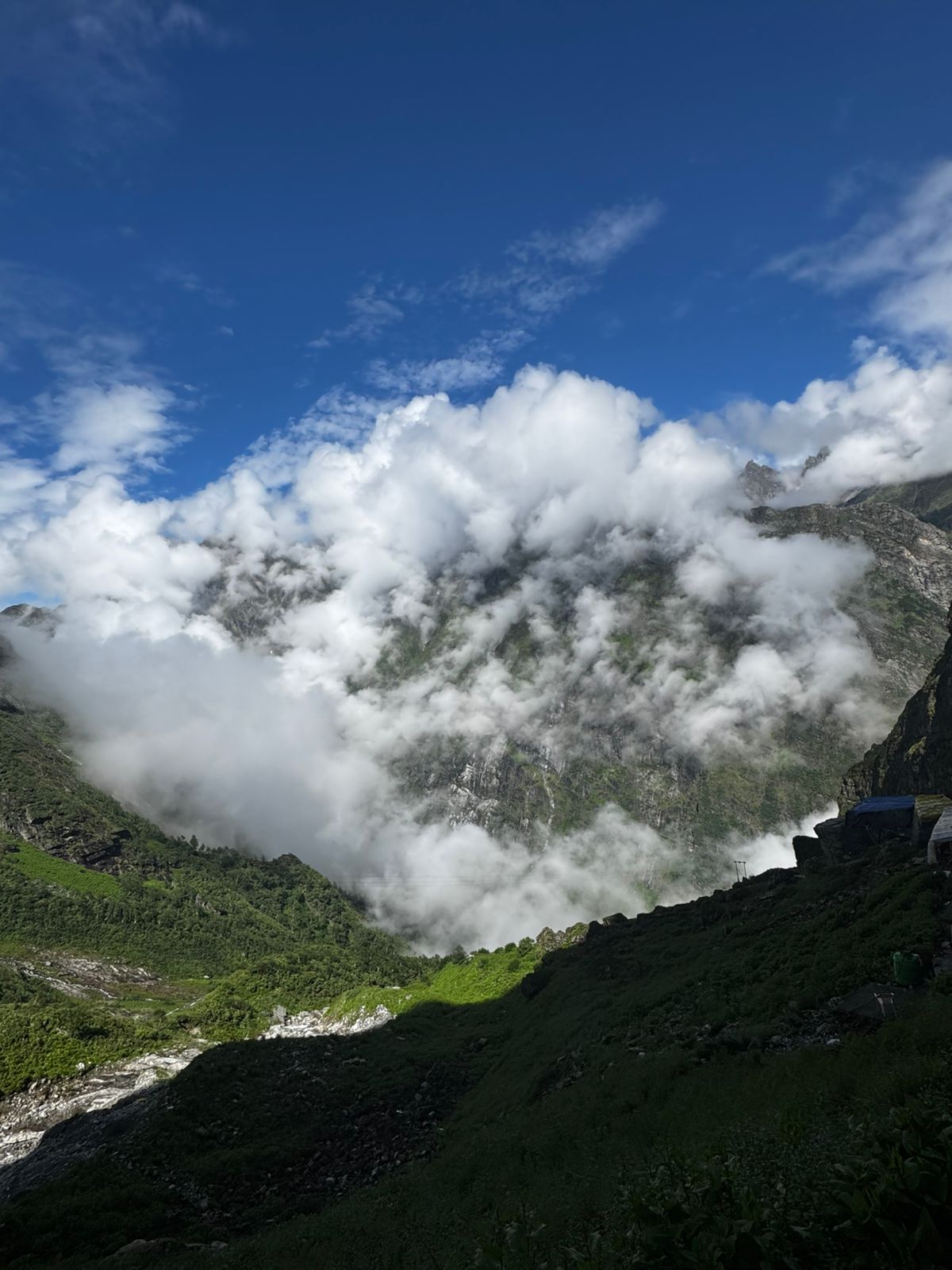
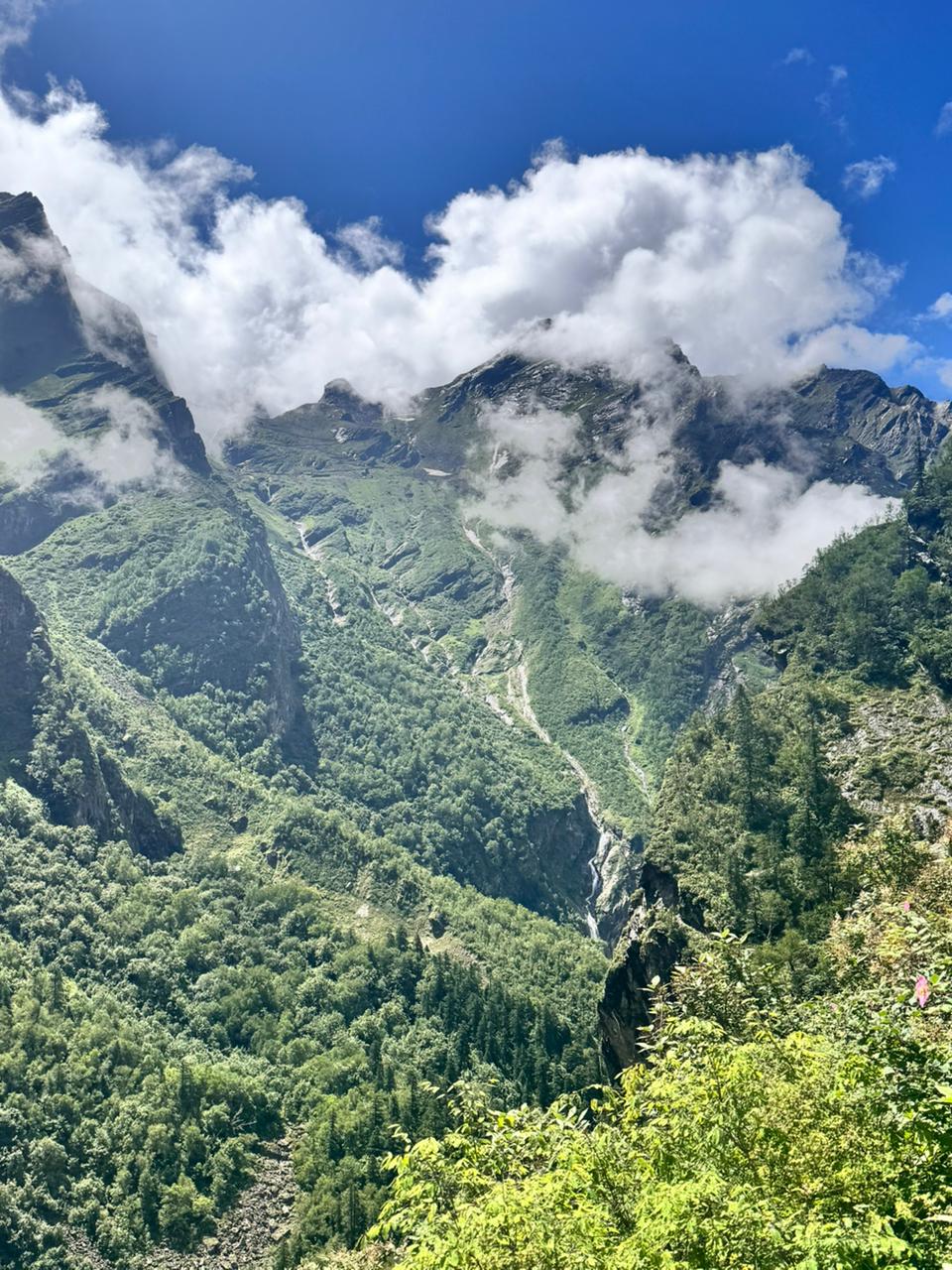
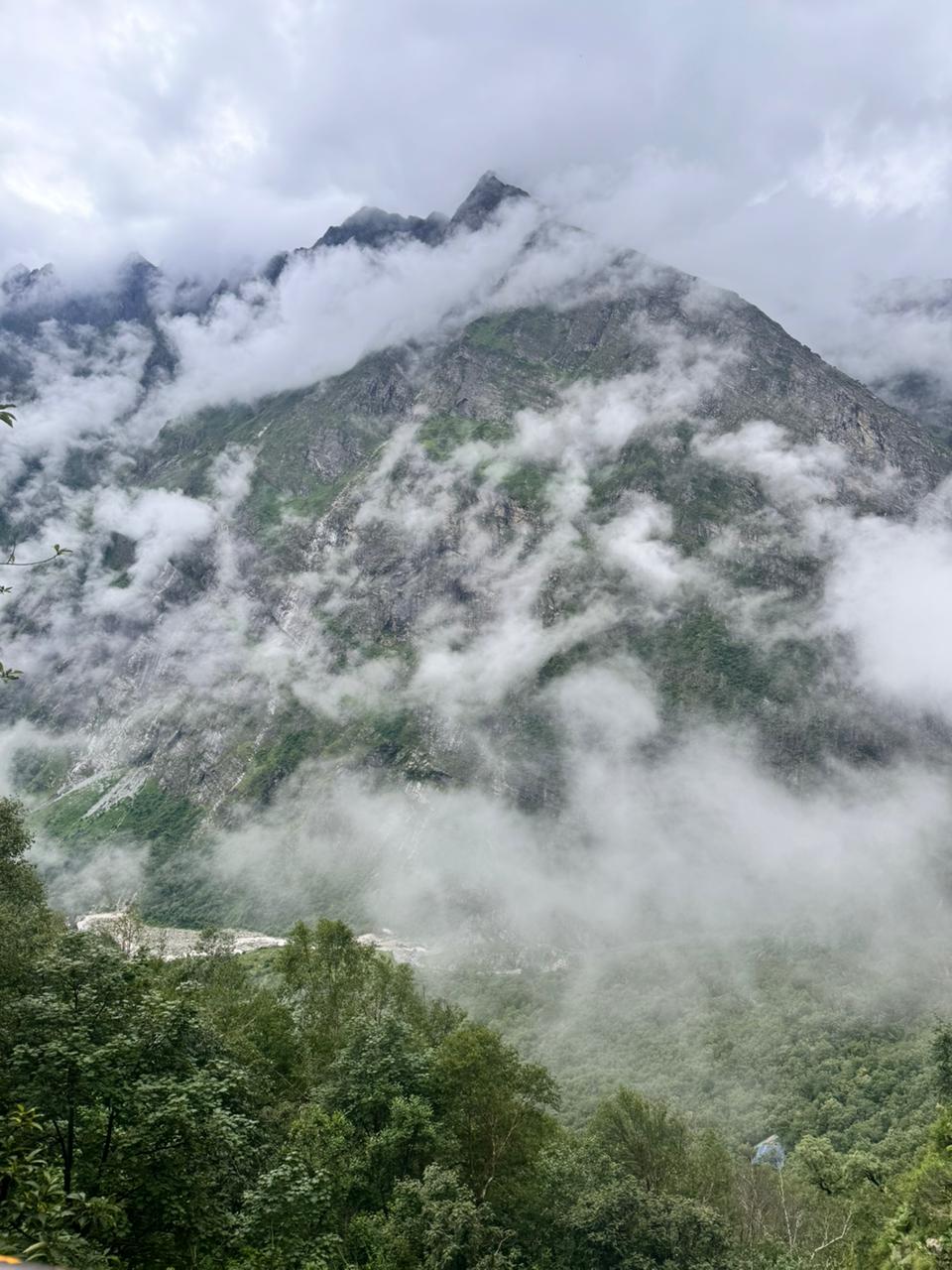
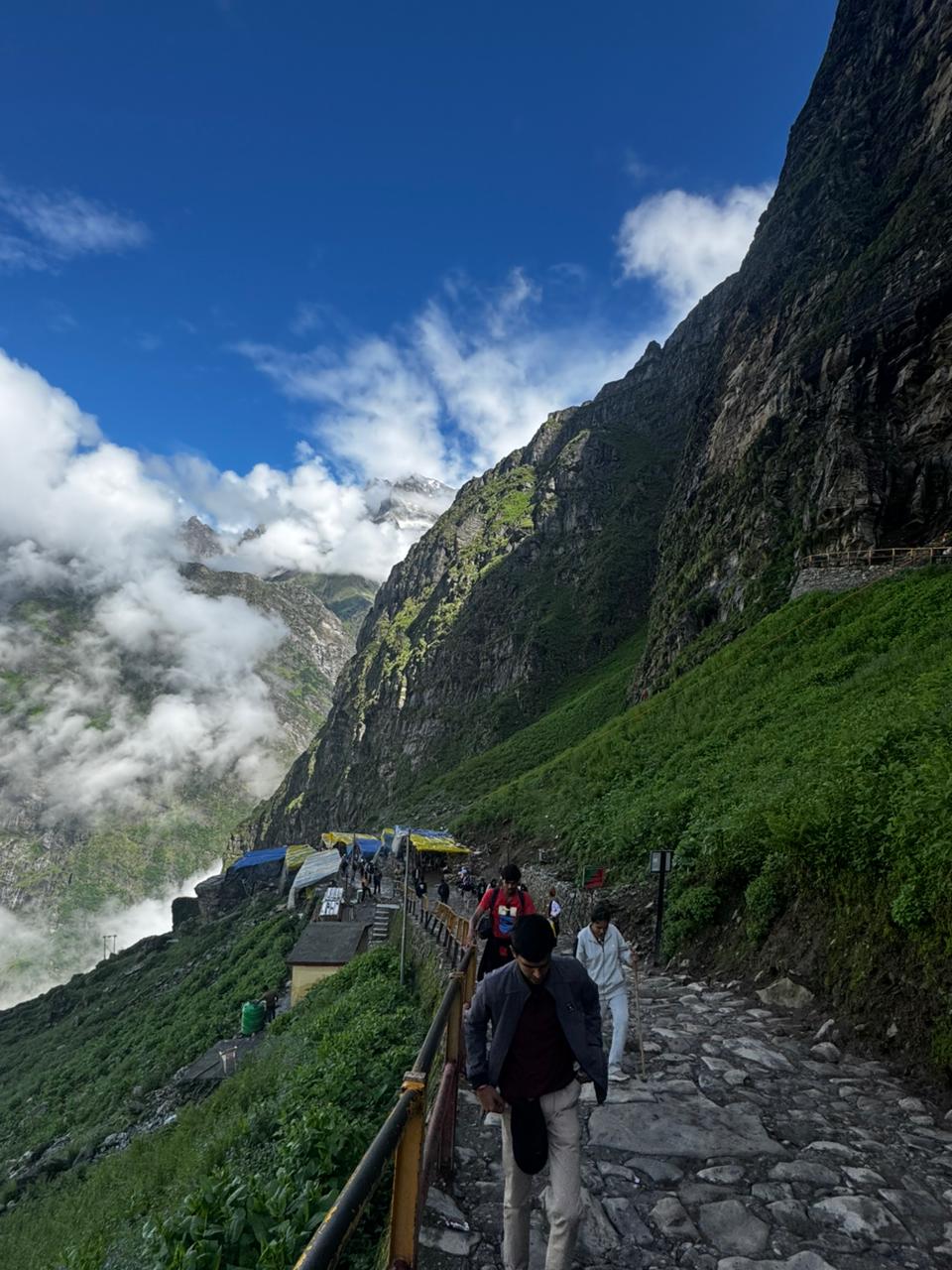
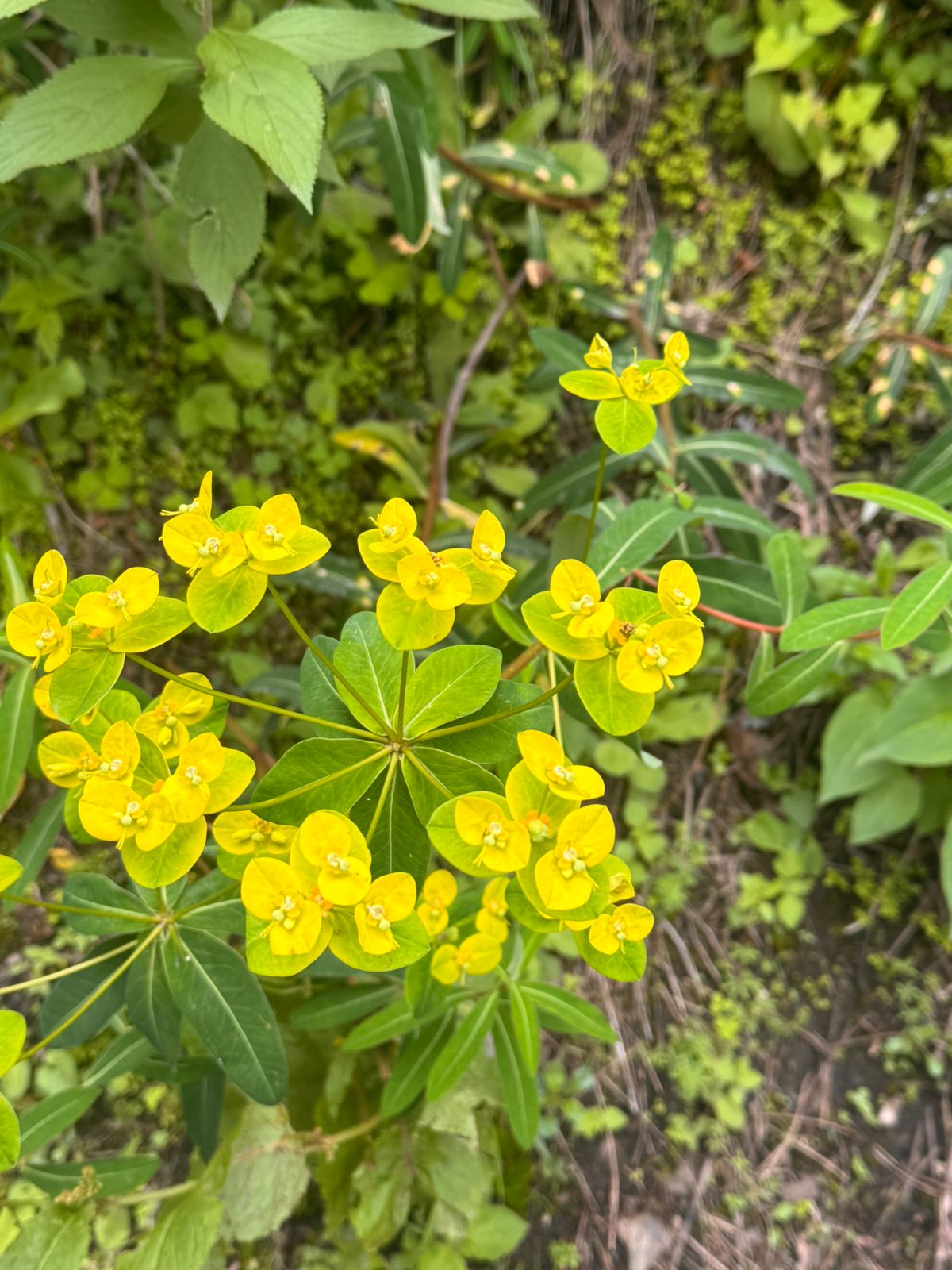
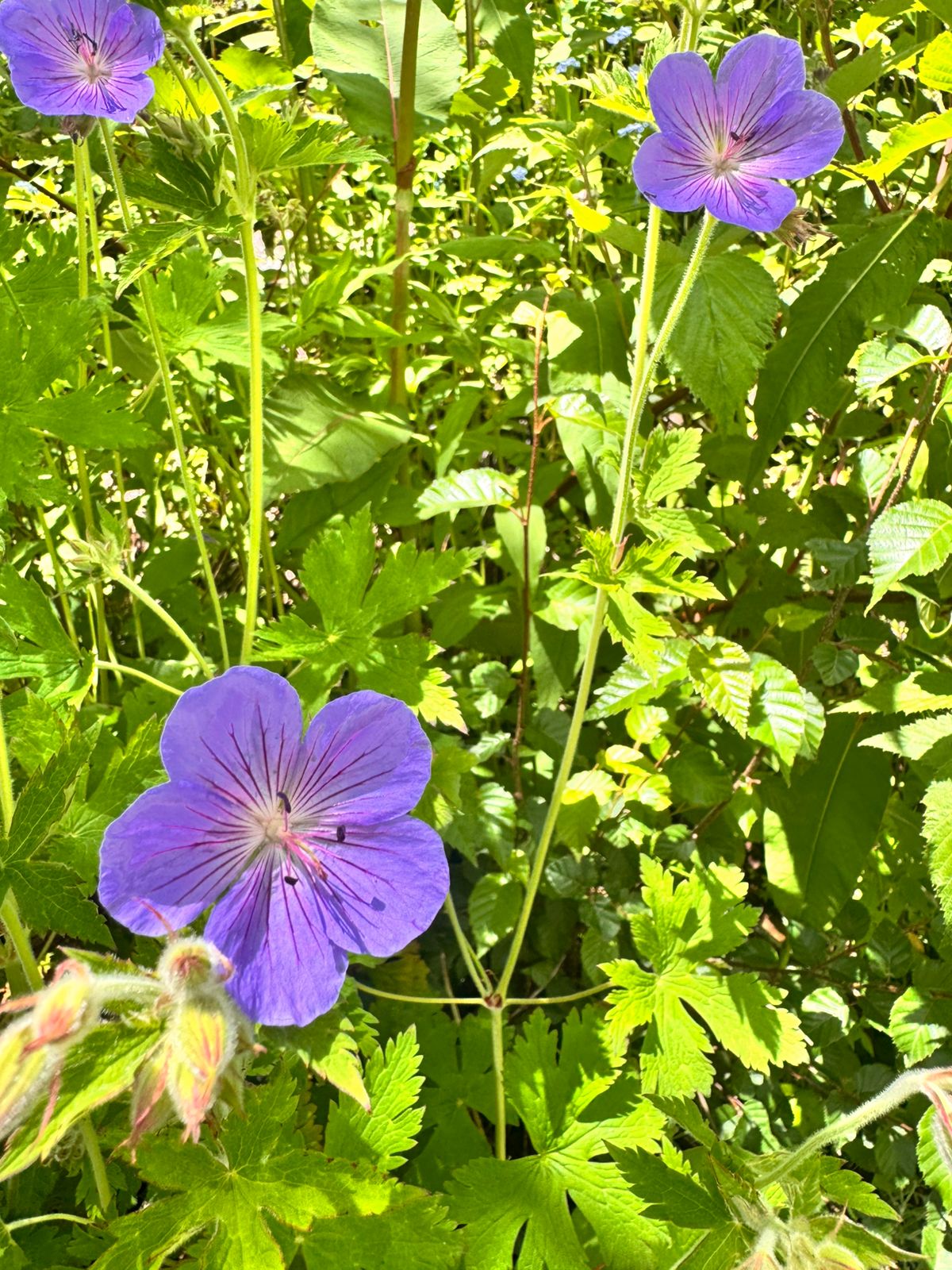
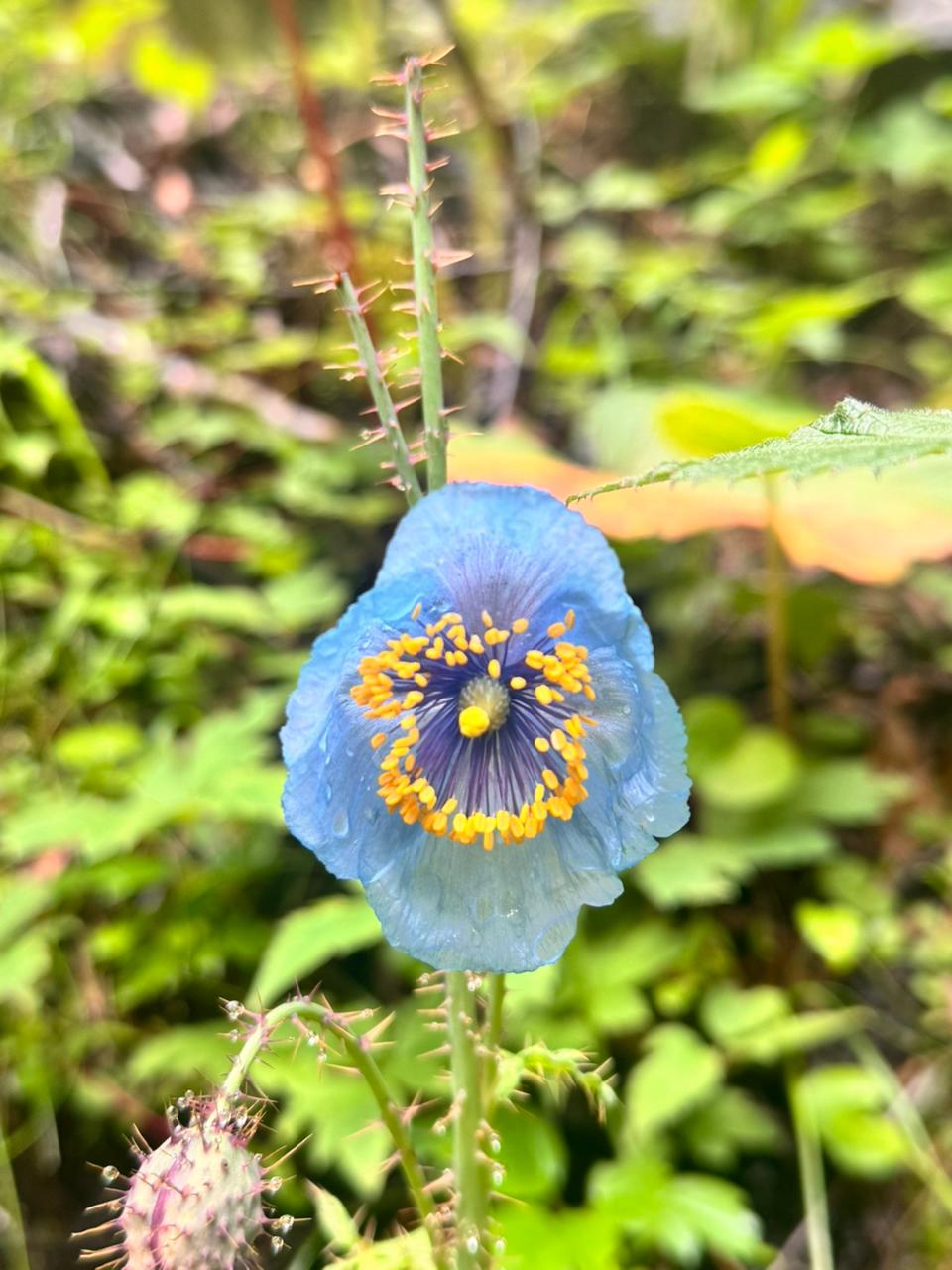
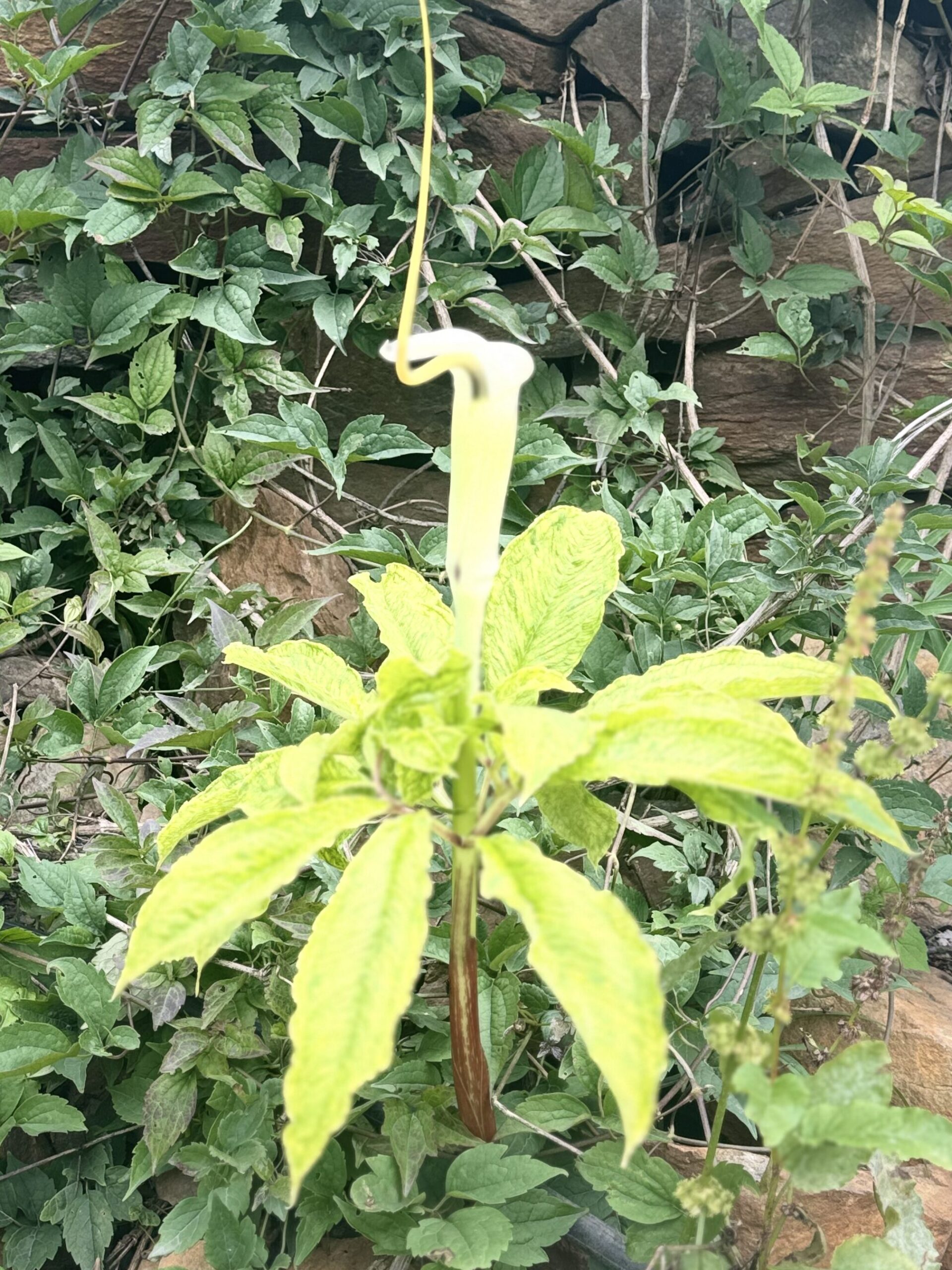
And what a climb it was. Steep, no doubt—but it had my heart. Big snow patches still clinging to the mountainsides. Peaks so close it felt like we could touch them. Mist swirling around us, rising and falling like waves. And then the wildflowers—oh, the wildflowers. The same ones we had seen in the Valley the day before, now growing in full glory along the trail. It felt like a little reminder that we were still in the valley, just higher, colder, and a little more out of breath.
Thankfully, there were chai tapris almost every 1.5 to 2 km, and surprisingly well-placed bathrooms. Just knowing a break was never too far made the trail feel more doable.
After about an hour of stiff climbing, the Hemkund Sahib Gurudwara finally came into view—white and quiet, sitting tall at 14,200 feet. Behind it, somewhere in the mist, was the lake.
But visibility was terrible. Fog had wrapped itself so thickly around the place that we could barely see a few steps ahead. I kept asking people where the lake was, and no one seemed to know. Hari looked at me, half amused, and said, “Try asking in Hindi?” I paused. “Wait…what’s lake in Hindi?” My brain wasn’t braining.
That’s when someone pointed and said, “Woh raha kund.” And it clicked—Hemkund. Of course. I laughed at myself. We were standing right beside it the whole time.
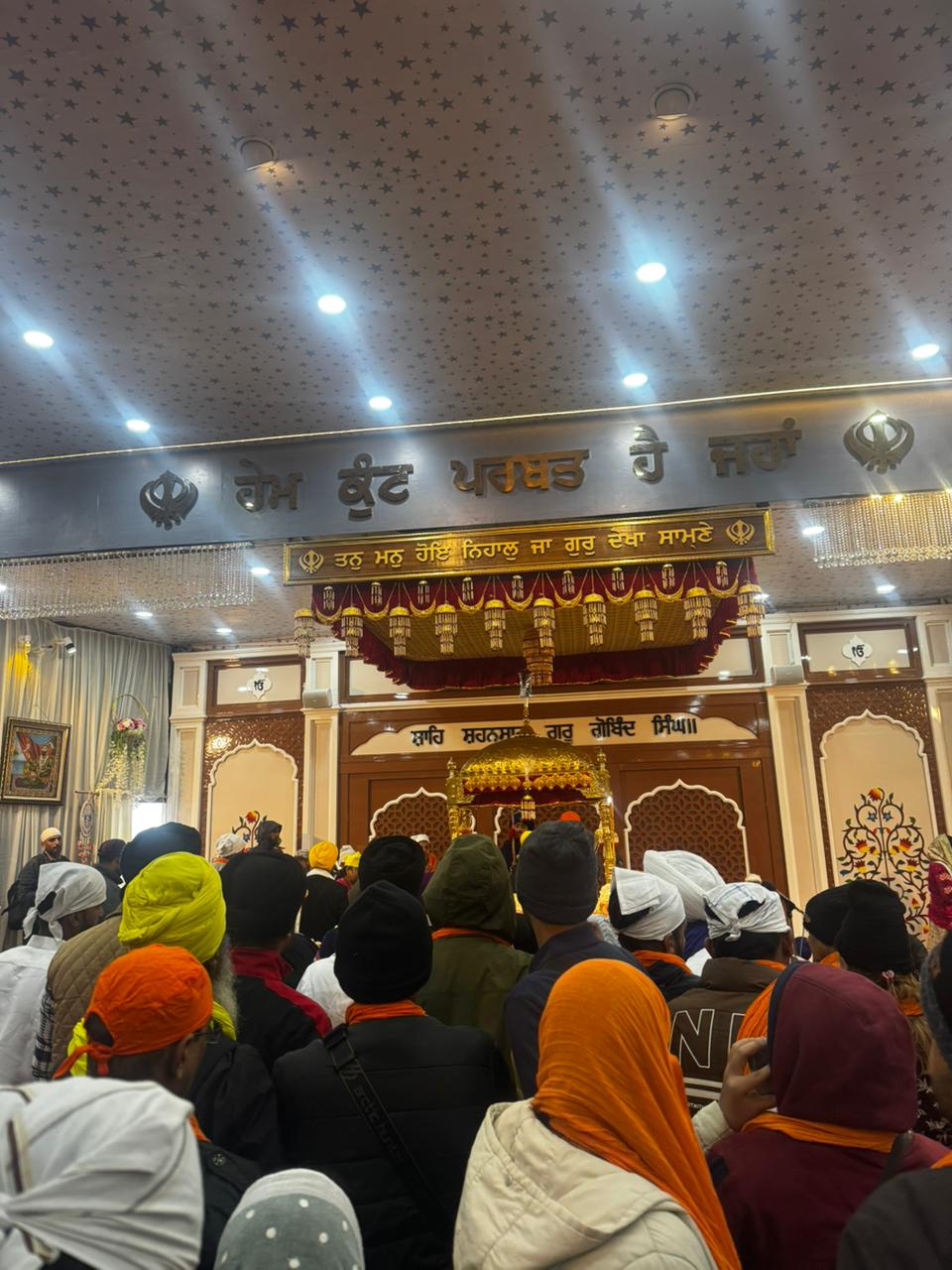
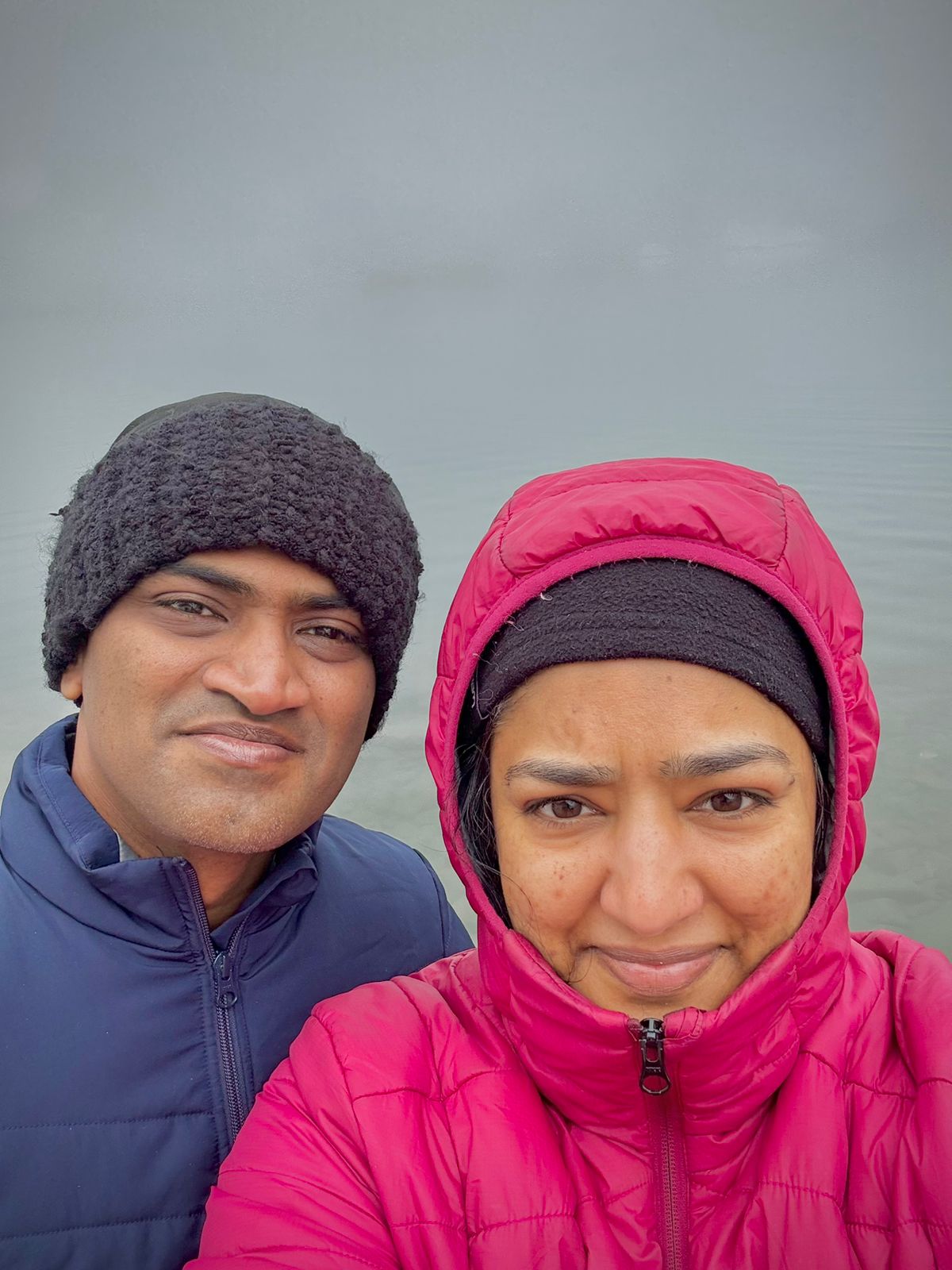

Visiting Hemkund Sahib with Hari felt like walking into a dream I never dared to say out loud. A secret wishlist that had been sitting quietly inside me for months. Last year, I had visited the Golden Temple alone. Back then, something in me wished I could share a spiritual moment like that with him. But I never told him. And now, here we were—bowing our heads together inside this mountain Gurudwara, standing in freezing fog, our hands cold but hearts full.
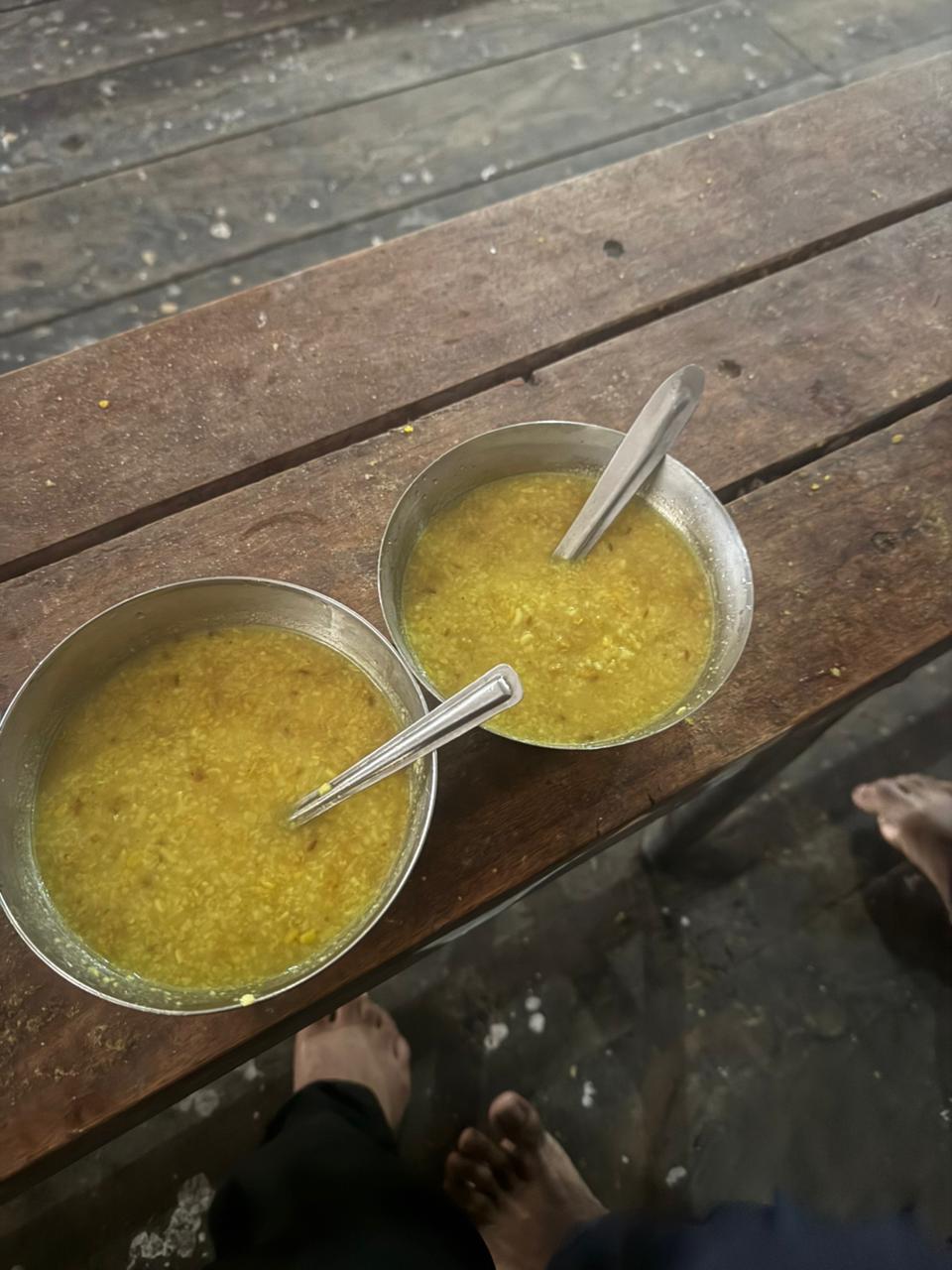
Then came the langar—hot khichdi, the best chai of our life, and warm, soft kada prasad that felt like it melted into my soul.
I stood there, hands open, eyes teary. I couldn’t say much.
I was just…grateful. For the trek. For my body. For him. For everything.
It wasn’t just a climb anymore. It was something else—something bigger, quieter, and deeply grounding.
A climb that took my breath away, yes—but also gave me back something I didn’t even know I needed.
The Descent That Broke Our Feet and Melted My Heart
We both descend well. That’s the one time I get to be a bit ahead of Hari. The first kilometre took 15 minutes, and we felt invincible. Until we didn’t.
Turns out, downhill on paved stone paths is its own kind of hell. Especially when they’re uneven and you’re in trail shoes not made for concrete. We were fast—but that came with a price. Towards the last 1.5 km, our feet were screaming. By the last half kilometre, we were walking like elderly penguins.
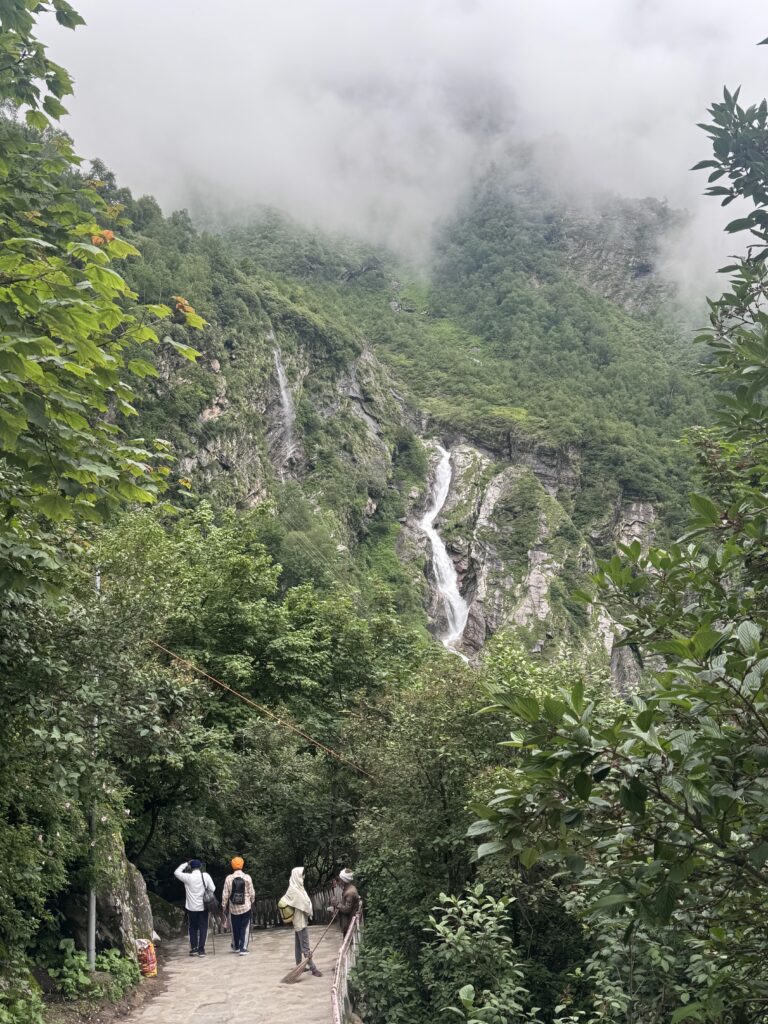
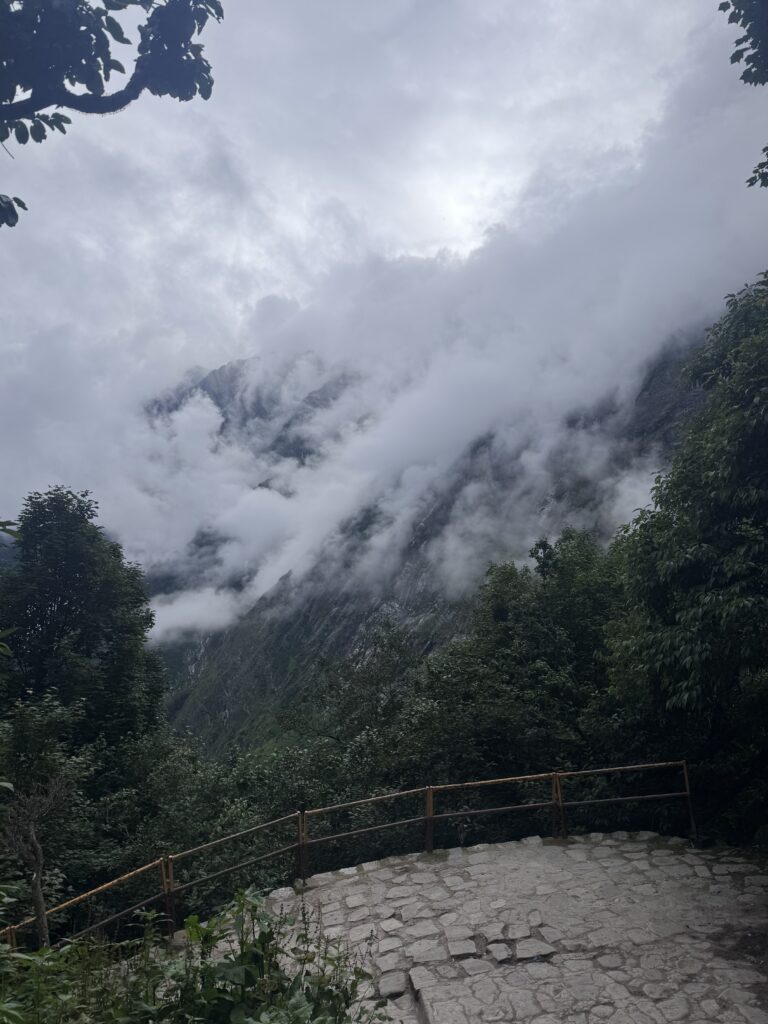
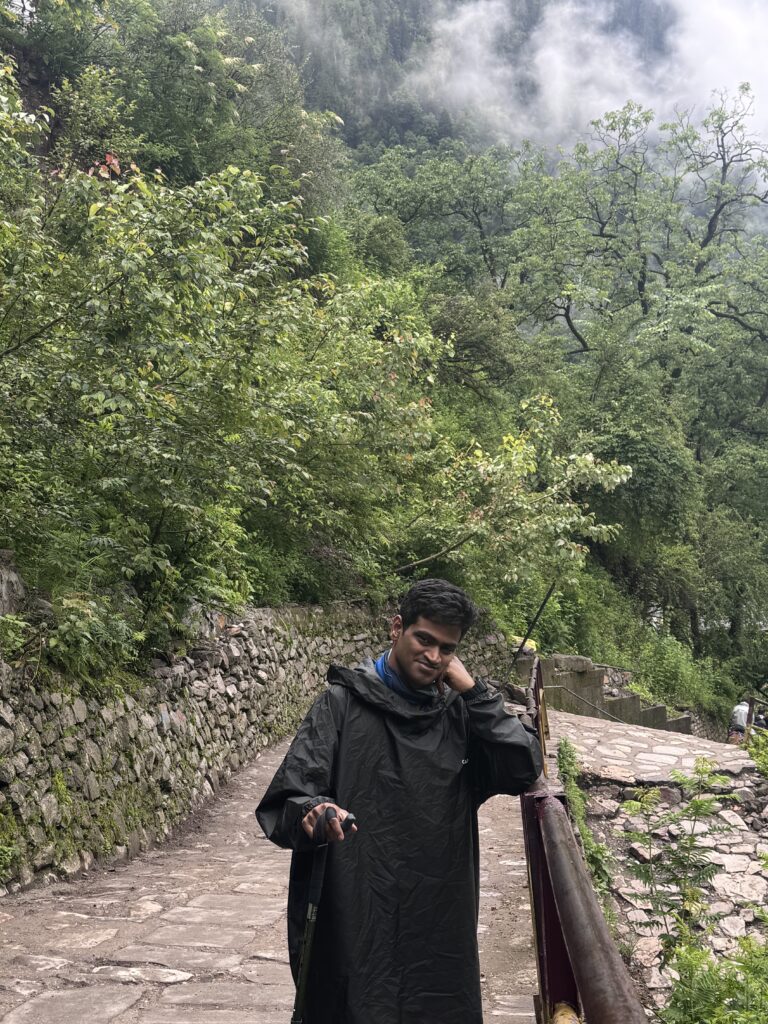
Nobody needed language. The path was filled with tired, crumpled pilgrims—most of whom only spoke Punjabi—but we all exchanged smiles. That quiet solidarity of shared suffering.
And then Hari said something I never expected.
He’s the last person on Earth to suggest a massage. But mid-descent, he turned to me and said, “Let’s get that massage as soon as we reach. There’s one right next to our homestay.”
I fell in love again.
It was an electric massage setup—not a spa. But it felt like divinity. I whispered prayers from my lungs, liver, and kidneys for the stranger relieving our aches.
We had samosa and chai right before the massage and crashed at 7 pm. I woke up at 10:20, stiff as a cardboard cutout, worried we’d missed dinner and were out of water. I hobbled to the homestay owner—who had shut the kitchen—and he kindly made me Maggi, refilled our bottles, and sold me two Bourbon biscuit packets. One for me. One for Hari, whenever he woke up.
As always, I didn’t sleep again. Trek insomnia, my old friend. I stayed awake from 10:30 pm to 6 am. Tired. But content.
The Real Trek
Valley of Flowers had been on my mind for years. But when we finally got there, it didn’t move me the way I thought it would. The trail was beautiful, no doubt—but between the crowd, the headache, and the rush, something felt off. It was scenic, just not soulful.
Hemkund Sahib, on the other hand, was something else entirely. Cold, steep, fog-covered—and yet, quietly powerful. There was something sacred about arriving at that height, soaked in sweat, barely able to see a few feet ahead, and standing side by side with Hari in silence. Bowing our heads together inside that mountain Gurudwara felt personal in a way I didn’t expect.
And somewhere along the way, what we had pulled off began to sink in. This was Hari’s first Himalayan trek. My eighth. And we did it entirely on our own—no guides, no fixed itinerary, just two people figuring it out as we went. We carried our own bags, made our own calls, and worked through every stretch of tiredness and uncertainty together.
It wasn’t smooth. It wasn’t flawless. But it was ours. That’s what made it feel special.
The mountains didn’t care how many treks we’d done or how well we planned. But walking this trail with him, doing it our way—that made it feel complete in a different way.
Not the best trek I’ve ever done. Not the easiest either.
But easily one of the most meaningful.
Because this time, I wasn’t just showing up to the mountains. I was sharing them.
😁
Mai mano dub si gayi hu Vasu isame .The way you explain it .Whenever I read your blogs I can visualise everything you are sharing .You shared so deeply the divine feeling of Hemkund Sahib .So happy for you .keep writing .Love to read your blogs .And being your Maa Proud on you .
Thanks maa
😊