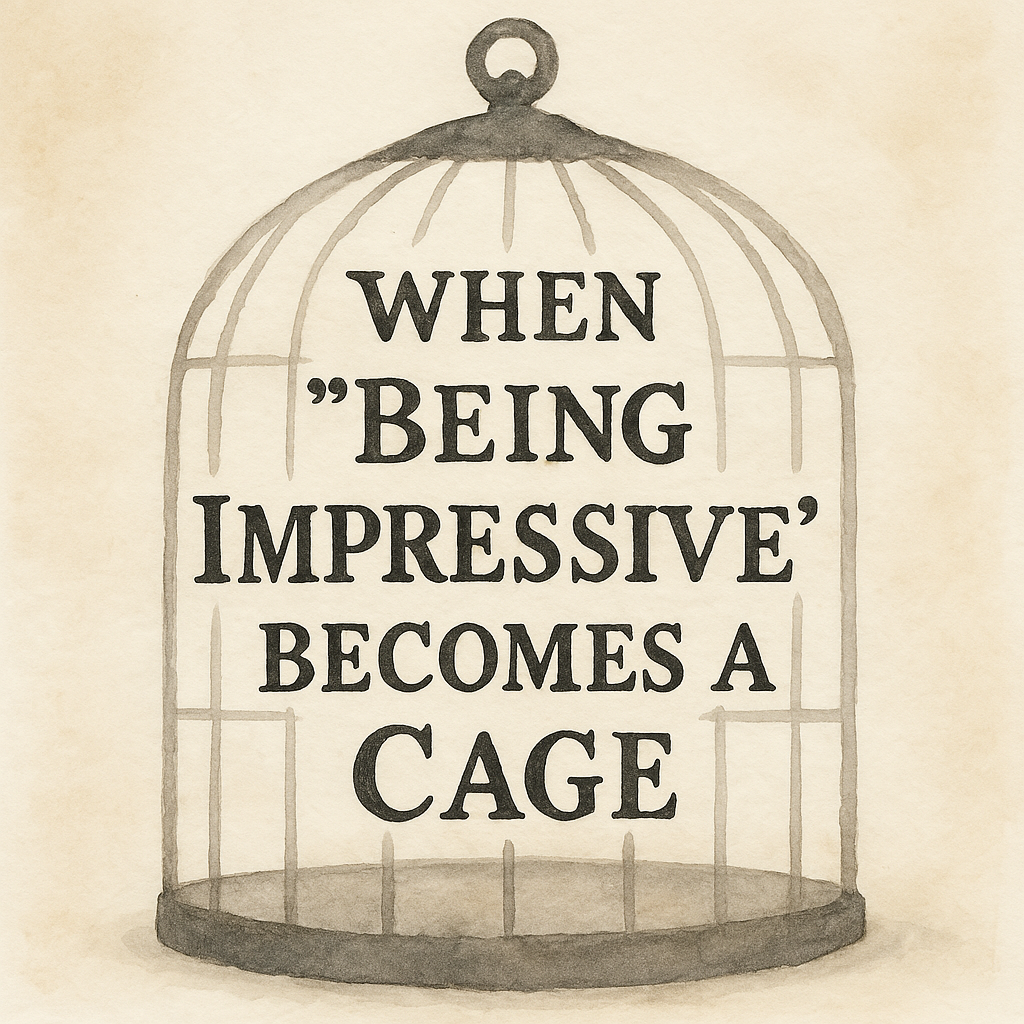
I never thought doing things I genuinely loved—things that brought me joy—could leave me feeling so hollow.
That rush of reaching the summit, the high of ticking off goals, the discipline of sticking to a plan—it made me feel powerful. Unstoppable. Like I was building a life full of purpose. I was doing hard things. And that became my identity.
But somewhere along the way, it stopped feeling like joy and started feeling like performance. If I wasn’t achieving something remarkable, it felt like I didn’t know who I was. Slowing down didn’t just feel lazy—it felt threatening.
I got good at hiding what was underneath. The stress and exhaustion were easy to push through. But the quieter ache—the feeling that I was only valuable when I was doing something extraordinary—that was harder to admit. Even to myself.
It creeps up slowly, this identity trap.
A little more work.
One more goal.
A tougher challenge.
One more trek.
It all looks like drive. But underneath it, I was using the doing to outrun what I didn’t want to feel.
The grief I hadn’t processed.
The relationships I had neglected.
The stillness that made me uncomfortable.
For a while, it worked.
But there comes a point where the mask gets heavy. When every new goal starts to feel like an obligation, not a desire. I started to notice it—how I would commit to things just to prove I could, not because I wanted to. How I’d skip rest because being tired felt better than feeling sad.
I began to ask myself if I was still doing things for me, or if I had just become someone people expected to see doing hard things. The praise was addicting. The admiration fed the part of me that still believed I had to earn love. But it also kept me from softness—from real connection.
I don’t want that kind of strength anymore.
Not the kind that isolates.
Not the kind that performs while falling apart quietly backstage.
There’s a different kind of resilience I’m learning now. It doesn’t look impressive on paper.
It looks like saying no to one more goal so I can have a slow morning.
It looks like being present at dinner without mentally planning the next achievement.
It looks like letting myself rest without guilt. Cry without explanation. Exist without proving anything.
I’m learning to separate achievement from identity. To remember that who I am isn’t defined by what I do, but by how I show up when there’s nothing to win. I want to be remembered for how I made people feel, not just what I accomplished.
Strong mental health, to me, means feeling enough even when I’m still. Even when I’m not the high achiever. Even when I’m just… me.
Some days, I get it. Some days, I don’t. But I’m no longer trying to outrun the discomfort. And that feels like progress.
Leave a Reply