She said it so simply I almost missed it.
My grandmother was in her late eighties, sitting in the same chair she’d sat in for 20 years. I asked her whether she’d ever forgiven her sister — the one she hadn’t spoken to in thirty-one years, over something involving a piece of land and a phone call in 1974 that neither of them disclosed to anyone in the family, ever. She looked out of the window for a moment and said,
“I don’t think either of us ever really let it go. We just… didn’t know how to go back.”
That was it. That was the whole conversation.
She died a few months later. Her sister had died a decade before that. Whatever that woman carried in her body across thirty-one years of silence, I’ll never know. But sitting with my grandmother’s words since then, I’ve come to believe she carried something. Something that didn’t look like grief or guilt on the outside, but was doing its work regardless.
The reason I keep returning to that afternoon is that it answered a question I hadn’t thought to ask yet — one I only found through other people’s pain, slowly.
Why do the people who hurt us seem completely fine?
The ex who moved on fast and looks happy.
The parent who was unkind and now acts baffled that you’re still bothered by it.
The friend who disappeared during the hardest year of your life and never explained why.
From where you’re standing, every one of them is walking around in decent weather, living their lives, while you’re the one still absorbing what happened. It looks like they got away with it.
They didn’t. The bill just travels differently than we expect.
They haven’t escaped anything. You were simply never given access to the damage.
A plumber once said something to me in a damp house in Ireland that I’ve never forgotten.
The leaks that actually destroy a house, he said, are never the visible ones. They’re the small ones inside the walls — running for months, softening the timber, rotting the joists, while the kitchen looks perfectly fine and the kettle still works. Then one evening, a ceiling comes down on someone’s dinner party.
“A house never forgets a leak,” he told me, with the cheerfulness of a man preparing to hand over a large bill. “It just takes a while to show up in a form the owner can read.“
The mind is exactly like that house. Everyone who has hurt someone and never genuinely reckoned with it has a slow leak running somewhere.
The conscious mind is a gifted publicist —
it writes a convincing account of why the behaviour was complicated, understandable, the other person’s fault really when you look at the full picture.
It polishes that account until the author has almost forgotten they wrote it.
The body keeps the original draft. And it collects, quietly, in its own currency —
the sleep that goes strange at 3am for no articulable reason,
the new relationship that keeps breaking in the same place,
the drink poured slightly earlier than it was two summers ago,
the low dull shame that follows a person into rooms where everything looks fine and dims the lights by a couple of stops.
And none of it looks like a consequence, which is exactly why it goes unrecognised.
The bill always comes. It just doesn’t look like a bill.
Carl Jung described this as the shadow — the accumulated weight of everything in ourselves we’d rather not examine.
The small cruelties. The laziness. The moment we chose our own comfort over someone else’s and then immediately constructed a story that made us the reasonable party.
Jung’s point, after decades of clinical work, was that the shadow doesn’t dissolve when ignored. It compounds. It starts appearing in how we speak to people when we’re tired, in the relationships that keep failing in familiar places, in the choices that feel urgent and make no rational sense.
People who never look at any of this in themselves tend to keep rebuilding the same situation with new people and be genuinely confused by the wreckage each time.
The thing I find hardest to admit — and I mean that, it took me a long time to see it clearly — is that most of us have also been the person someone else is watching and assuming got away with something.
I have. You probably have too.
Somewhere in your past is a person who thinks you walked away unbothered from something that left them winded. And you probably have a very elegant account of why yours was different, why the context made it complicated, why they weren’t exactly blameless themselves.
The watching — the checking of their profile, the leading questions to mutual friends — is almost never really a justice question. It’s a wound that’s harder to name. The wound is that if they’re fine, what happened between you was forgettable to them. That’s a crueler thought than the betrayal itself, and the mind avoids it by waiting for a photograph that proves otherwise.
The photograph never comes. The receipt lives inside them, running on a timeline you weren’t given, in a body that won’t be reporting back.
My grandmother’s sister was carrying her half of 1974 in her own bones across those thirty-one years. I’m as certain of that as I am of anything I can’t prove. They each paid privately, eleven miles apart, across a distance that neither of them closed.
What I remember most clearly from that afternoon is not what my grandmother said. It’s the way she looked out the window first, the small pause before she spoke, like she was checking on something she hadn’t visited in a while.
She wasn’t sad, exactly. She was just — still paying.
And I think that’s the thing worth holding. The people who hurt you are not living consequence-free lives. They’re living in houses with slow leaks, on timelines you don’t have access to, carrying weight that doesn’t show up in photographs.
You don’t need to watch for it. It’s already happening.
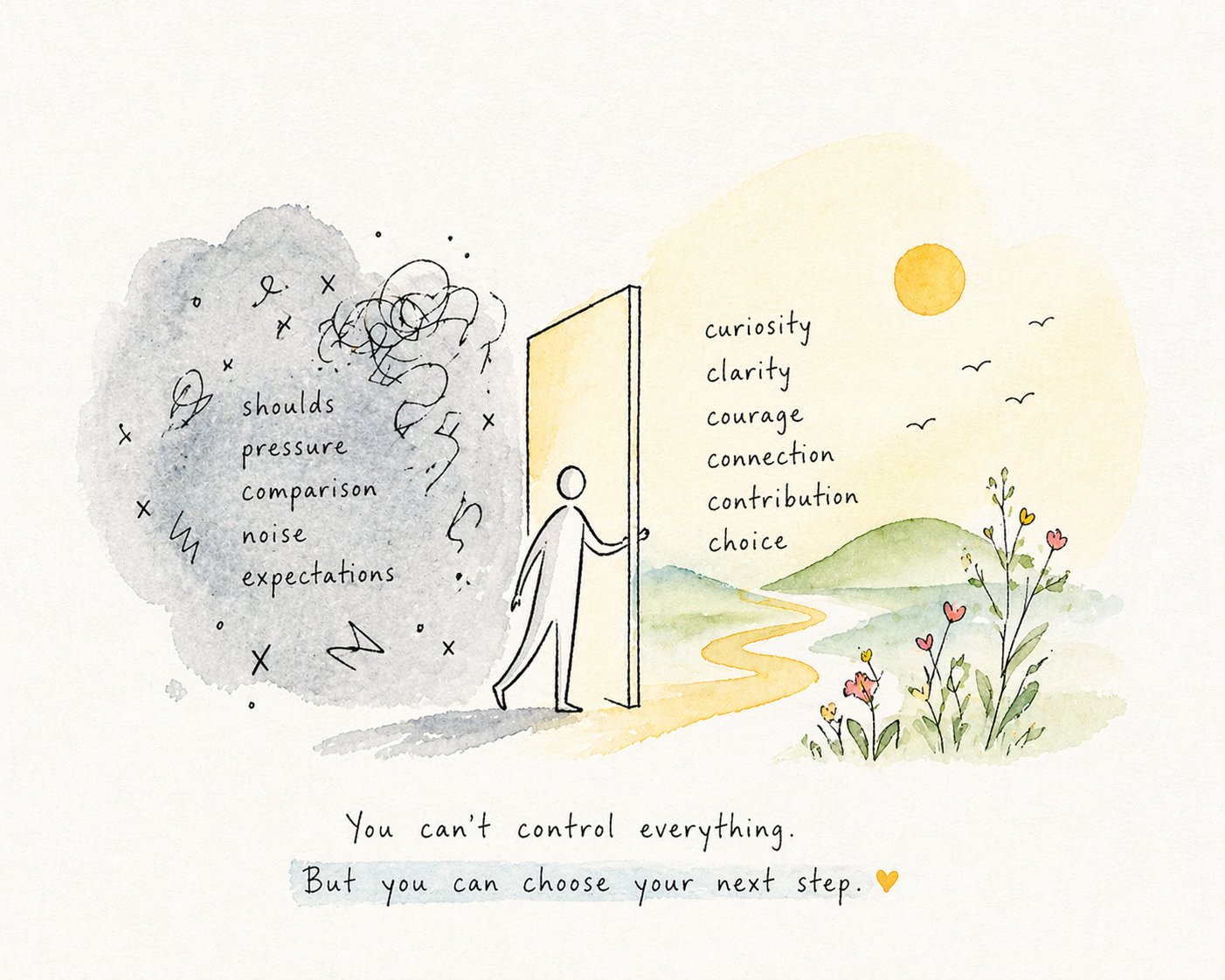
Your only job is to stop making their reckoning the thing you’re waiting for — because as long as you’re watching their window, you’re missing everything happening in your own house.
Leave a Reply