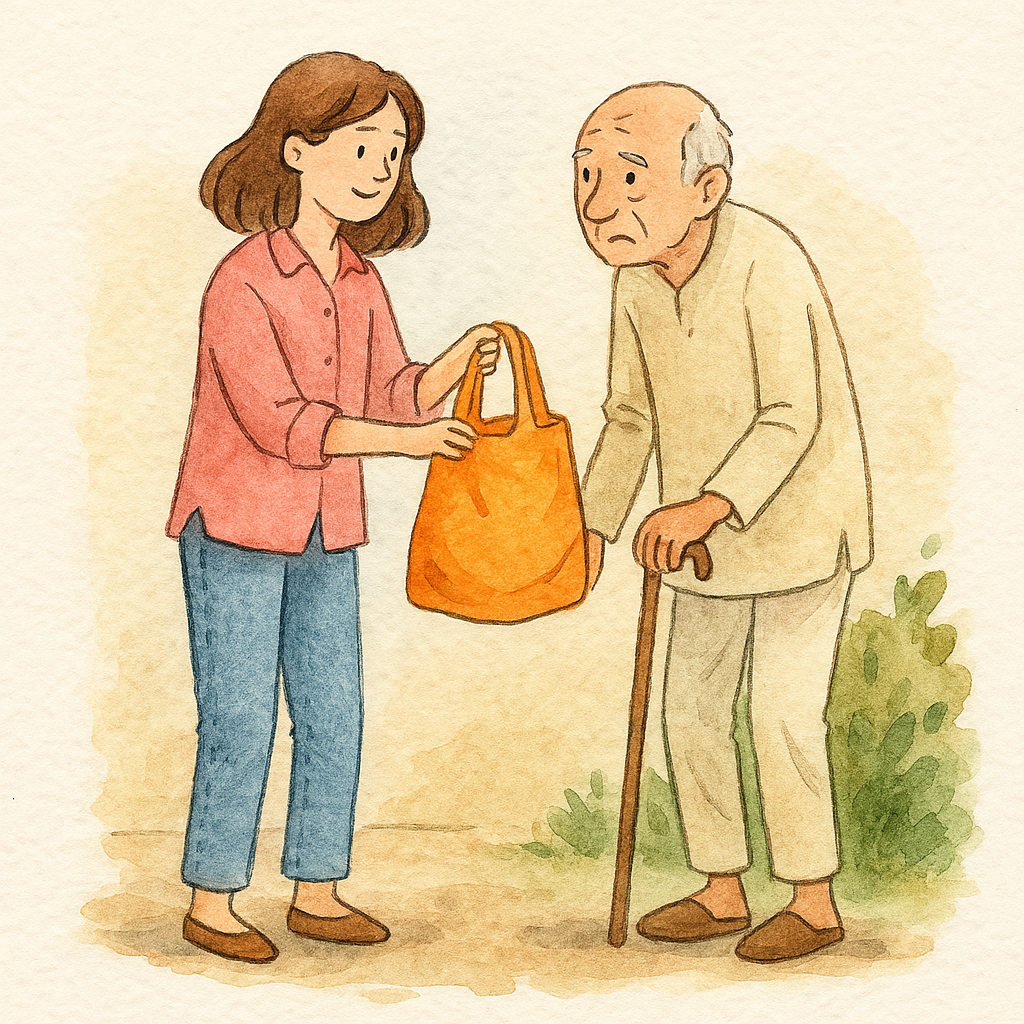
Aria spotted the old man from halfway down the block. White kurta, too-thin legs, translucent skin that looked like creased paper. He stood at the foot of the stairs outside the ration shop, gripping a plastic bag so orange it looked radioactive.
She slowed down. He didn’t ask for help. Just stood there, swaying slightly, like someone caught between decision and defeat. The bag was too heavy. That much was clear.
Aria had two choices. Keep walking like she didn’t see him—or stop and carry someone else’s weight for a while.
She stopped.
“Baba, where do you live?”
He smiled, half-grateful, half-embarrassed. “Just around the corner.”
She took the bag. It was heavier than it looked—rice, lentils, oil, and what she assumed were ten bricks disguised as food staples. They walked in silence. Her wrist started to ache.
“Used to carry two of these,” he said, with the soft pride of someone trying to convince himself he still could.
“I believe you,” she said, but she didn’t. Not really.
That’s how it started. Small errands. The occasional visit. She became his Tuesday. Every week, she’d show up at 4 p.m., and he’d have something ready for her to carry or fix. He called it “light help.” It didn’t feel light.
Sometimes she brought him guavas from the market. Sometimes he gave her dry ginger candy. Sometimes she stayed longer than she wanted. Sometimes he talked like time owed him something.
Six weeks in, her mother fell sick. Nothing serious. Just one of those slow, nagging fevers that demanded presence. Aria texted the old man: Can’t come today. Maa’s unwell.
He didn’t respond.
The next week, she returned. No orange bag. No errands. Just him, on the steps, waiting. He didn’t greet her with a smile. He didn’t offer ginger candy.
“You left me,” he said, eyes not meeting hers.
“I had to take care of someone.”
He shrugged. “You’re like all the others.”
She almost snapped, I’m not your helper, I’m your neighbor. But something stopped her. Maybe the ghost of her grandmother, who used to say things like don’t break your back for people who won’t bend theirs.
She took a breath. “I came because I wanted to. Not because I was supposed to. And I didn’t come last week because someone else needed me more.”
He didn’t reply. She left early that day.
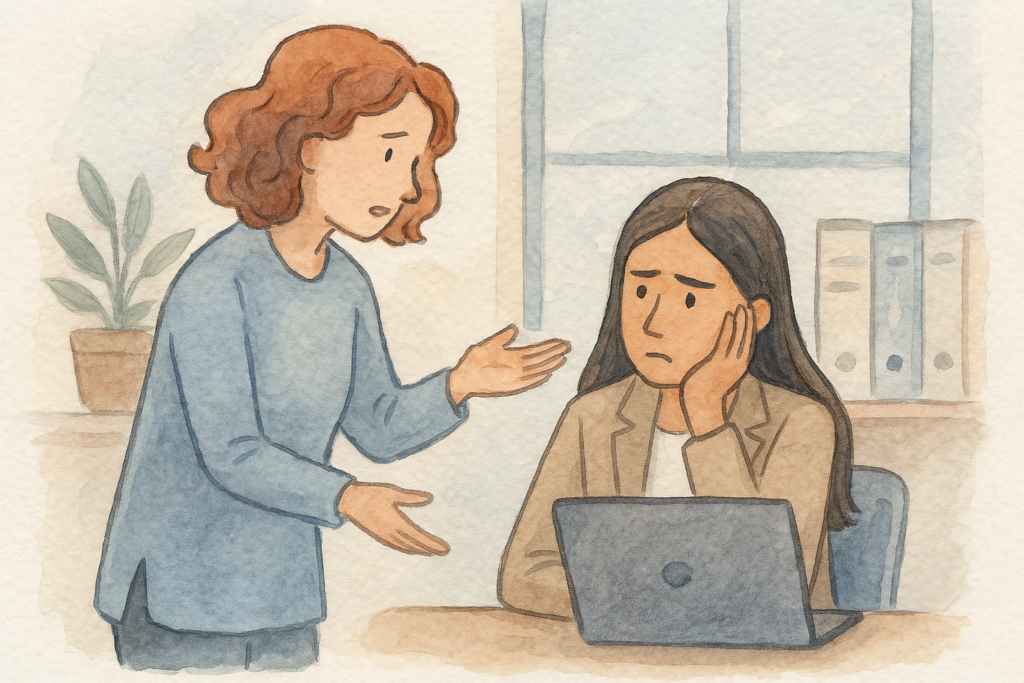
At work, Aria had a colleague, Naina, who never asked for help but always expected it. “You’re so quick with numbers,” she’d say, sliding a spreadsheet toward Aria as if delegating were a compliment. For months, Aria filled in the blanks, fixed her formulas, cleaned up her data messes.
Then, one Monday, Aria returned the sheet untouched. “You’ll get faster with practice,” she said. Naina looked betrayed. Like Aria had pulled away the chair mid-sit.
That night, Aria lay awake thinking about the old man and Naina. How help, when handed out too freely, turns into entitlement. How sometimes kindness becomes a leash.
Two weeks later, she returned to the old man’s place with a guava wrapped in newspaper. He opened the door slowly.
“I don’t need anything today,” he said.
“Good,” she said. “I just came to sit.”
They sat in silence. Birds screeched from the wires above. Downstairs, someone honked too long.
“I was angry,” he muttered. “Didn’t know how to say thank you.”
Aria nodded. “I didn’t know how to say no.”
That evening, she made two rules for herself:
1. If help makes you invisible, stop offering it.
2. If help makes someone else smaller, stop offering it.
She still helped people. She just didn’t carry what wasn’t hers anymore.
LESSONS :
- Not all help helps. Sometimes it delays growth, masks ego, or feeds guilt.
- People confuse kindness with permanence. That’s not your problem.
- If your help costs you your peace, it’s a transaction, not generosity.
- Boundaries aren’t walls. They’re doors with locks. You get to choose when to open them.
- Saying no isn’t rejection. It’s self-respect in action.
In the end, Aria didn’t stop helping. She just got better at it. Smarter. Quieter. And a hell of a lot lighter.
Leave a Reply