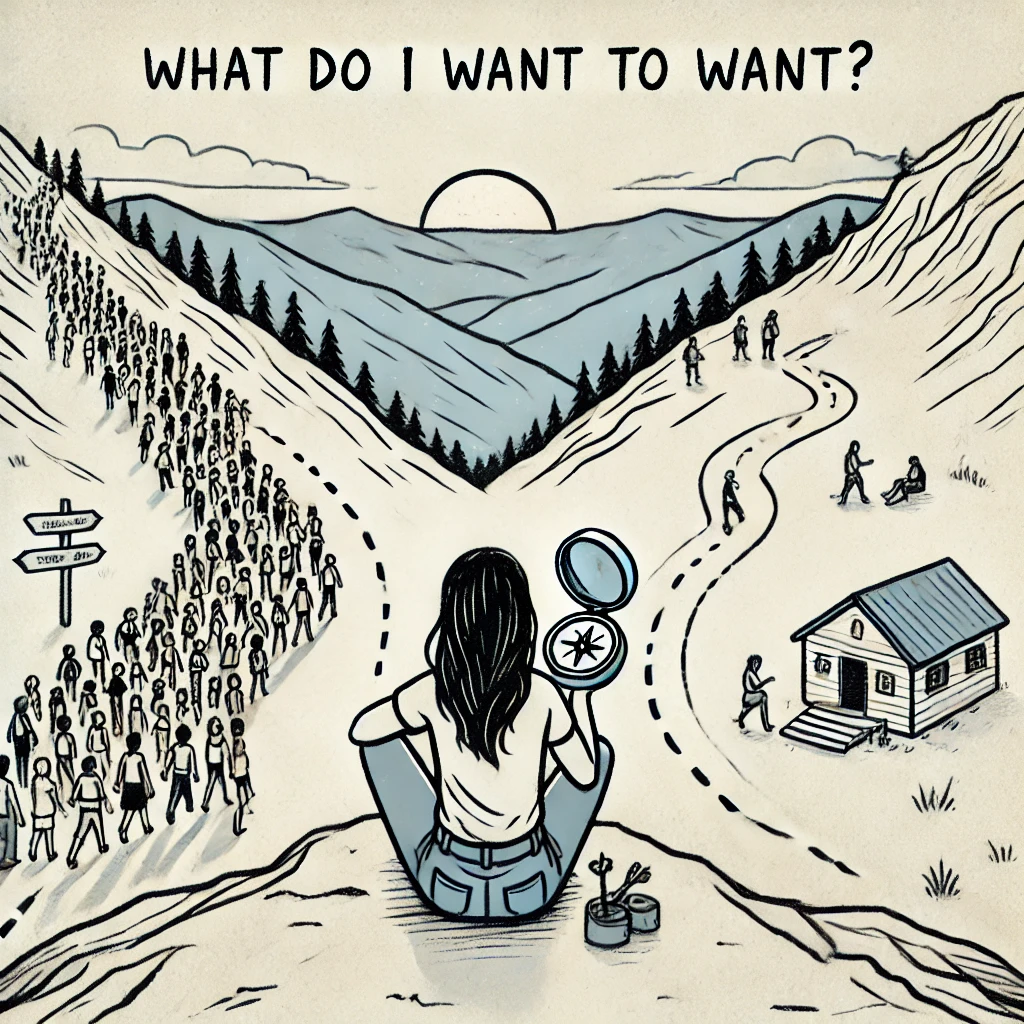
Most people chase things they don’t actually want. Not really. They just think they do because everyone else seems to want them—money, recognition, some vague notion of success. But where does that desire come from? More often than not, it’s rooted in something uncomfortable. An insecurity. A fear. A need to prove something. And if that’s the fuel behind the chase, the reward, when it comes, never feels enough.
This is the trap. The exhausting treadmill of striving for things that don’t actually bring fulfillment. It’s why so many people, after years of grinding, arrive at their so-called destination and feel… nothing. So what’s the alternative? The harder but infinitely more rewarding path: figuring out what you want to want. Not what the world tells you to want, not what seems impressive, but what would genuinely make your life richer.
That question—what do I want to want?—is uncomfortable. It forces you to confront the way you’ve been living. But it’s also the key to a life that actually makes sense.
The problem is that real change requires consistency, and consistency is boring. People love the idea of transformation, but few have the patience for the daily, unremarkable work it takes. Success is often just stacking up dull, repetitive actions long enough for them to become something significant. But that’s hard to accept because it’s not a thrilling movie montage—it’s waking up and doing the same small things over and over while feeling like nothing is happening. Until one day, everything is different.
There’s an absurdly low bar for standing out. Most people quit too early. They start something, don’t see immediate results, and walk away. If you stick with something even slightly longer than most, you’re already ahead. That’s true for nearly everything. The hardest part of most pursuits is surviving the phase where it feels like nothing is working. The phase where every instinct tells you to quit. The phase where no one is watching, no one is clapping, and nothing exciting is happening.
That phase is where most people give up. And it’s also where the people who succeed quietly keep going.
The irony? The things that make someone feel like an outsider, like they don’t quite fit, are often the same things that later become their biggest strengths. The kid who spent too much time alone becomes the adult who thrives in deep work. The person who once felt like they didn’t belong turns that perspective into something unique and valuable. The very traits that feel like burdens in one stage of life become the secret weapons in another. The trick is seeing them for what they are—raw materials, not flaws.
The real freedom is not just in what you achieve but in how you define success for yourself. It’s not in proving something to others, but in knowing that what you’re working toward actually matters to you. Because when the work itself is rewarding, when it feels like play to you but looks like work to everyone else, you win. Every single time.
Leave a Reply