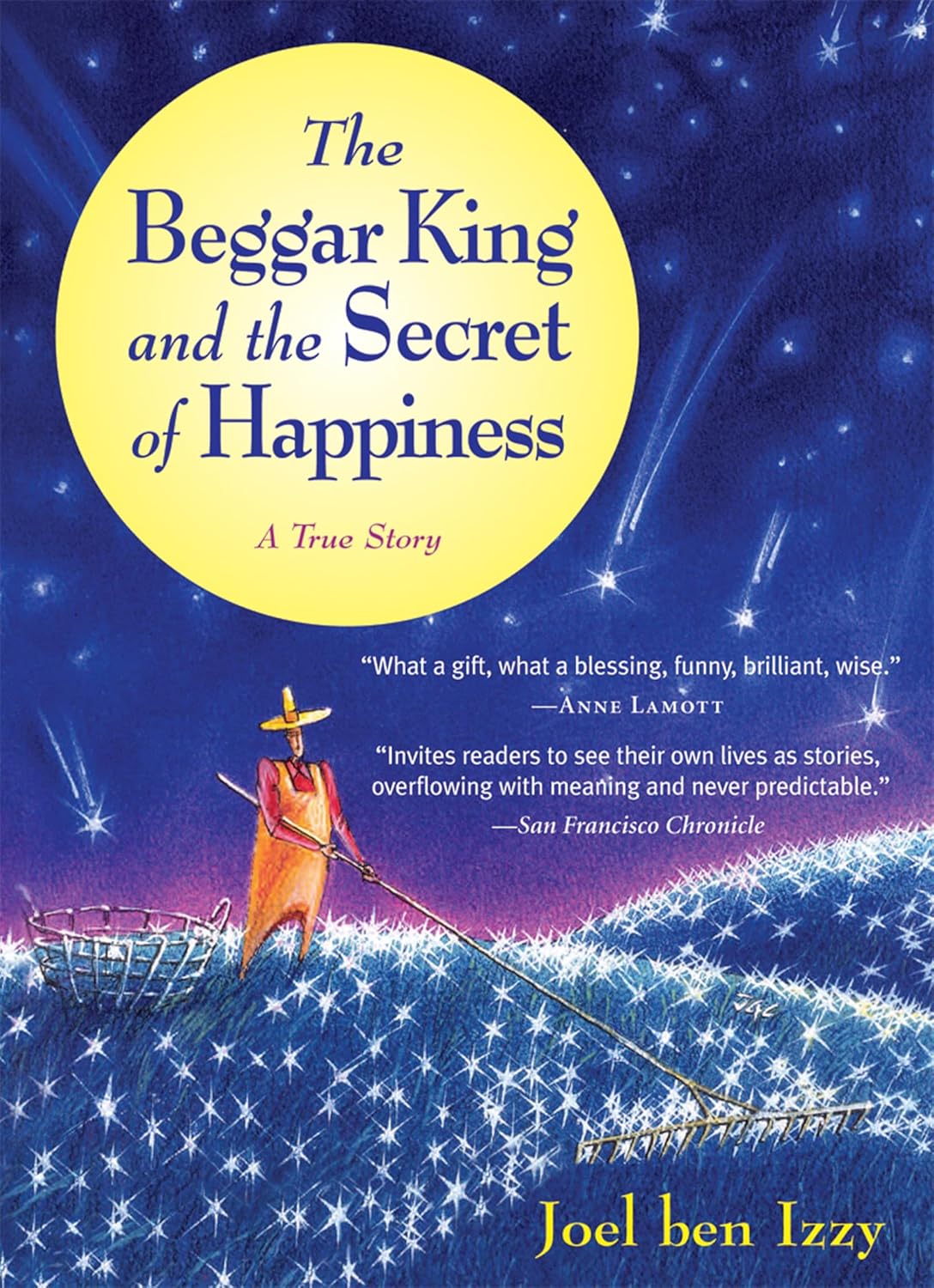
There’s this old story Joel ben Izzy tells, right near the middle of the book. A man walks into a tailor’s shop and orders a suit. The next week, he returns to try it on. It’s awful. The left sleeve is too long, the right one too short, the trousers sag and pinch in all the wrong places. “This is unwearable,” the man complains. “It’s perfect,” the tailor insists. “Just tilt your head like this, drag one foot a bit, hunch your shoulder—see? Now it fits beautifully.”
The man limps out of the store, contorted and ridiculous. Two women pass by. One says, “My God, what happened to that man?” The other shrugs, “I don’t know. But what a fantastic suit.”
I laughed out loud reading it. Then felt that sickening echo of recognition. Because I’ve done that. I’ve twisted myself into knots to make broken things look like they fit—jobs, relationships, ideas of who I should be. All for the sake of appearing put-together. All for a story that looked better than it felt.
That’s the kind of memoir The Beggar King and the Secret of Happiness is. You think you’re signing up for a gentle tale about a man losing his voice, but what you get is a subtle slap: wake up, you’re wearing a suit that doesn’t fit.
When the Curtain Falls and You’re Still on Stage
Joel ben Izzy is a storyteller by trade. Not in the “my-friends-say-I’m-funny” kind of way—he made his living traveling the world, telling stories in synagogues and boardrooms and kindergartens. Until cancer silenced him. Literally.
It wasn’t just that his voice changed. He couldn’t speak above a strained whisper. His vocal cords—his livelihood—were paralyzed.
So, what do you do when the one thing you built your identity on is taken away? If you’re ben Izzy, you don’t pivot to becoming a motivational speaker. You fall apart. You get bitter. You shut doors on your kids. You return, reluctantly, to stories—not to perform them, but to survive them.
This part mattered most to me: he didn’t “overcome.” He broke open.
Don’t Mistake Cleverness for Depth
Early in his career, ben Izzy’s storytelling had polish. Tight arcs. Clean morals. Audiences loved him. But after the surgeries, when the applause faded, he realized something terrifying: much of what he’d called storytelling was actually just performance.
And I felt that in my chest. How often do we confuse charisma for connection? How many of us speak to be admired instead of understood?
He has a mentor, Lenny—equal parts mystic and jerk—who delivers this line like a gut punch:
“You’re not a storyteller. You’re a performer.”
The old ben Izzy would’ve deflected with a joke. The new one just absorbs the burn.
What’s on the Other Side of Silence?
With no voice, ben Izzy becomes a listener. His kids, his wife, his aging mother. Strangers. Ghosts. Even the stories he’s been telling for years—like King Solomon losing his throne to a demon—start to shimmer with new meaning.
There’s something deeply moving about watching a man who once commanded rooms with confidence now learn to sit still. To let stories work on him instead of through him.
This isn’t redemption. It’s reverence. It’s the kind of spiritual shift that doesn’t announce itself. It just quietly reorders everything.
There’s No Epiphany. And That’s the Point.
I kept waiting for the scene where he stands in front of a crowd and miraculously speaks again. It never comes. He gets some of his voice back, sure—but not the old one. Not the easy one.
The real climax is quieter: He returns to storytelling. Not because he can, but because he must. Because it’s no longer what he does—it’s how he understands the world.
And maybe that’s the secret of happiness. That there is no secret. Just a choice to keep telling the story, even when your voice shakes, even when you don’t know the ending.
The Line That Broke Me
There’s a moment late in the book where ben Izzy writes:
“I still believe things happen for a reason. But sometimes that reason comes after they happen. It’s not a reason we find, but one we carve.”
That one made me put the book down. Because how many times have I tried to force meaning into something too fresh, too raw? Tried to explain the unexplainable just to make it less painful?
But carving meaning out of pain—that’s storytelling. That’s how we heal without needing to be fixed.
So What Did This Book Do to Me?
It taught me to hold space for silence. That not every heartbreak needs a metaphor. That performance and vulnerability don’t belong on the same stage.
And it reminded me—again and again—that stories aren’t there to tie things up neatly. They’re there to remind us we’re not the only ones walking around in crooked suits.
If you’re stuck, if you’re grieving, if you’ve lost something and don’t even know what to call it yet—this book won’t solve you. But it might sit beside you long enough that you don’t feel so alone.
Leave a Reply