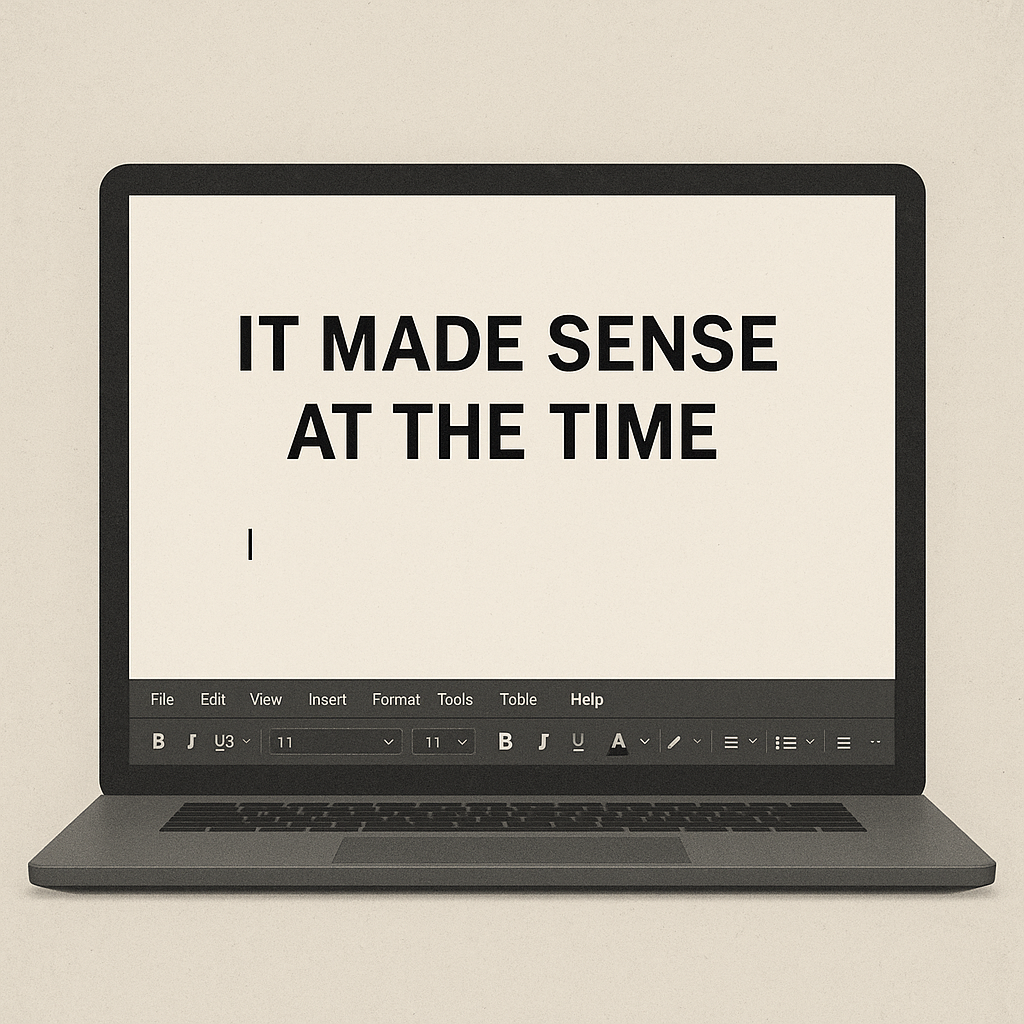
The document was already open on the screen, its cursor blinking in that patient, accusatory way it does when something is nearly finished. Twenty minutes, perhaps thirty, and tomorrow would begin with one less thing demanding attention. The night tipped toward work without anyone making a decision; momentum did what momentum does, handing you the next reasonable step before you have time to ask whether you want it.
At the beginning, this felt like maturity. There was something comforting in being the person who finished the task, answered the message, took the extra meeting, absorbed the inconvenience so nobody else had to feel it. The reasons sounded sturdy when spoken aloud—deadlines exist, money has weight, people are waiting—and because they sounded sturdy, they were difficult to argue with. They kept life moving. They kept it from becoming unnecessarily turbulent. And really, who argues with keeping life moving?
So the same gesture repeated itself in different costumes: one more task before logging off, one more favor because it would prevent an uncomfortable conversation, one more postponement because whatever was being delayed had the good manners to wait without complaining. The logic was clean, the outcomes predictable, and because the world didn’t immediately punish the choice, it began to feel less like a compromise and more like common sense.
For a while, the returns were genuinely good. Work got noticed, the house remained calm, and the machinery of everyday life ran with so little friction that it was easy to mistake smoothness for success. Days filled up in a way that felt reassuring, the way a well-organized cupboard feels reassuring even when you cannot remember the last time you opened it for anything you actually needed. Being busy became its own reassurance: if life was this full, surely it was going somewhere.
Then the arrangement hardened. Extra work stopped being extra and became the baseline; favors turned into expectations; plans that were supposed to happen “after this phase” stayed pinned to that phrase long after the phase had dissolved into another phase, and then another. The thing that carried weight but didn’t shout kept waiting—not because it was unimportant, but because it was polite. Politeness, it turns out, is a terrible negotiator.
The strange thing is that the collapse never comes. There is no evening where everything gives way, no obvious moment to identify and say, there, that’s when it went wrong. Instead, weekends dissolve into maintenance, evenings get eaten by the residue of unfinished things, and the promise of rest stays suspended just far enough ahead to remain believable. From the outside, everything still looks fine. Inside, it feels less like unhappiness than like a low-grade irritation with your own life—the sensation of standing in the wrong queue for so long that leaving now feels like admitting you were wrong to join it.
At some stage, a small wrongness begins to surface. The job got done, the routine held, the days were full, and yet the feeling left behind was smaller than the effort that produced it. That is an annoying thing to admit, mostly because every reason along the way was sound. It made sense at the time. That is precisely what makes it hard to argue with later.
Every choice can still be defended. Every explanation still works. The logic didn’t fail; it simply carried you somewhere narrower than you expected, and nobody marked the moment the corridor began to close. The past doesn’t suddenly turn foolish, either. Staying wasn’t cowardice, waiting wasn’t dishonesty, and none of it was a failure of character. It was a long series of reasonable answers to immediate questions.
What changes is the willingness to keep giving the same answer once the questions stop changing.
The realization doesn’t come with a grand exit or a clean resolution. It comes as a recalibration: fewer automatic yeses, more things left unfinished on purpose, a little more mess tolerated in exchange for the unfamiliar sensation of being present in your own life. The cursor is still blinking.
This time, it doesn’t decide.
Leave a Reply