How I finally built habits that didn’t collapse every time life got messy.
I spent years designing habits for a perfect version of myself. You know the one: wakes up at sunrise fully refreshed, follows a meticulous routine, drinks exactly eight glasses of water, and has a perfect streak on every habit app.
That person doesn’t exist—at least, not in my world.
My actual mornings are usually blurry-eyed and underslept. I regularly lose socks, misplace notebooks, and get sidetracked by notifications. The systems I crafted fell apart regularly—not dramatically, but quietly. They unraveled one tiny friction at a time: a missed alarm, a misplaced running shoe, a forgotten shopping list.
Eventually, I realized I wasn’t failing because I lacked discipline. I was failing because my systems were built for someone who showed up once a month at best.
Build Systems for Real-Life Chaos, Not Fantasy Conditions
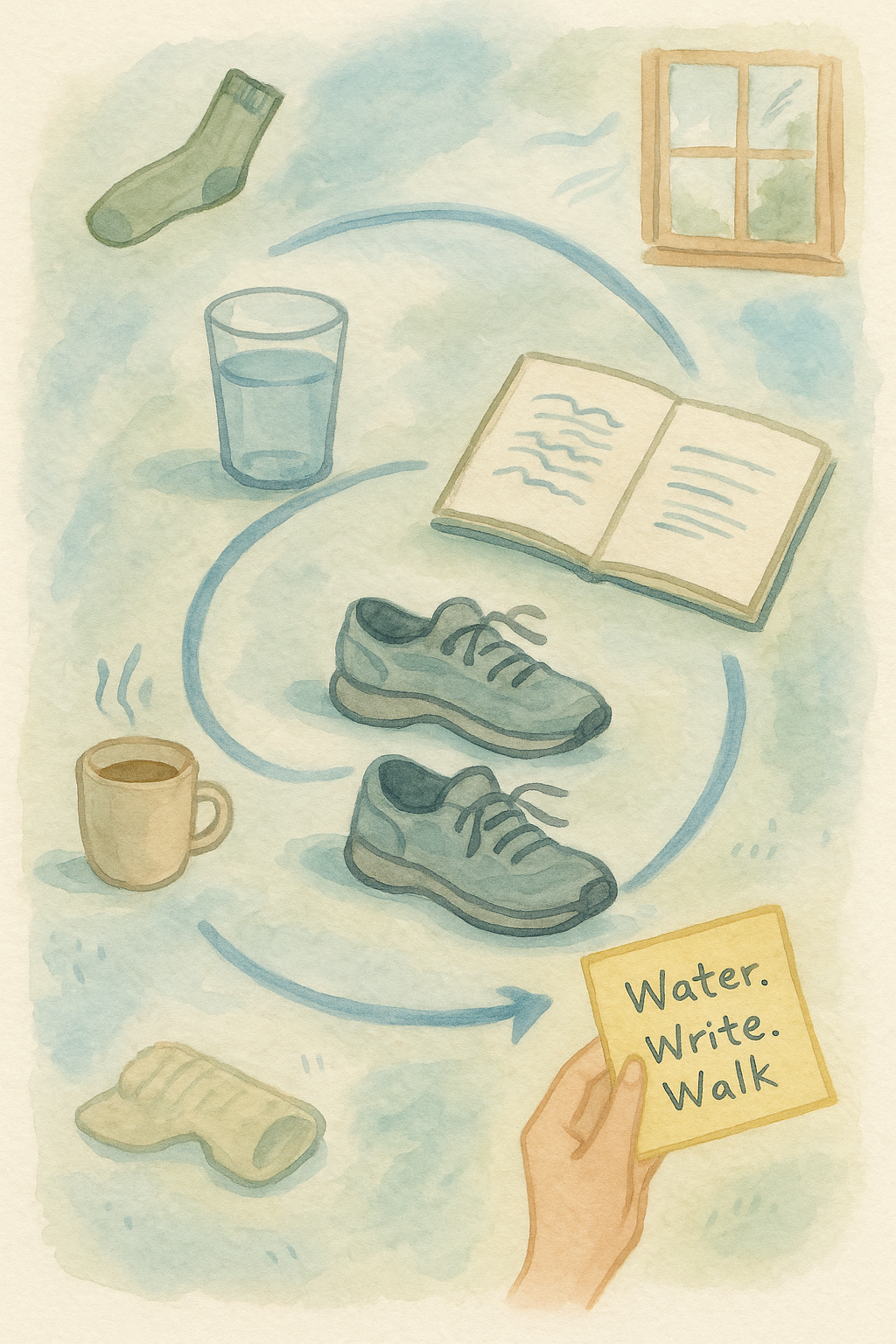
I tossed away elaborate plans and started with a humble sticky note. Three embarrassingly small goals: drink water, write something, and go for a short walk.
I didn’t expect magic. I expected to survive rough days.
And I did. When I woke up cranky or exhausted, I drank one glass of water because it was right there next to the coffee pot. I wrote a sentence because the document was already open. And I stepped outside for five minutes, even if only to check the mail.
These weren’t heroic tasks. But that’s exactly why they worked.
Make Starting Easier Than Avoiding
For me, starting was always harder than the task itself. If I had to dig for shoes, I skipped the run. If I couldn’t find my favorite pen, I didn’t write. It wasn’t laziness—it was friction.
To break this, I built routines that removed excuses before they could appear. Shoes near the door, a writing app already open, ingredients chopped and waiting in the fridge. Every action became too easy to avoid.
Now, when resistance shows up—and it still does—it’s fighting an uphill battle.
Real Systems Don’t Care How You Feel
Motivation always abandoned me at inconvenient times. It showed up strong on Monday mornings, then ghosted me on Thursday afternoons.
My new system doesn’t ask if I’m motivated. It doesn’t rely on good moods or optimal conditions. It simply waits, quietly, already in place.
Specificity Is Your Secret Weapon
Vague promises—”I’ll run more” or “I’ll write more”—are too easy to negotiate away. But “Run 10 minutes before breakfast” or “Write two paragraphs after coffee” leaves no room for ambiguity.
Clarity isn’t just helpful; it’s non-negotiable. Specificity traps my procrastination before it has a chance to argue.
Track Identity, Not Streaks
Habit trackers used to intimidate me. A missed day felt catastrophic.
Now, my tracking is simple: just a single mark each day. That mark isn’t proof of perfection—it’s evidence that I still showed up, even a little. Over time, that mark became evidence of something bigger: I’m someone who shows up, even imperfectly.
Returning Matters More Than Restarting
Previously, I’d “restart” every Monday. Now, I just “return.” One missed day isn’t a setback; it’s normal.
My system doesn’t shame missed days. It anticipates them. And it always holds space for me to come back.
Systems Are Quietly Powerful
There’s nothing glamorous about my current routines. They don’t make good Instagram posts. They don’t impress friends.
But they last.
Real habits aren’t built on enthusiasm; they’re built on resilience. They aren’t flashy—they’re reliable. They don’t inspire applause—they quietly create results.
The best system isn’t the one that thrives under ideal conditions. It’s the one that survives chaos, friction, and messy realities.
That’s a system worth building.
Leave a Reply