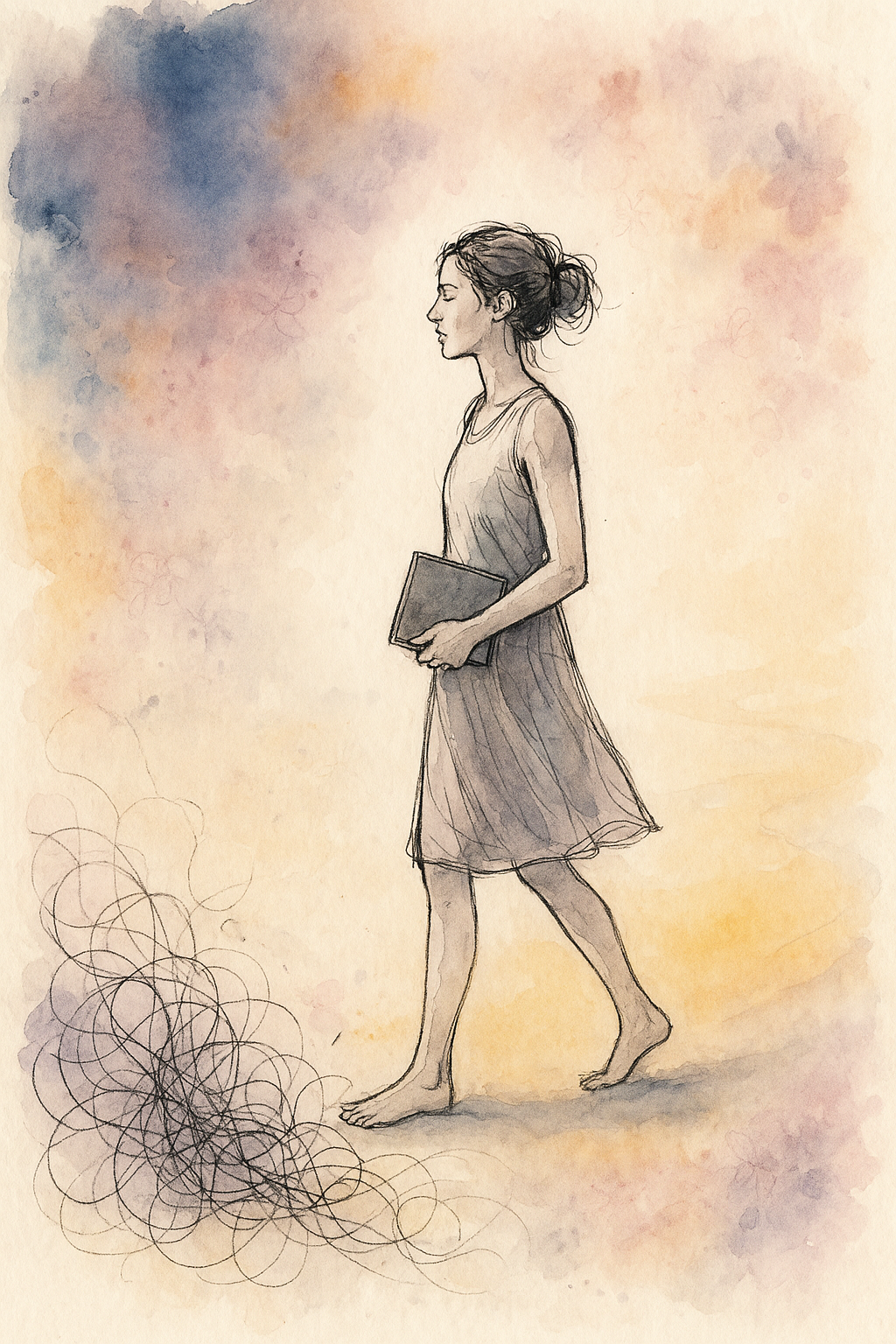
—and somehow, the silence felt like coming home.
My grandmother used to say, “Forgiveness is good for the soul.” But when I was thirty-two, crying into an old T-shirt on my bedroom floor, her voice felt about as useful as a paper umbrella in a storm.
Because what do you do when forgiveness doesn’t feel holy? When it doesn’t feel healing? When it just feels like another item on the already insufferable to-do list of being “the bigger person”?
I wasn’t interested in grace. I wanted quiet.
Not peace—quiet. The kind that sits inside your body like a weighted blanket. The kind where you stop arguing with ghosts.
But everything I read insisted that forgiveness was the only way to get there. That unless I forgave, I’d stay shackled to the story. That healing without forgiveness was somehow incomplete. Stunted. Maybe even petty.
And I started believing that. So I tried.
I wrote letters I never sent. I meditated on their wounds. I tried reframing their behavior through childhood trauma and generational dysfunction and a hundred other things that made their choices my emotional labor.
And still, I couldn’t forgive them.
Not because I didn’t want to heal—but because my body wouldn’t lie for the sake of closure.
So I did something I hadn’t tried before: I stopped making forgiveness the goal.
I dropped it. Cold.
And in that absence, something unexpected happened—I started feeling better.
Not right away. First came anger. Then grief. Then an entire Netflix season of self-pity.
But eventually, the grip loosened. My life filled with other things. I forgot to bring them up in conversations. I stopped checking their name in my search bar. Their presence faded—not because I forgave—but because I no longer needed to remember.
Forgiveness didn’t free me. Disinterest did.
The more I zoomed out, the more I realized: I wasn’t stuck because I was unforgiving. I was stuck because I was still trying to make their behavior mean something about me.
That’s the lie we inherit. That people hurt us because we deserved it. Because we weren’t enough. Or worse, because we were too much. Too needy. Too trusting. Too intense. So we stay, trying to be palatable enough for the next version of them to finally love us right.
But once I stopped doing that math, once I stopped tying their treatment of me to my identity—I felt the ground return under my feet.
I didn’t need to make them a villain. I didn’t need to stay a victim. I just needed to stop auditioning for the apology that was never coming.
This wasn’t a one-day epiphany. It was a series of boring, uncomfortable decisions.
Deleting the message thread.
Not telling the story one more time to one more friend.
Leaving the event early instead of pretending I was okay seeing them there.
Quiet exits. Clean exits.
I still don’t forgive them. And honestly, I’m okay if I never do.
I don’t owe forgiveness to anyone who treated my dignity like it was optional.
I owe myself better instincts. I owe myself better questions. Not “Why did they do that?” but “Why did I stay?”
And if I can answer that without shame, I win.
That’s the real pivot. Not from hate to forgiveness. But from rumination to responsibility.
The day I stopped trying to forgive was the day I started feeling like myself again. The day I chose understanding over resolution. Boundaries over closure. Curiosity over blame.
And most of all: silence over spectacle.
Because I didn’t want to be the protagonist of pain anymore.
I just wanted my life back.
And now that I have it, I’m not giving an ounce of it to anyone who needs me to “make peace” before I can be free.
Some things you walk away from without explanation. Without fanfare. Without a final conversation.
You just close the chapter.
And start writing better ones.
Leave a Reply