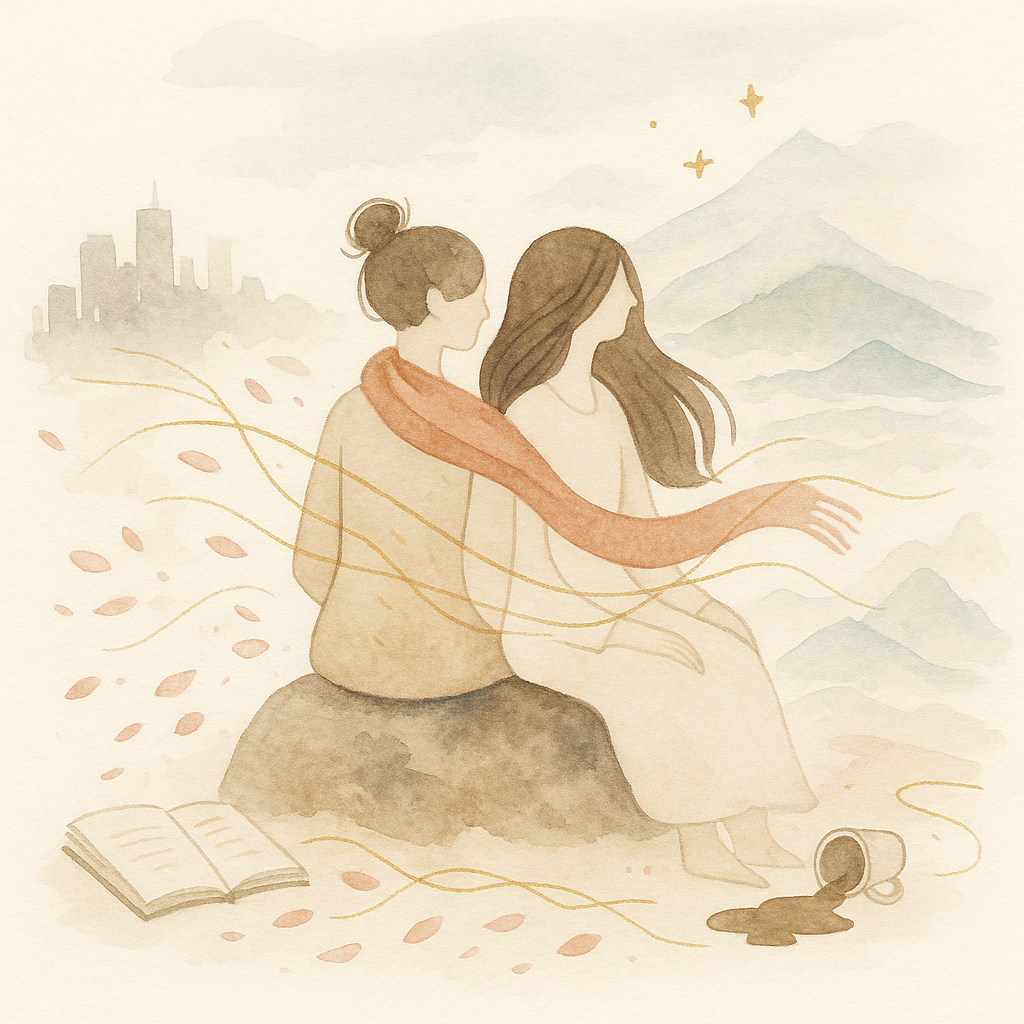
She was the sister I became because life left us no choice but to build each other.
I’ve had a sister all my life. One house, two girls, three hundred silent wars over borrowed clothes and emotional space. We fought over the front seat, lipstick shades, the right to grieve differently. But we also fought for each other—quietly, clumsily. I knew she’d burn the world if anyone hurt me, but she’d still take the bigger slice of cake when no one was watching. That’s the kind of love I grew up with. Familiar, flawed, loyal.
So it threw me when adulthood demanded a different kind of sisterhood. One not built into the family tree, but cobbled together through survival.
You see, nobody tells you this: the older you get, the more invisible you become. Especially if you’re a woman who doesn’t package her ambition in softness. Or worse, if you do—and people still manage to misunderstand you.
They’ll call you intense. Complicated.
They’ll say you “feel too much” as if empathy is an allergy you should’ve outgrown.
And so, I went looking for sisters outside the house I was raised in.
I found them in the wreckage.
In the women who were done auditioning for worth.
Who had cried in toilets between meetings and still walked back out with a killer pitch and smudged mascara.
I found them in women who had quit jobs, marriages, identities. Who weren’t waiting for applause anymore.
These women didn’t offer you polite nods. They handed you tools.
They asked the hard questions and refused to edit themselves to make you comfortable.
And when you told them you were tired of holding it all together, they didn’t respond with a Pinterest quote. They said, “Then let it fall. I’ll help you clean up.”
There’s something holy about that kind of support. Something revolutionary about a woman who chooses to sit with your darkness without trying to turn on the light.
But here’s where it gets real: we don’t always show up for each other.
We say “women support women,” but often what we mean is
“women support women who don’t threaten me,
women who aren’t too much like me,
or worse, too much me.”
We get territorial about pain. Competitive about resilience.
We measure who’s suffered more instead of sitting in the shared ache of it.
That’s the mess I want to talk about.
Because real sisterhood is messy.
It demands you look at your own jealousy and insecurity without flinching.
It demands that you cheer for someone even when she gets what you wanted.
It’s not some hand-holding kumbaya circle.
Sometimes it’s a loud argument at 1 a.m. where nobody wins but something finally shifts.
Sometimes it’s just showing up.
And that, to me, is the most radical act.
Not climbing some corporate ladder in heels.
Not retweeting feminist slogans.
But sitting next to a woman who’s drowning in shame or doubt or debt or postpartum rage, and saying,
“You don’t scare me. I’ve been there. I’m still there. Let’s keep going.”
I don’t care how shiny your life looks from the outside. If you haven’t buried a part of yourself to make someone else comfortable, you’re either very lucky or very forgetful.
So here’s what I know: sisterhood isn’t something you get just because you share DNA or eyeliner or DMs. It’s something you earn. Through consistency. Through honesty. Through giving someone the space to be ugly and whole and brilliant all at once.
I had a sister. And then I found others.
And now I try, every day, to be one.
It’s the only kind of legacy I care to leave behind.
This is so good. Felt every word of that. You put something into language that so many of us carry but don’t know how to say, the kind of sisterhood that isn’t handed to us but built through the mess, the honesty and the showing up when it’s hard.
Thank you for writing it and for being that kind of woman. I am proud to walk beside you.
This left me speechless. Right back at you, wonderwoman.