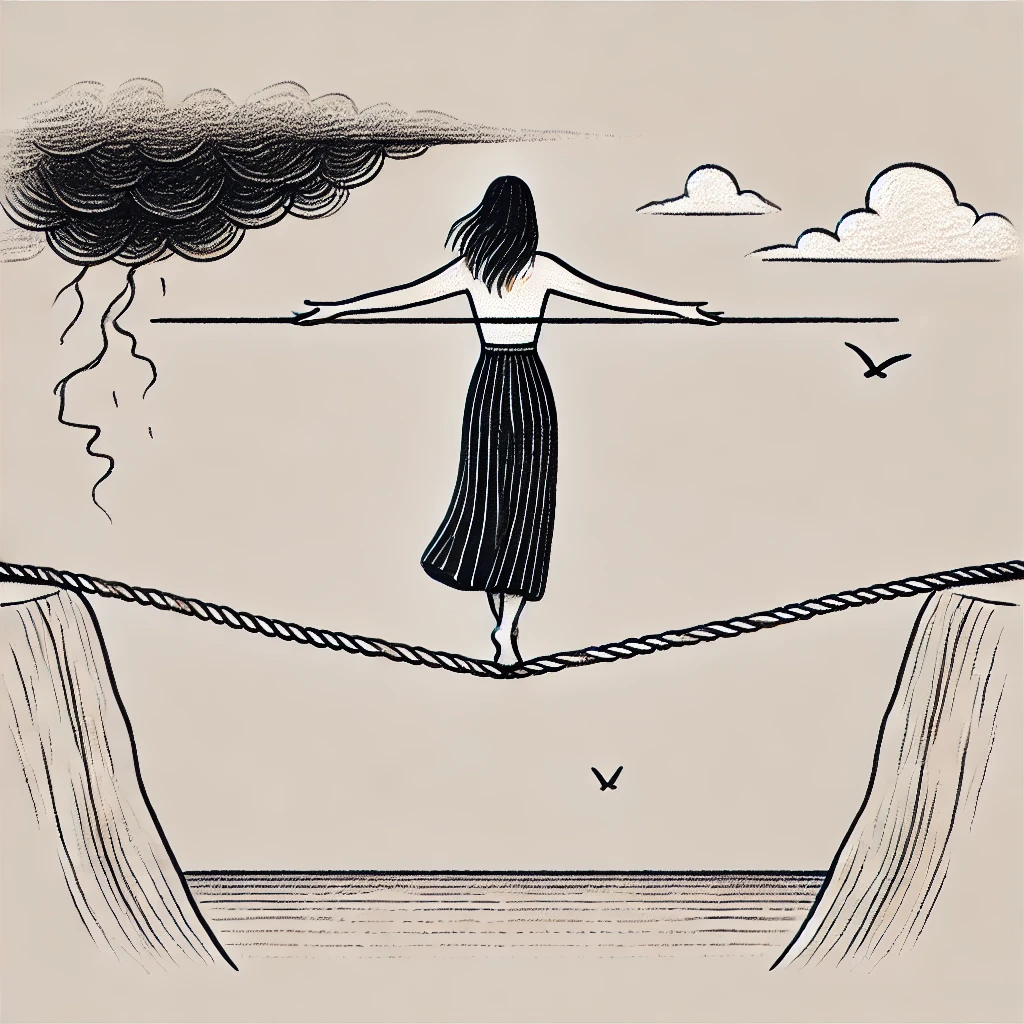
A relationship should feel like an exhale, not a battlefield. If being with someone feels like walking a tightrope, constantly second-guessing every step, that’s not love—it’s exhaustion. If you’re always bracing for the next emotional whiplash, that’s not love—that’s survival mode. And survival isn’t sustainable.
People romanticize chaos, as if love is only real when it’s hard. But if you can’t even relax in your own relationship, what exactly are you holding onto? If every conversation feels like a test, if every disagreement leaves you scrambling for reassurance, that’s not love. That’s living on borrowed peace, and the debt will come due.
Healthy relationships aren’t free from conflict. They come with arguments, occasional frustrations, and moments when you’d trade your partner for a plate of fries. But they don’t come with the kind of instability that makes you question whether you’re valued at all. Even on the hardest days, love should feel like solid ground—not quicksand.
People confuse safety with the absence of conflict. They think love means never fighting, never struggling, never having a hard conversation. But real safety isn’t about walking on eggshells to avoid a fight. It’s knowing that when one happens, you won’t be abandoned. It’s being able to say, “That hurt,” and being met with care instead of coldness. It’s knowing that your presence isn’t just tolerated—it’s wanted.
Feeling at ease with someone is the most underrated relationship green flag. Not the obsessive texting. Not the grand gestures. Not the highs that make the lows feel worth it. Just the quiet relief of being yourself without fear of it costing you the relationship.
Love isn’t meant to be a performance. If you have to keep proving you’re worthy of it, you’re in the wrong story. The right person doesn’t make you feel like you’re too much. They don’t turn your needs into a burden. If asking for love, time, or kindness feels like negotiating a hostage release, you’re not in a relationship. You’re in an emotional famine, and you’re the one going hungry.
Letting go of someone who can’t love you well is brutal. But staying is worse. It’s a slow erosion of self. It’s a gradual acceptance of less and less until you no longer remember what it felt like to be whole. Walking away isn’t giving up—it’s refusing to beg for the bare minimum. And if you have to break yourself into pieces to be loved, was it ever really love at all?
When you finally step away, you don’t just lose them—you find yourself. You stop waiting for the next apology, the next half-hearted effort, the next moment of clarity that never comes. You stop living on borrowed peace. And for the first time in too long, you stop holding your breath.e.
Leave a Reply