The thing about embarking on solo adventures is that you never truly know what you’re signing up for. On the surface, it’s all about the trek, the thrill of the climb, the stunning landscapes that unfold at every corner. But for me, this two-week solo trip to Manali wasn’t just about scaling the 14,250 feet of Bhrigu Lake. It wasn’t even about the trek itself. It was about everything that led up to it—the fears I carried, the unexpected brushes with death, the unraveling of emotions that shaped my entire journey.
This was my longest solo trip to date, and my first monsoon trek. It was also the first time I genuinely felt scared for my life on multiple occasions. The words I had chosen for this trip were healing and courage, as I always pick a word or fear to confront with each trek. But little did I know how these words would come to define not just the trek, but the entire experience of being in Manali. I was the most broken-down version of myself when I came here. Emotionally fractured, I had been through some tough times leading up to this trip. My friends were my only pillars of strength, and they had stood by me through it all.
Yet, despite their support, I found myself completely disoriented, unable to shake off the heaviness I felt. The only thing I could tell myself was to sit with it—sit through the pain, don’t numb it, don’t distract yourself. This was a mantra I kept repeating, though it was much easier said than done. In the first few days, forcing myself to step out of the room felt like an uphill battle. It would have been so easy to sulk all day and let the weight of everything keep me anchored in place. But something inside kept pushing me to at least try.
The Brush With Death: On the Edge of a Cliff
From the moment I stepped foot in Manali, I knew this wasn’t going to be an easy ride. I suffer from severe motion sickness, so the very thought of getting there was a daunting challenge. Traveling alone on the HRTC bus to Manali, I was jolted awake by the sudden screeching of brakes. We had come to a sharp stop on a road curve, and as I looked out the window, I could see a deep ditch just on my side. It was a close call, and I couldn’t help but wonder, If something happens, will I be the first one people try to save? That unsettling thought lodged itself into my mind, though I quickly brushed it aside.
But it wouldn’t be the last time that fear crept into my trip. In fact, it kept resurfacing in the most unexpected ways.
I had recently connected with a designer who had survived the tragic Sahastra Tal incident, where people lost their lives in the mountains. The idea that you could die in the mountains was not a new concept to me, but it took on a different weight this time around. Then there was the havoc that the monsoon had unleashed on Himachal Pradesh the previous year, and the fact that I had come here alone.
When I signed up for both the Beas and Bhrigu Lake treks, I felt a sense of anticipation. But then the Beas trek got canceled, and people from the first batch began calling me in a panic, asking about the situation in Manali. I hadn’t been paying much attention to the news, knowing that the Bhrigu trek route was relatively safe. Still, the anxiety others felt started seeping into my mind.
The Unexpected Goodbye
And then came a different kind of reminder of life’s fragility. A designer I had exchanged work-related messages with passed away unexpectedly at the age of 35 due to a heart attack. We were supposed to catch up soon, but instead, I saw an RIP message next to his photo on LinkedIn. It was such a stark, brutal reminder of how life can change in an instant. The finality of it all humbled me, but it also terrified me.
I had conditioned myself through the losses of the COVID era to live with more intention, to be mindful of how I spent my time. Yet, when it came to dealing with grief, I wasn’t as equipped. I tend to park it somewhere in the back of my brain, suppressing it rather than confronting it head-on. And this loss brought all those parked emotions back to the surface.
The Narrow Escape: A Dance With Nature’s Fury
One of the most intense moments of the trip didn’t happen on the trek itself but during a spontaneous detour I took while exploring a pine forest trail near the river Beas. The trail had become part of my daily ritual—a space where I could clear my mind and reconnect with myself. But one day, curiosity got the better of me, and I decided to venture off the trail. I found myself in a serene, untouched spot by the river, alone with nothing but the towering pine trees and the sound of rushing water.
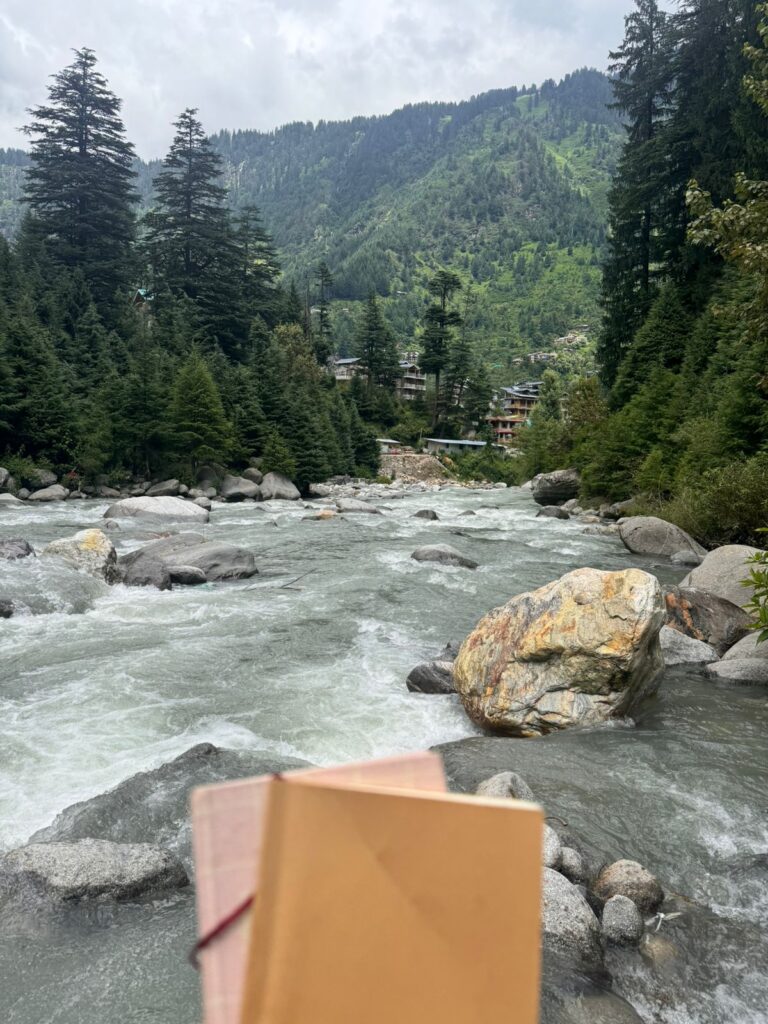
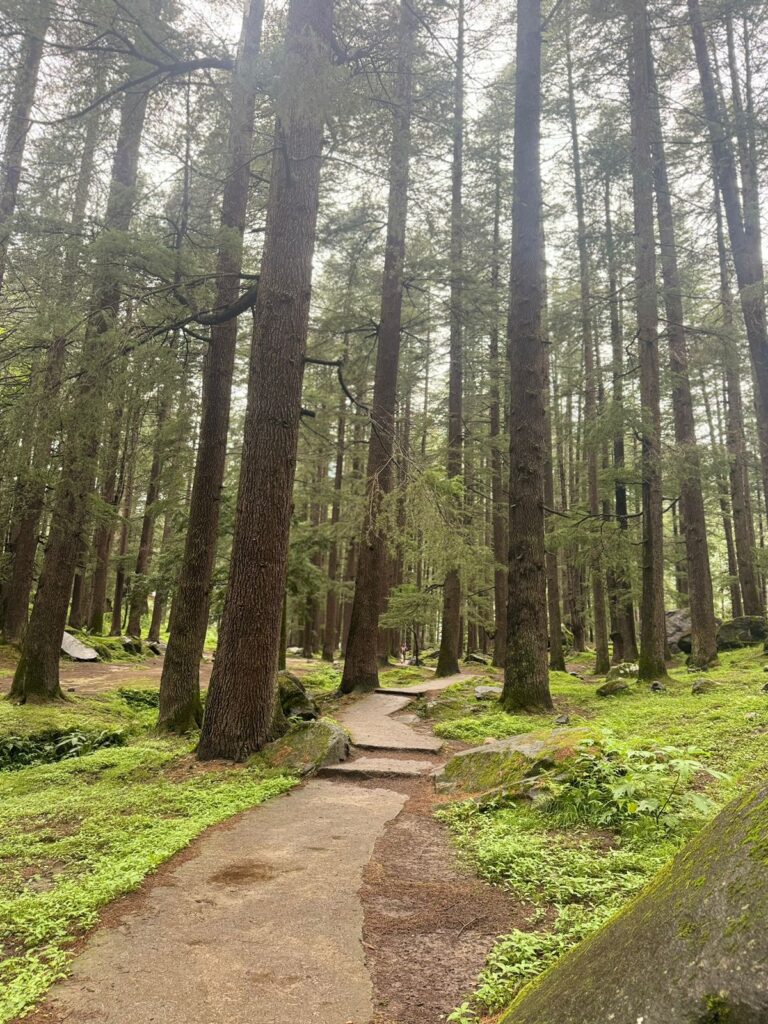
It was peaceful, but there was a lurking sense of danger that I couldn’t shake off. As I made my way through thorny bushes and moss-covered rocks, it quickly became clear that there was no path ahead. One side was the Beas river, swollen and furious from the monsoon rains, and the other side was a wall of thick bushes and slippery rocks. Every step felt like a gamble with nature. I chose the thorny route, knowing that slipping on the rocks by the river would likely mean certain death.
I slipped a few times, scratched and bruised by the thorns, but miraculously managed to stay away from the river’s edge. At one point, I had to climb a massive, moss-covered rock to continue. With no grip and the rock too large to scale easily, I clung to thorny bushes, pulling myself up and over. When I finally reached the top and saw the trail again, I folded my hands and thanked whatever higher power had been watching over me. The relief was overwhelming, but so was the realization of how close I had come to a very different outcome.
The Emotional Labyrinth: Breaking Down to Break Through
What struck me the most about this entire trip wasn’t just the near-death experiences, but the mental and emotional toll it took on me. I’ve always been an avid reader, and during this trip, I had picked up Where You’ll Find Me—a book about the final solo climb of Kate Matrosova, a strong female trekker who didn’t make it back. I put it down after a few chapters, the weight of her story feeling too close to my own fears.
Even though I had faith in the safety protocols of the trekking company I was with, there was still that nagging voice in my head. During one of our treks, the guide shared a story of a heroic rescue mission he had led to save a trekker. In the same breath, he mentioned trekkers who hadn’t been so lucky. Death, it seemed, was everywhere, reminding me of its presence. And no matter how hard I tried to suppress it, the thought lingered: Was this going to happen to me too?
I had never before encountered such an overwhelming series of coincidences surrounding death. It wasn’t like this was my first solo trek or my first time facing fears. But this time, the signs were relentless, and a part of me started to believe that maybe, just maybe, this was it.
Facing the Unknown: The Paradox of Risk
What’s fascinating about fear is how it shapes our experiences. I’ve always been intrigued by extreme endurance athletes—people who knowingly put their lives at risk in the pursuit of something greater. Why climb Annapurna, the mountain with the highest death toll, when you could choose a safer challenge? I used to think I couldn’t understand their motivations, but now I do. At the core of it, these individuals have made peace with the possibility of dying while doing what they love most.
This trek broke me down in ways I hadn’t expected, but it also gave me something in return. It helped me rediscover my belief in myself, made me trust my instincts again, and reminded me that no matter what happens, I can take care of myself. That feeling was more powerful than any summit I could have reached.
Fear is no longer something I want to avoid. It’s something I want to explore. The part of me that hesitated, that second-guessed every decision, is the same part that now feels drawn to push my limits further. There’s a thrill in knowing you’ve faced something that could have broken you—and come out the other side, stronger.
What’s next for me? I’m not sure. But I do know this: I’m no longer afraid of what lies ahead. If anything, I’m eager to find out just how far I can go.
This journey wasn’t just about a trek. It was about facing my deepest fears, confronting death, and realizing that the only way to truly live is to be unafraid of dying. And in doing so, I’ve found a new drive—a drive to push myself beyond the boundaries of what I thought was possible.
Leave a Reply