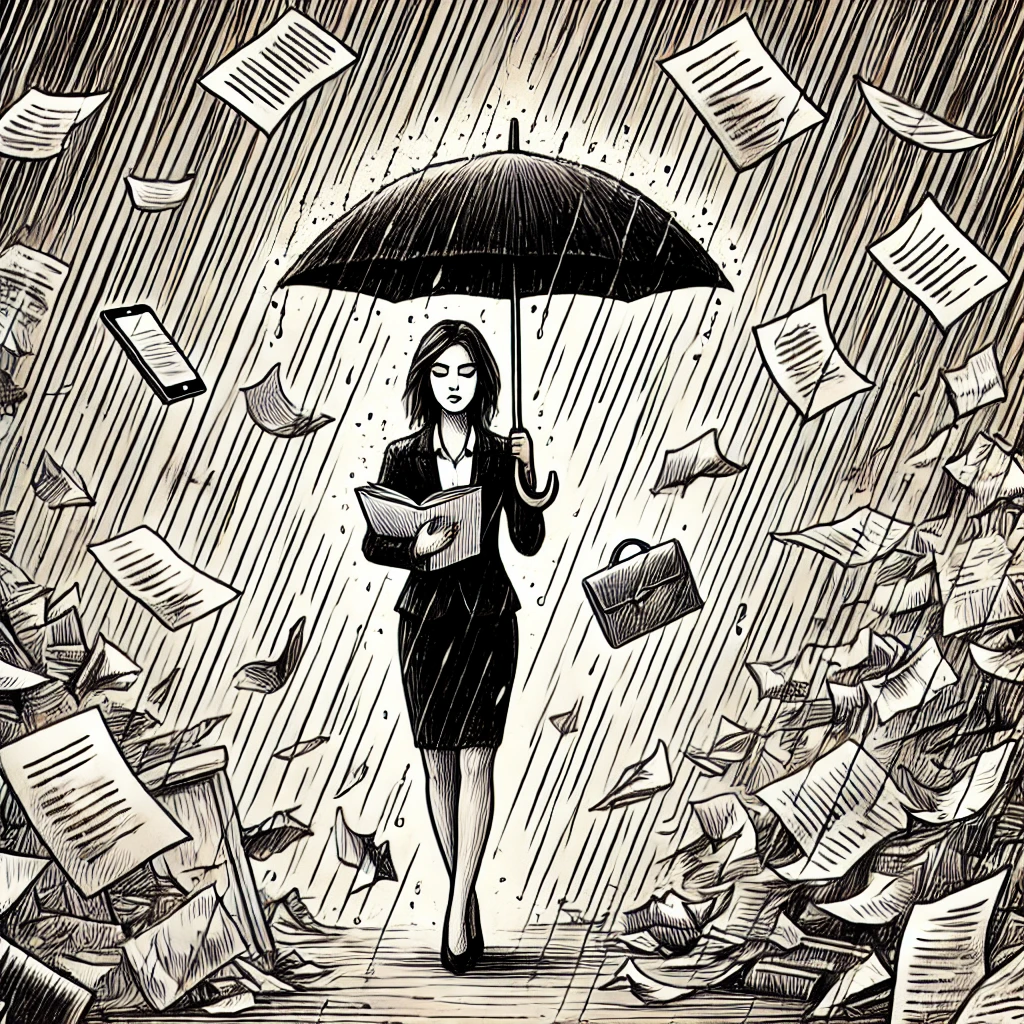
A few years ago, I received an email that ruined my entire day. The client’s message was curt, maybe even annoyed. I read it three times, then a fourth, dissecting every word for hidden meaning. Were they mad at me? Had I messed up? Was I about to lose this project?
My stomach knotted. My brain spiraled. The rest of my workday blurred into the background as I obsessed over a problem that might not even exist. Hours later, I got a follow-up message: “Apologies for the short reply earlier—was in a rush. Appreciate your work.”
That should have been the end of it. But it wasn’t. The damage had been done. I had wasted an entire day drowning in an emotional response that I had created.
The Realization
That wasn’t the first time I had handed over control of my emotions to something external. A friend canceling plans, a slow week in business, a cloudy morning—each one had the power to wreck my mood. I had unknowingly placed my peace in the hands of people, events, and circumstances that weren’t even aware they were holding it.
If my emotional stability required the world to behave a certain way, I was in trouble. The world is messy. People are unpredictable. And, as it turns out, the weather does not care about my feelings.
Taking Back Control
There wasn’t a single moment of enlightenment—no monk on a mountain whispering the secret to inner peace. But over time, I started to notice a pattern. Something would happen, and I would react. Not because of the event itself, but because of the story I told myself about it.
The client’s email wasn’t an attack—I imagined it was. Rain wasn’t depressing—I decided it was. A friend canceling wasn’t proof that I was unimportant—that was just my own insecurity talking.
Once I saw that, everything shifted.
Rewriting the Script
Emotional independence isn’t about ignoring feelings. It’s about taking responsibility for them. Instead of spiraling, I started pausing. Instead of reacting, I started questioning. Is this really a problem? Am I seeing this fairly? Can I choose a different interpretation?
It turns out I could. And that changed everything.
The Work Never Ends
Do I still get anxious over emails? Sometimes. Do I still overanalyze things? More often than I’d like. But now, I catch myself. Instead of wasting an entire day spiraling, I shake it off in minutes. Instead of assuming the worst, I look for other explanations.
Life isn’t going to get easier. People aren’t going to suddenly become perfectly considerate. But I don’t have to live at the mercy of all that. The world can be chaotic. That doesn’t mean I have to be.
Leave a Reply