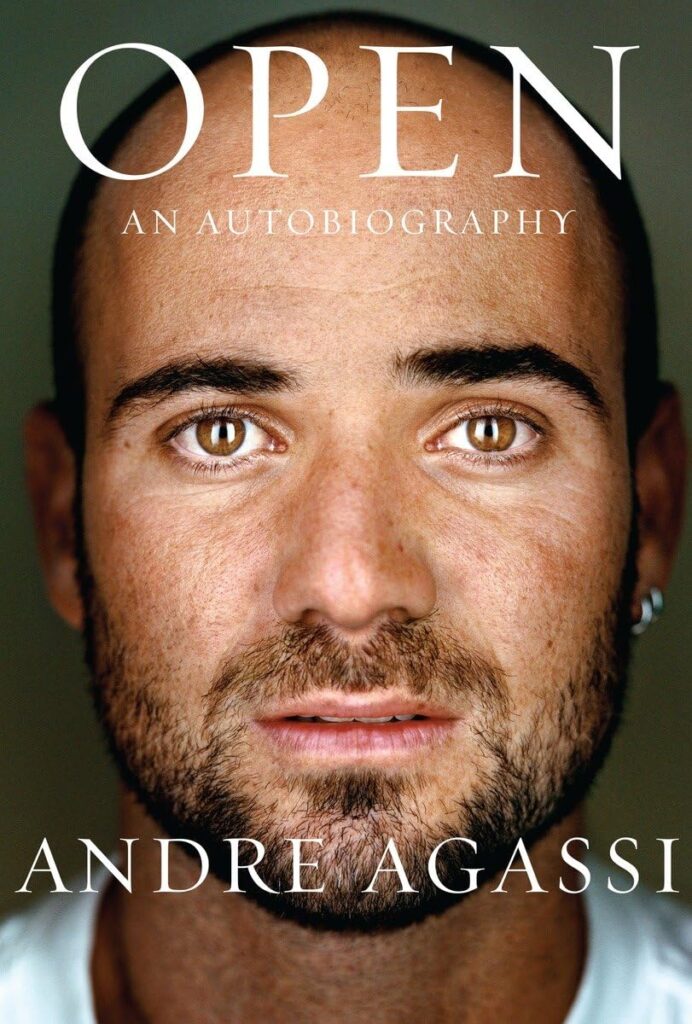
I didn’t pick up Andre Agassi’s Open expecting to fall headfirst into an existential whirlpool. Honestly, I anticipated pages filled with sweat-drenched match points and polished trophies. Instead, I was instantly captivated by the brutal honesty of a man who despises tennis—a man whose entire identity hinges upon the very thing he resents. From that unexpected collision, I couldn’t look away.
Agassi opens his memoir candidly:
“I play tennis for a living even though I hate tennis, hate it with a dark and secret passion.”
Right there, he flips the script on the traditional sports hero narrative, discarding clichés of passion and glory. Agassi’s relationship with tennis isn’t a love story; it’s more of a messy, daily breakup—raw, painful, and undeniably compelling.
One particularly unforgettable anecdote describes a young Agassi enduring punishing practice sessions orchestrated by his obsessively driven father. He recounts hitting thousands of tennis balls daily, a child trapped within his father’s relentless ambitions:
“My father says if I hit 2,500 balls each day, I’ll hit 17,500 balls each week… Numbers don’t lie. A child who hits one million balls each year will be unbeatable.”
It’s methodical, exhausting, and slightly terrifying, vividly capturing the obsessive pursuit of perfection that defined Agassi’s early life.
Agassi’s portrayal of isolation is hauntingly effective:
“Only boxers can understand the loneliness of tennis players—and yet boxers have corner men. Tennis forbids even a whisper.”
This stark imagery magnifies the inherent isolation of his sport, mirroring the universal loneliness often hidden beneath success. Agassi pulls back the curtain, inviting readers into his solitary confinement.
Even his victories aren’t joyous celebrations but brief reprieves from relentless self-doubt. Agassi soberly reflects:
“A win doesn’t feel as good as a loss feels bad.”
He gently reminds us that triumphs are fleeting, while defeats carve lasting impressions into our identities, lingering long after the applause fades.
Amid the struggle and solitude, Agassi’s mentor Gil emerges as an anchor, offering timeless wisdom:
“There’s a lot of good waiting for you on the other side of tired.”
This advice resonates deeply, speaking universally to anyone who’s ever pushed beyond their perceived limits, highlighting that exhaustion often precedes personal enlightenment.
The deeper you venture into Open, the clearer it becomes that Agassi’s story transcends tennis—it’s fundamentally about choice. Agassi poignantly writes:
“No matter what your life is, choosing it changes everything.”
It’s deceptively simple wisdom. Agassi’s greatest victory wasn’t won on the court but in consciously choosing a life he initially hated, transforming resentment into acceptance through deliberate, repeated choices.
A defining moment encapsulating Agassi’s complexity occurs during his final battles with Federer. He gracefully acknowledges his defeat:
“Walking to the net, I’m certain I’ve lost to the better man… Most people have weaknesses. Federer has none.”
Agassi’s humility here is palpable and genuine, illustrating a man finally at peace, not through victory, but through profound self-awareness and acceptance of his imperfections.
Open doesn’t merely lift the curtain on a tennis legend—it tears it down entirely, exposing raw humanity beneath. Brutally candid, deeply emotional, and refreshingly devoid of typical sports memoir clichés, Agassi’s courage in revealing vulnerability transforms this memoir into a compelling exploration of identity, isolation, and resilience.
You don’t need to love tennis to love this book—you just need to be human.
Leave a Reply